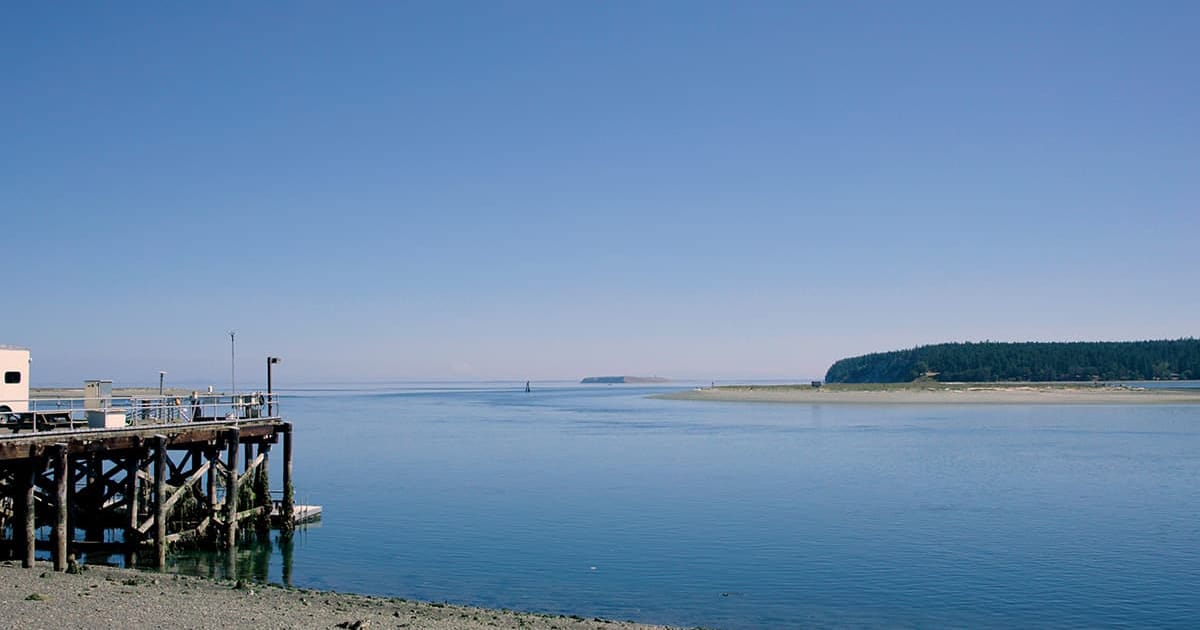
Ebb Carbon has shared that this collaboration has now been published in a peer-reviewed study in Frontiers in Environmental Engineering. The research documents two controlled releases of alkaline-enhanced seawater into Sequim Bay—providing the first real-world validation that Ebb’s system can operate safely, effectively, and within existing regulatory frameworks.
This paper builds on earlier peer-reviewed research at PNNL-Sequim:
- Simulated impacts on ocean chemistry — computer models showed that Ebb’s technology could capture and store CO2, while also raising pH across Sequim Bay, improving resilience against acidification (find study here).
- Defined safe operating bounds — laboratory studies that exposed local species important to marine food webs, such as sea hares and isopods, to alkalinity established thresholds for safe deployment for field trials (find study here).
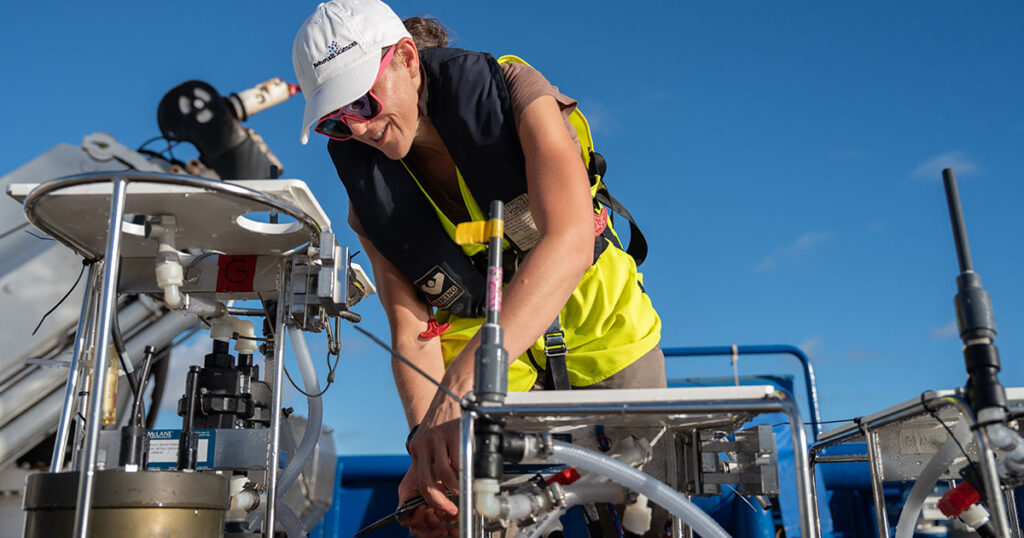
At PNNL-Sequim, the Ebb system integrates directly with the facility’s seawater in-flows and out-flows. Water coming in is diverted to the Ebb system, where it is processed through our electrochemical membranes. This process removes acid from the seawater, creating alkaline-enhanced seawater that, when re-introduced to the ocean, enables a draw down of CO2 directly from the atmosphere.
Key findings from the study in Frontiers in Environmental Engineering include:
- Using existing coastal facilities for mCDR: alkalinity was released using PNNL’s wastewater treatment facility under existing permits, demonstrating how existing coastal infrastructure can support mCDR research and development.
- Effective Mixing of Alkaline-enhanced Seawater: The alkalinity-enhanced seawater was rapidly diluted within a few meters of the outfall, with no measurable impacts on temperature, salinity, or oxygen.
- Effective Monitoring Toolkit: A suite of sensors and models successfully tracked water chemistry throughout the wastewater treatment system and through discharge, providing tools for future monitoring, reporting, and verification (MRV).
The safety and monitoring approaches demonstrated in this research directly support our next deployment in Port Angeles, Washington: Project Macoma. Project Macoma’s design and permits—including a first-of-its-kind National Pollutant Discharge Elimination System (NPDES) permit—were directly informed by the monitoring techniques, modeling, and laboratory research developed through Ebb Carbon’s collaboration with PNNL and other partners, allowing us to safely operate in one of the world’s most closely regulated marine environments.
With the strong scientific foundation resulting from the company’s work with PNNL, Ebb Carbon has expressed excitement to begin operating Project Macoma as the company takes the next step in its efforts to scale its technology safely and responsibly.