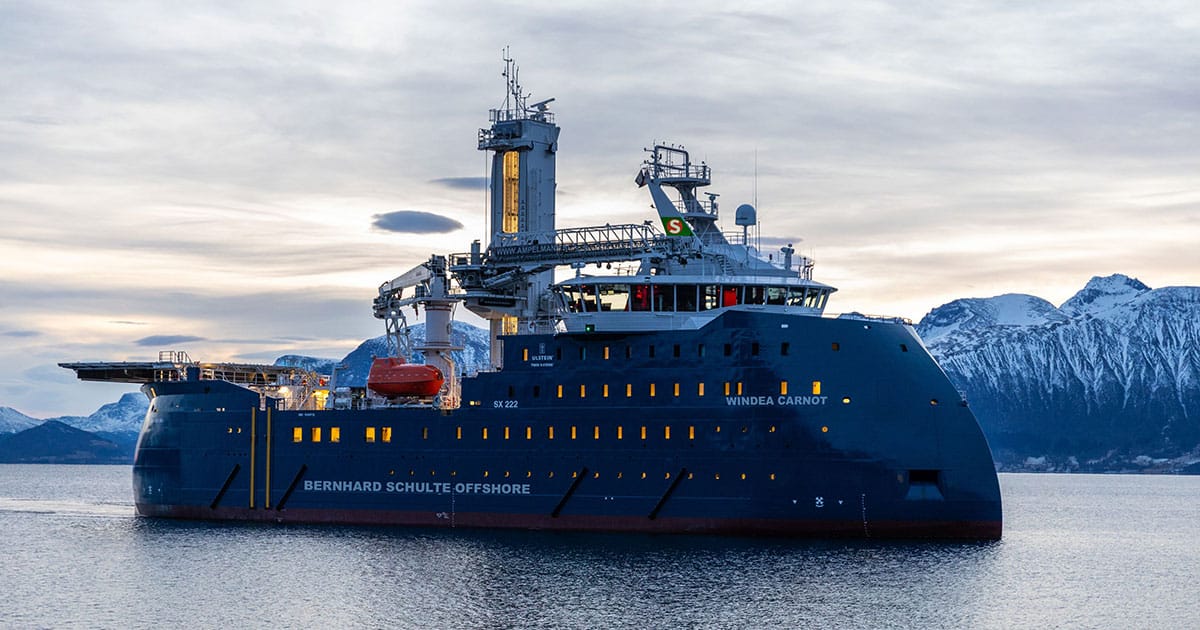
The Windea Carnot is the third of three sister ships built at Ulstein that BSO has integrated into its modern offshore fleet since the middle of last year. BSO now operates six specialized vessels serving the global offshore energy industry.
“The offshore market offers promising prospects. Therefore, we are pleased to have added Windea Carnot to our portfolio,” says Matthias Müller, Managing Director at Bernhard Schulte Offshore. “The Ulstein design, characterized by reliability, flexibility and innovative features, is very well received by the offshore industry.”
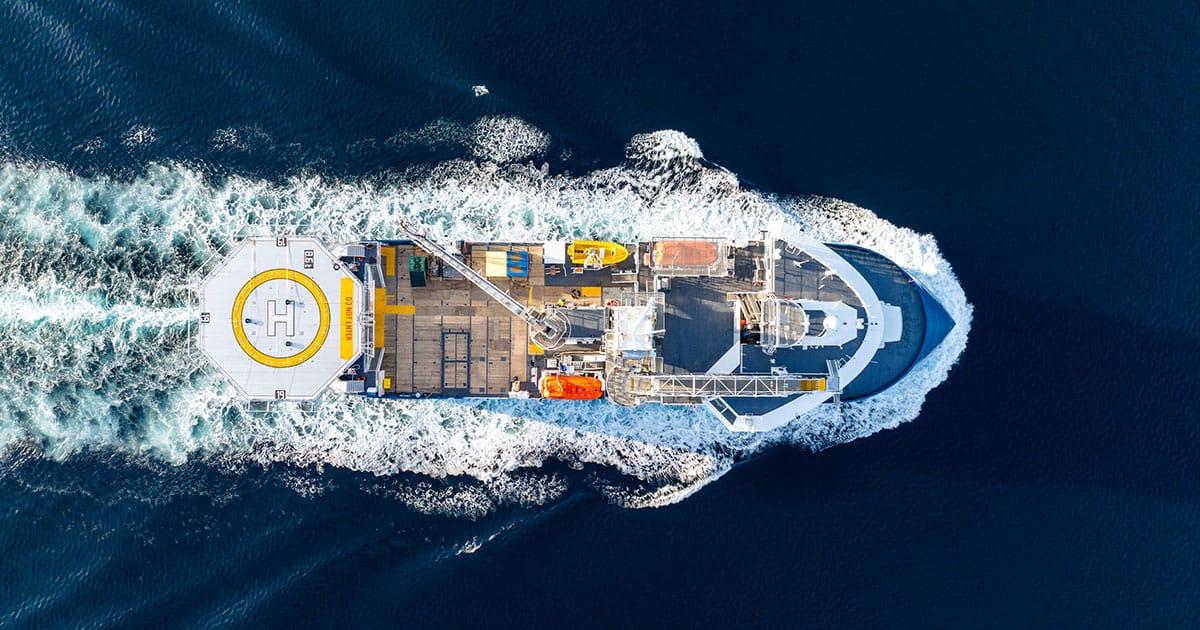 The new CSOV has a helideck for helicopters with a maximum take-off weight of up to 8.6 tonnes. (Credit: Ulstein Group)
Windea Carnot features Ulstein’s innovative TWIN X-STERN solution, which provides exceptional maneuverability, reduced vessel motions and improved fuel efficiency—key qualities for safe and sustainable offshore operations. Featuring hybrid battery propulsion and prepared for future methanol fuel use, the CSOV is designed for low-emission operations and is well suited for both operations and maintenance (O&M) as well as construction support activities, including deployments in demanding offshore conditions.
The CSOV, offering comfortable single cabins for up to 90 charterers’ offshore personnel, is fitted with a centrally positioned, height-adjustable walk-to-work gangway and elevator tower to enable safe personnel and cargo transfers. Furthermore, the Windea Carnot is equipped with a helideck for helicopters with a maximum take-off weight of up to 8.6 tonnes. A 3D motion-compensated crane with a lifting capacity of up to 5 tonnes supports offshore handling operations, while generous storage areas and step-free access optimize onboard logistics. In addition, a height-adjustable boat-landing system enables stepless transfer between the CSOV and smaller crew transfer vessels, a key safety feature when operating in offshore wind farms.
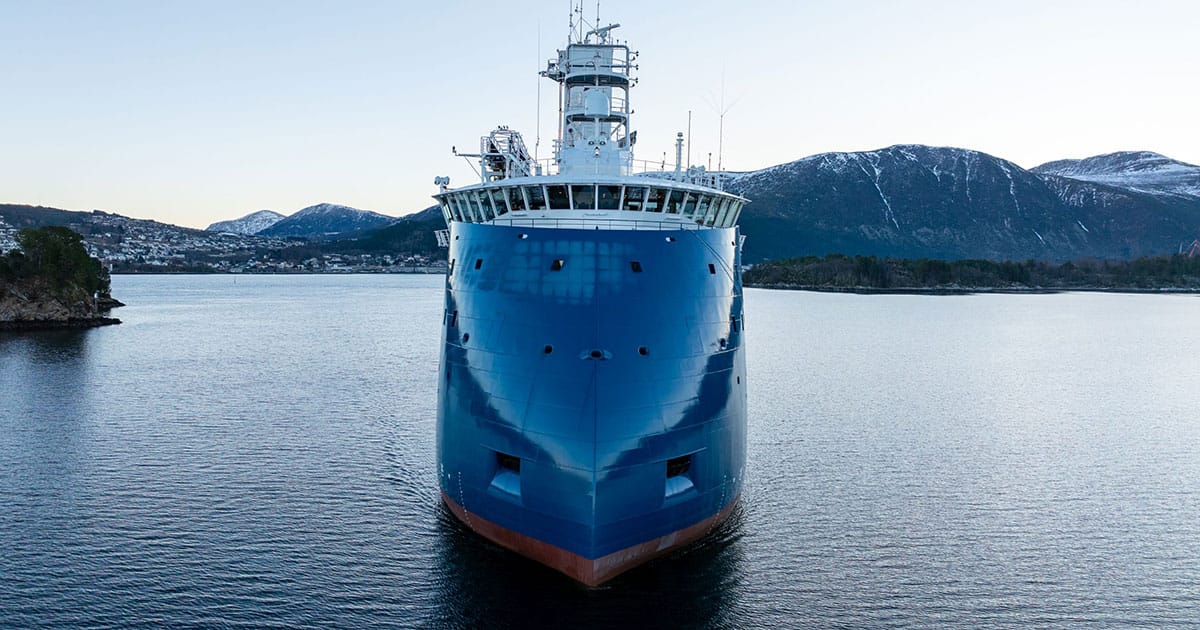 Featuring hybrid battery propulsion and a methanol-ready design, the CSOV is built for efficient, low-emission operations in the global offshore energy sector. (Credit: Ulstein Group)
The newbuilding is named after the French physicist and engineer Nicolas Léonard Sadi Carnot, who is widely regarded as the father of thermodynamics. This naming continues the tradition of the two previous sister ships, Windea Curie and Windea Clausius, also named after outstanding scientists.