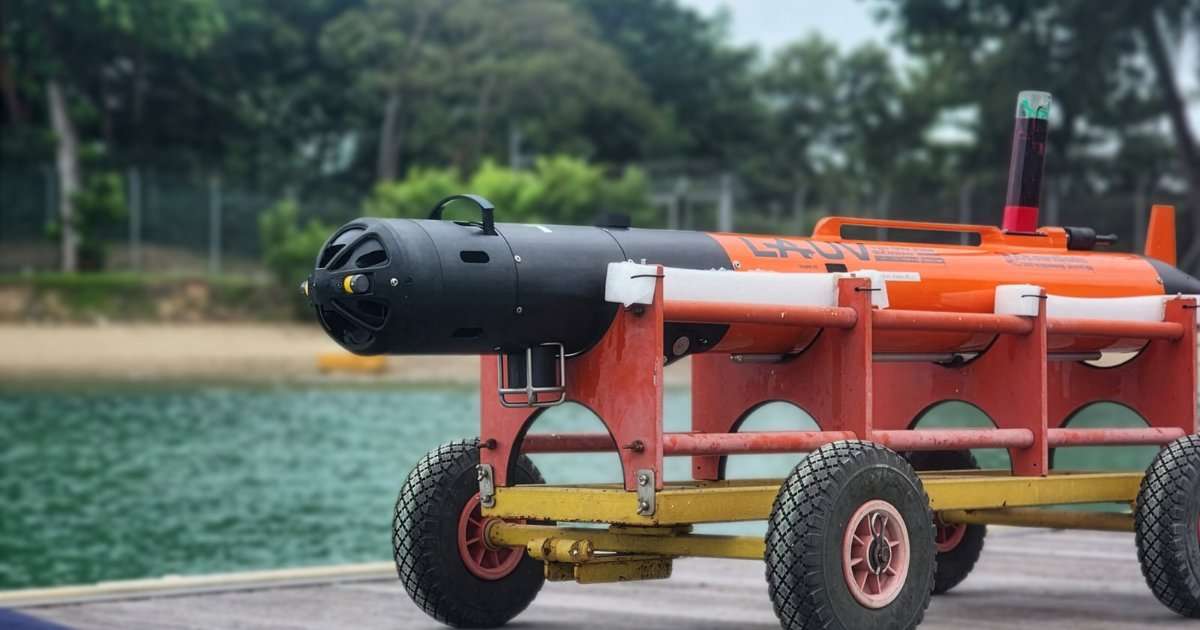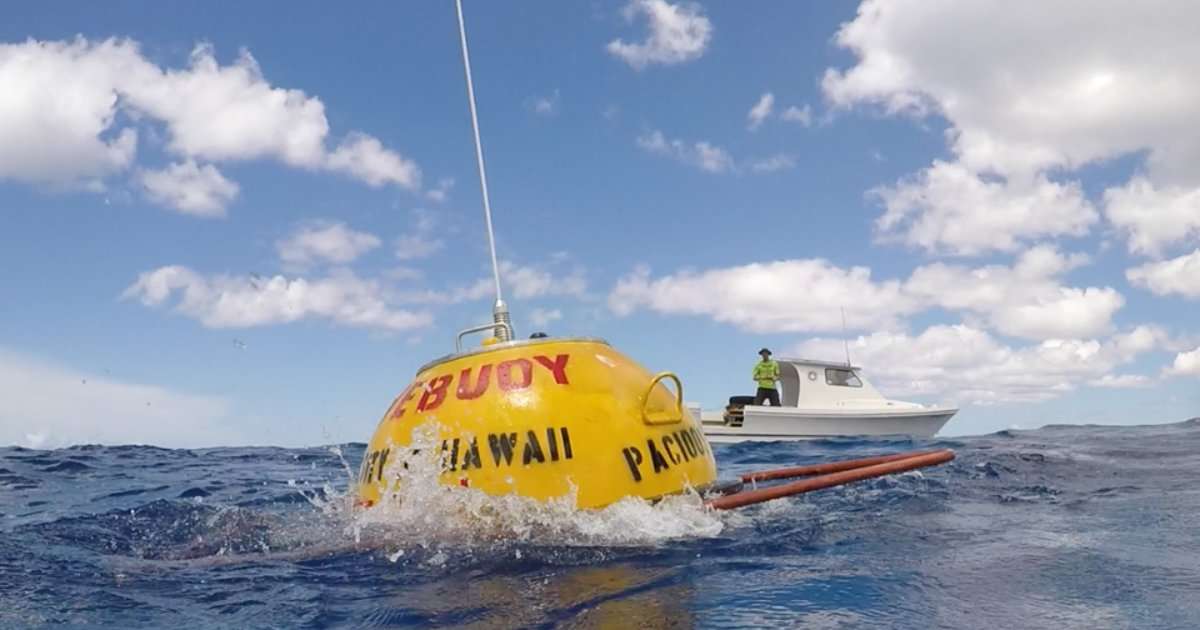
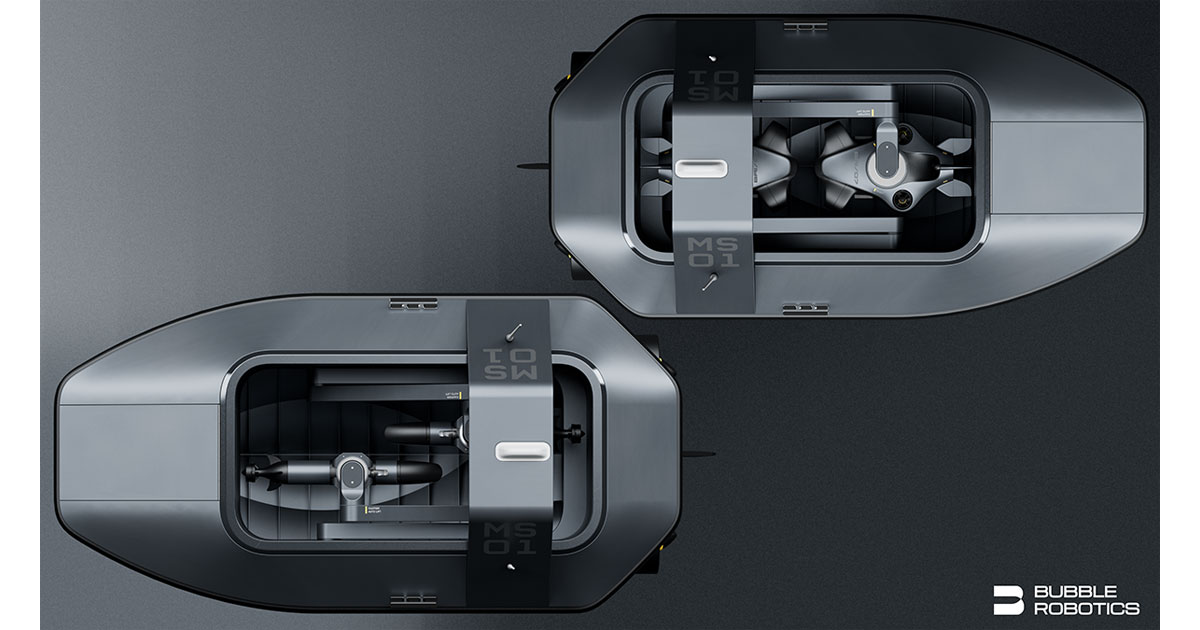
Founded in 2025 by former robotics engineers from NASA and ETH Zürich, Bubble is building the ocean’s autonomous workforce: a fleet of intelligent robotic systems capable of operating continuously at sea for months, without the need for human intervention.
The Next Frontier
The ocean sits at the center of 21st-century challenges. It powers energy transition, carries global data flows, delivers two-thirds of global trade, and underpins climate resilience. Yet the way we operate offshore has not changed in decades.
Today, offshore operations rely on vessels, crews, and heavy equipment costing up to $100,000 per day. This model is expensive, dangerous, and unscalable. At the same time, the industry faces a structural workforce shortage, with 600,000 additional professionals needed by 2030 in the energy sector alone.
Bubble’s thesis is simple: offshore operations should not require humans at sea.
Instead of episodic, vessel-based missions, Bubble deploys resident autonomous systems that stay at sea for 24/7/365, continuously inspecting, monitoring, and collecting data.
From Vessels to Persistent Infrastructure
“Today, 80 to 90% of offshore inspection costs come from vessels and crews,” said Jean Crosetti, CEO and Co-Founder of Bubble Robotics. “By removing that dependency, we unlock a step change in cost, safety, and operational frequency. What used to be episodic becomes continuous.”
Advances in robotics, edge AI, and satellite connectivity have reached an inflection point. For the first time, it is possible to deploy persistent, autonomous systems at sea that can perceive, decide, and act with minimal human oversight.
Beyond industrial operations, the same constraints apply to maritime security and critical infrastructure monitoring. Subsea cables, ports, and offshore energy assets are increasingly exposed, yet remain largely unmonitored in real time. Persistent autonomous systems enable a new model of continuous presence at sea, allowing operators to detect anomalies, monitor sensitive zones, and secure infrastructure without relying on human deployments.
“One of EF’s unique strengths is creating the environment for exceptional individuals to meet and build great companies. Patricia and Jean formed a team at our kick-off weekend around a shared belief and complementary skillset: Patricia with world-class technical credibility in robotics, Jean with unusual commercial instinct and intensity. Their pace of iteration throughout the program and strong customer obsession make Bubble Robotics a company to watch closely,” said Alice Bentinck, Co-founder of Entrepreneurs First.
Robotics-as-a-Service for Critical Infrastructure
Bubble operates under a robotics-as-a-service model, providing full operational capability without upfront CAPEX or offshore mobilization. This allows industrial operators to simultaneously reduce costs, address workforce shortages, and increase inspection frequency and data coverage.
The solutions developed by Bubble provide concrete answers to a vast array of industrial needs:
- Energy and resources: the system unlocks easier monitoring and inspection of foundations, cables, pipes, and turbines, as well as structural mapping, non-destructive testing, and millimeter-scale seabed surveys
- Climate & Biodiversity: facilitates benthic mapping, photogrammetry, long-term ecosystem monitoring, and biofouling monitoring
- Maritime security and defense: the technology enables the detection of acoustic anomalies and of unexploded ordnance (UXO), mine countermeasures, continuous surveillance, and underwater security
Inspired by satellite constellations providing continuous Earth observation, Bubble Robotics is deploying a widespread infrastructure of robots designed to collect and elaborate complex high-frequency underwater data, paving the way for a new standard in understanding and efficiently managing ocean environments.
Bubble is already seeing strong market pull, with over $4 million in signed letters of intent and upcoming deployments across offshore wind, maritime security, and subsea infrastructure. Beyond building robots, Bubble is deploying a new layer of autonomous infrastructure for the ocean, powering the most advanced model of the underwater world.