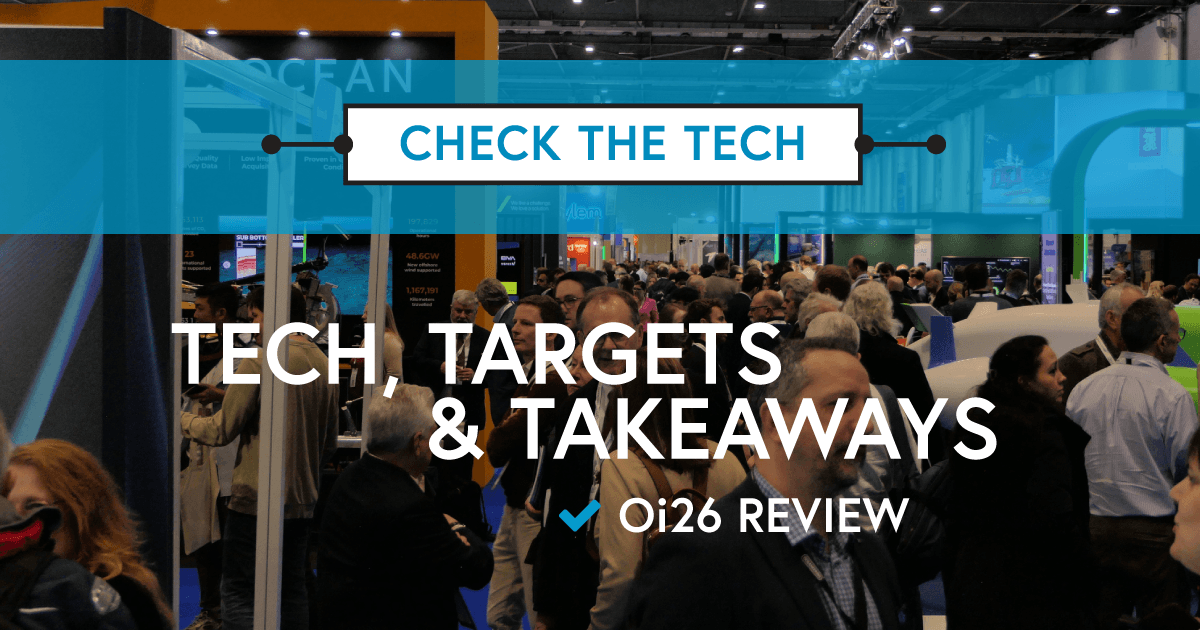
The ocean industry, like so many others right now, isn’t an easy one to predict. Labor shortages, an aging workforce, shifting regulatory compliance, and financial pressures all bring challenges; throw the geopolitical stressors currently choking international supply chains into the mix and have a recipe for market volatility.
Release the Kraken!
Amid uncertainty, a keen appetite for collaboration can prove critical. Already in 2026, we are seeing many companies coalesce under shared objectives and strategic alliances. None more so than Kraken Robotics, which announced the acquisition of Covelya Group in the lead up to Oi26. With Sonardyne, EIVA, Forcys, Wavefront Systems, Voyis, and Chelsea Technologies now part of Kraken’s offering, we have a new consortium to consider. (See this month’s TAKE 5 for further insights from Kraken President & CEO Greg Reid.) Will 2026 be marked by further M&A activity? If Oi26 is any measure, the market is rife with opportunity.
The Future of Uncrewed
No ocean tech show would be complete today without a panel to discuss the future of uncrewed technologies. The round table discussion, “Charting the Future of Uncrewed Vehicles & Vessels,” united industry experts Jim Bellingham, Professor , Johns Hopkins University ; Sam Taylor, Head of Business Development, Ocean Infinity; Matthew Palmer, Head of Environmental Intelligence and Director of National Centre for Coastal Autonomy, Plymouth Maring Laboratory ; and Serena Brown, Global Business Development Manager, Deep Trekker to deliver some large takeaways.
- The scales have tipped from hardware to software. Many operators want innovation “cheaper and faster.” Software is a key piece to that. Panelists agreed that the development of simulator packages can now take weeks rather than months, reducing fulfillment bottlenecks. They also shared that the investment in improving software technology to address system health and diagnose issues has shown greater ROI than “making a machine bullet-proof.”
- The operational case for uncrewed survey and observation task is well documented, but the capacity for real-time intervention lags. The capabilities of uncrewed assets to execute a survey campaign are proven. With the acceleration of independent sensors to produce robust, accurate datasets, companies are now finding themselves juggling between “what the best tech available is” and “what is commercially viable.” While confidence in autonomous platforms on and below the surface continues to grow, the practical capacity for real-time intervention lags. Defining the role of a human-in-the-loop hinges on refining what is operationally possible and scalable.
- Frameworks and regulations continue to create bottlenecks. For more substantial USVs—Large or Fleet-Class models—a need for defined regulations persists. The business case for larger platforms—primed to conduct “leaner, greener, and meaner” operations at a snip of the cost (investment dollars and time) of conventionally crewed vessels—needs no further clarification. But the promise of scalability is being anchored by a sluggish regulatory progress. Widespread trial and integration, especially as operators target increasingly remote, long-endurance deployments, demands a universally ratified framework of governance.
Seeing is Believing
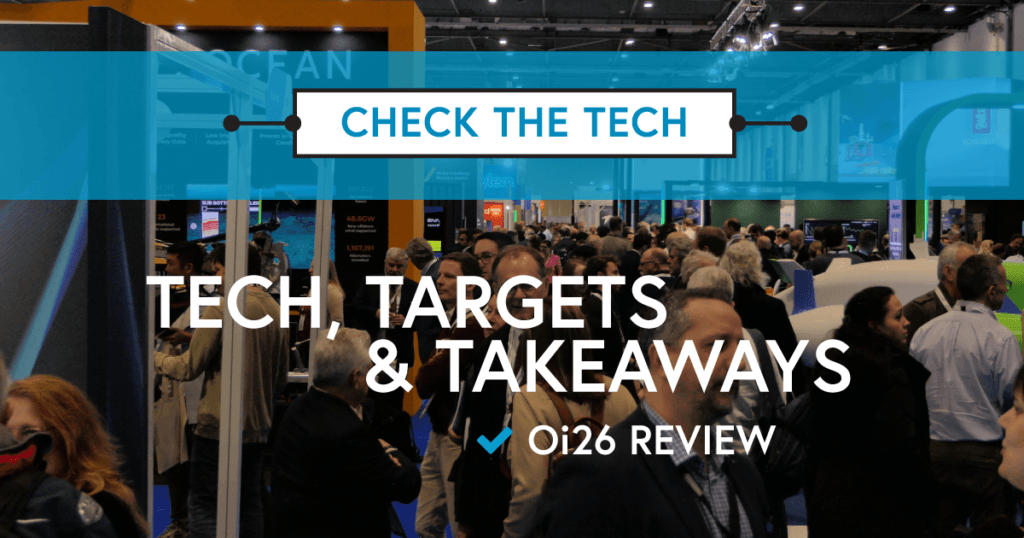
There is always a uniquely tangible element to Oi; not only can visitors interact with the best minds in the business, but they can also experience the tech on display firsthand throughout the expansive exhibition floor. Then there are the dockside demos, which always prove popular among attendees wishing to see experts putting the latest autonomy, robotics, and tools to the test.
Evo-Logics, Teledyne Marine, and Maritime Robotics were among the standouts carrying out live dockside demonstrations during the show. Evo-Logics showcased the ability to conduct tandem uncrewed operations above and below the surface with their Quadroin AUV and Sonobot USV. Teledyne Marine demonstrated their newly launched Sea-Bat T51-R integrated dual-head multibeam system aboard the vessel Maplin, and Maritime Robotics showcased a live autonomous seabed mapping mission with their Mariner USV.
This spotlight appeared in ON&T Magazine’s 2026 April Edition, Offshore Energy, to read more access the magazine here.