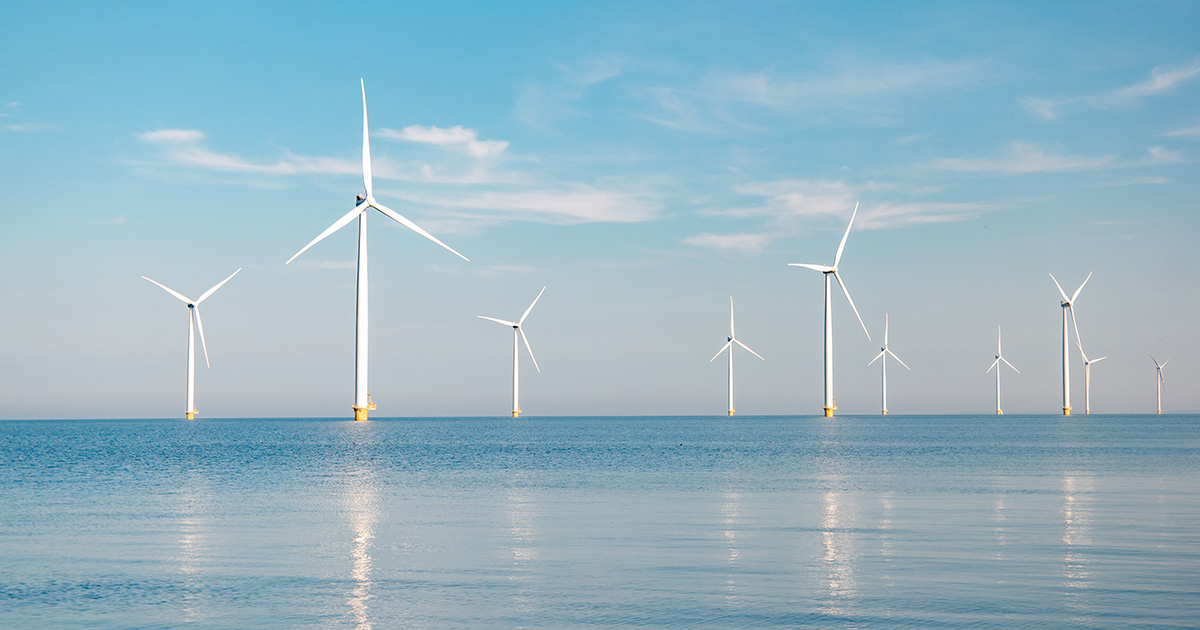
Europe’s offshore wind sector is increasingly exposed to hybrid threats and covert activity—including sabotage, surveillance, and subsea interference—according to a new policy paper from WindEurope developed with technical input from Terma. The findings underscore a growing gap between the strategic importance of offshore wind and the level of protection currently in place.
As offshore wind becomes a cornerstone of Europe’s energy system, it is rapidly evolving into critical infrastructure. But the report warns that parts of this infrastructure remain insufficiently protected.
“Offshore wind is no longer just energy infrastructure. It’s critical infrastructure – and today, parts of it remain effectively unprotected,” said Steen Hommel, Executive Vice President at Terma.
Despite the rising threat landscape, the report points out that the security deficit is not caused by a lack of solutions nor necessarily by cost. Analysis and White Paper contributed by Terma shows that integrating physical security early in project design adds only a marginal cost.
For new offshore wind developments, integrating asset-level physical security measures corresponds to an additional investment in the order of €4–12 million, depending on project scale, together with annual operational costs of approximately €0.5–1.2 million. For new projects, this means that security can be implemented without materially affecting project economics or investment decisions. Retrofitting of existing offshore infrastructure is technically feasible, but will be challenged by being a higher add-on cost.
“The cost of securing future offshore wind is—especially in early stages—insignificant compared to acting after something happens,” Steen Hommel said.
Instead, the report identifies regulatory fragmentation as the primary barrier to implementation. Security requirements vary across Europe, are often introduced late in development processes, or embedded in auction criteria rather than stable regulatory frameworks. This creates uncertainty, increases financing risk, and drives delays and costly redesigns.
“Right now, lack of stable regulatory framework is slowing down implementation more than anything else. The technology is ready, but the coordination is lacking,” Steen Hommel added.
WindEurope calls for a coordinated European approach, where minimum security requirements are defined early and embedded in regulation and permitting frameworks. This would provide the predictability needed for developers to integrate security efficiently and at lower cost.
As offshore wind continues to scale, the policy paper concludes that the question is no longer whether to secure it—but how quickly Europe can move from policy to implementation.
To read Terma’s white paper, visit: https://www.terma.com/media/n1sfezy2/terma-white-paper-offshore-wind-farm-security-concept.pdf