Traveling from Mindelo in Cabo Verde to Bremerhaven, Germany, they will carry out physical, biogeochemical, and biological measurements together with ten experienced scientists. This is the fourth time that the Floating University is taking place under the leadership of GEOMAR Helmholtz Centre for Ocean Research Kiel. This initiative significantly contributes to the goals of the UN Decade of Ocean Science and is funded by the German Federal Ministry of Research, Technology, and Space (BMFTR) as part of the WASCAL program (West African Science Service Centre on Climate Change and Adapted Land Use).
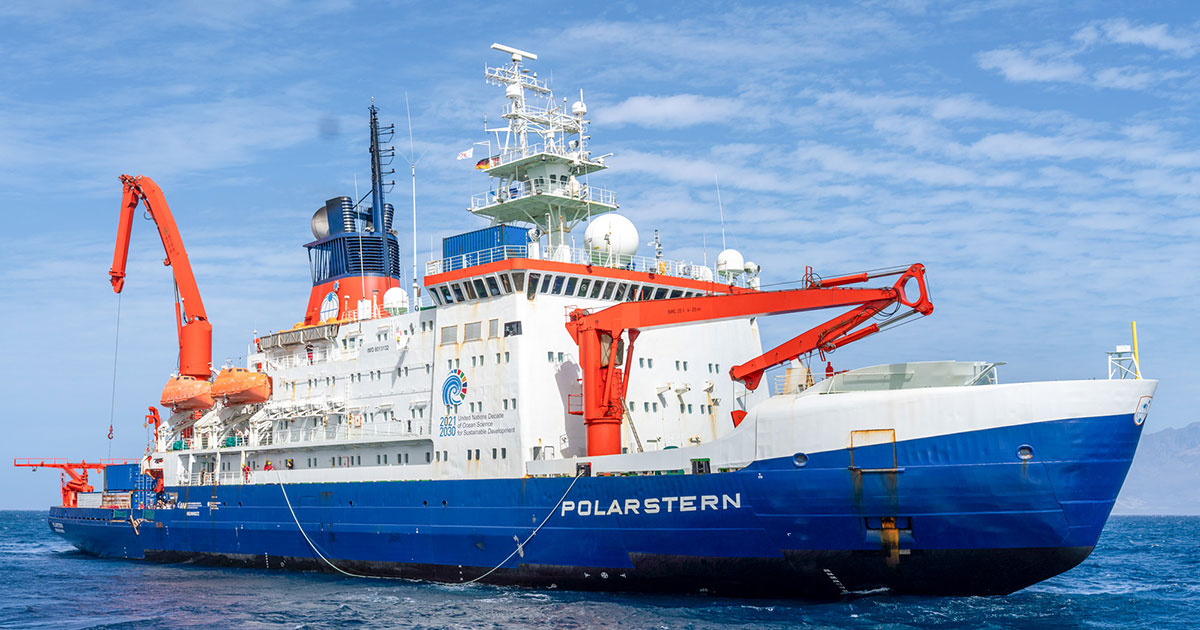
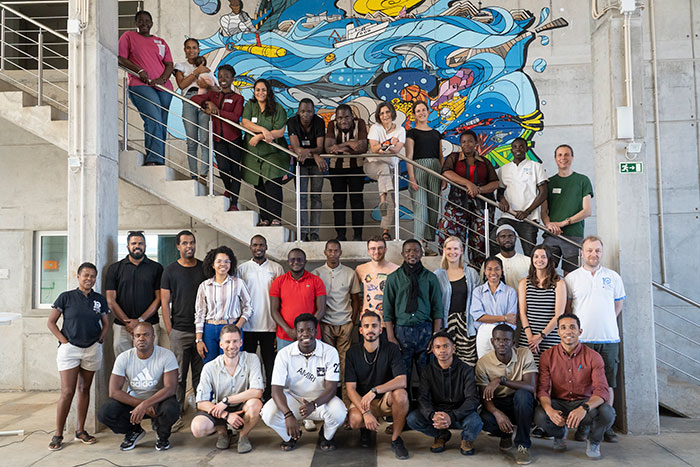
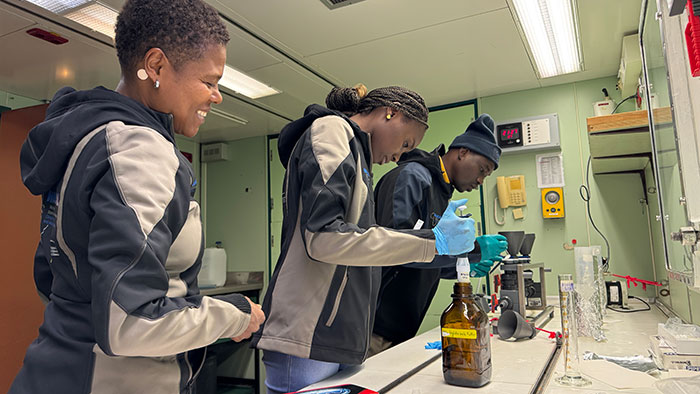
A total of 2,840 nautical miles lie ahead of the 14 Master’s students in the West African Master’s program ‘Climate Change and Marine Sciences’. Tomorrow they will set off on expedition PS154/2 aboard the research vessel POLARSTERN, traveling from Mindelo, Cabo Verde, to Bremerhaven, Germany. This is their first voyage on a research vessel. While on board, they will conduct research in close collaboration with ten experienced scientists, learning how to operate scientific instruments such as the rosette water sampler and filtration systems. Following their arrival in Germany, many of the students will continue with a research stay at GEOMAR Helmholtz Centre for Ocean Research Kiel, where they will further develop their scientific projects.
First Experiences Aboard a Research Vessel
The ‘Floating University’ forms the practical, ship-based component of the Master’s program “Climate Change and Marine Sciences” at the Universidade Técnica do Atlântico (UTA) in Cabo Verde. For the training voyage, the transit of the research vessel POLARSTERN from the Falkland Islands (Malvinas) to Bremerhaven via Mindelo in Cabo Verde is being utilized. The research vessel is operated by the Alfred Wegener Institute, Helmholtz Centre for Polar and Marine Research (AWI).
“During the Floating University, students learn how ocean research is conducted on a research vessel and how to collect high-quality data on marine ecosystems while working in an international team under challenging conditions. Many of the skills acquired will later be applied by the students in their own research projects in the region,” said Dr. Björn Fiedler, a marine chemist at GEOMAR and the expedition’s chief scientist.
Measurements at Depths of Up to 4,900 Meters
Throughout the transit, students and scientists conduct daily physical, biogeochemical, and biological measurements at water depths of up to 4,900 meters. The main objectives are to document long-term changes in the ocean and to investigate marine biodiversity. The team continuously measures parameters such as temperature and CO2 at the sea surface. In order to deploy instruments and collect samples, the research vessel stops for several hours at one position each day to operate various devices within the water column.
The route also passes the two long-term monitoring stations: the Cape Verde Ocean Observatory (CVOO) and the European Station for Time-Series in the Ocean of the Canary Islands (ESTOC). Both sites allow processes in the ocean to be observed over many years. For instance, oxygen concentrations at a depth of 3,500 meters have been monitored at the CVOO mooring since 2006. As different parameters, including the presence of different zooplankton species and temperature, are measured simultaneously, it is possible to analyze the relationships between multiple parameters over time.
Learning, Networking, Shaping the Future
In addition, the researchers will deploy three deep-sea drifters (Argo floats), which are autonomous measuring devices that provide temperature, salinity, and current data from depths of up to 2,000 meters over many years. The international Argo program is a collaboration between over 50 research organizations from more than 30 countries. Around 4,000 Argo floats are currently operating in the world’s oceans, continuously collecting data and contributing to an important global ocean observation system. In Germany, responsibility for the program lies with the Federal Maritime and Hydrographic Agency (BSH).
Tobias Hahn, scientific coordinator for WASCAL at GEOMAR: “People from 16 nations will come together for this year’s Floating University. During the two weeks on board, we work together, learn from one another, build networks, and exchange ideas. Over the past years, this has resulted in the formation of a valuable global alumni network of students from West Africa.” Björn Fiedler added: “We are confident that many of the alumni will play a key role in the planned FUTURO research campaign towards the end of this decade. The aim is to better understand the impacts of climate change on the marine ecosystem in West Africa and to derive the necessary actions from these findings.”
Expedition at a Glance:
Name: PS154/2 (WASCAL IV) “Floating University”
Duration: May 1, 2026, to May 15, 2026
Chief Scientist: Dr. Björn Fiedler
Departure: Mindelo (Cabo Verde)
Destination: Bremerhaven (Germany)