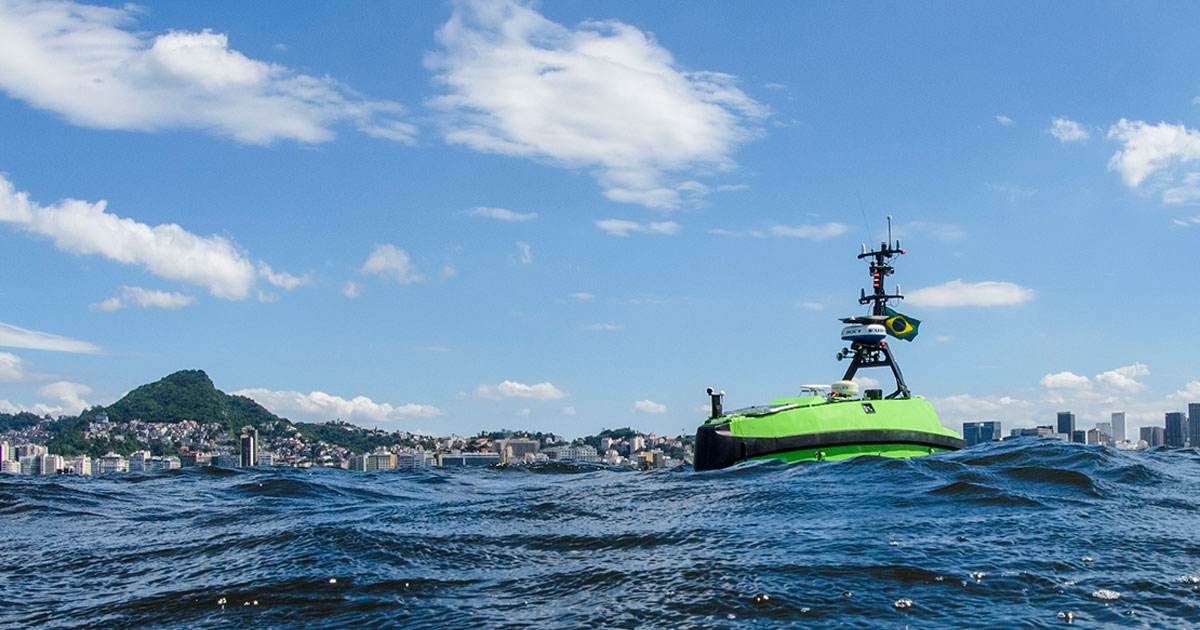
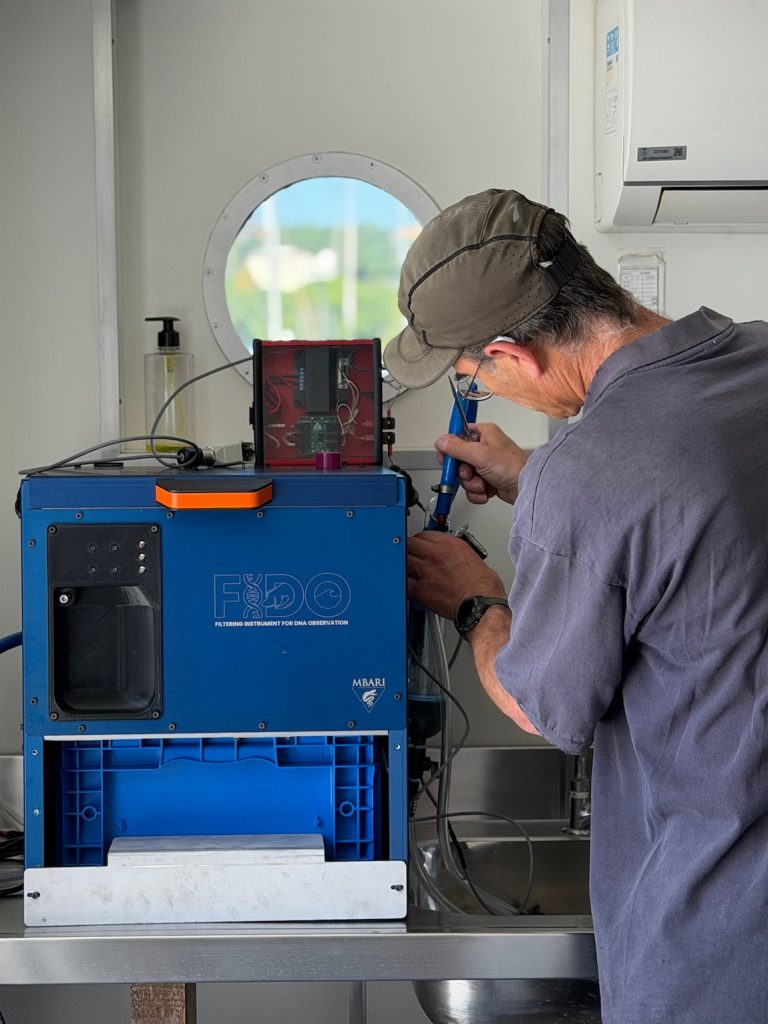
Last month, MBARI researchers deployed the third-generation ESP (3G ESP) on Tidewise’s autonomous surface vehicle Tupan II. Controlled via satellite from Rio de Janeiro, this uncrewed vessel first collected eDNA samples in Guanabara Bay, then spent seven days surveying oil fields in the Santos Basin more than 200 kilometers (124 miles) offshore, where depths exceed 2,000 meters (about 6,600 feet). MBARI researchers also installed the FIDO instrument on the Brazilian oceanographic research vessel Prof. Luiz Carlos for complementary ship-based surveys. Bio Bureau will now begin analyzing the nearly 200 samples collected using MBARI technology.
By reducing reliance on crewed vessels and large logistical operations, autonomous sampling can lower costs, operational risk, and carbon footprint, while enabling data collection in remote areas that have historically been challenging to study.
International collaborations expand the reach of MBARI’s technology innovation, equipping resource managers, policymakers, industry, and communities with the tools needed to better understand ocean health and collect information that can guide their decision-making about marine ecosystems and resources.
The fieldwork was part of an Equinor research project focused on identifying and monitoring biodiversity in remote marine areas, with funding provided by Brazil’s National Agency for Petroleum, Natural Gas, and Biofuels under the Research, Development, and Innovation clause.