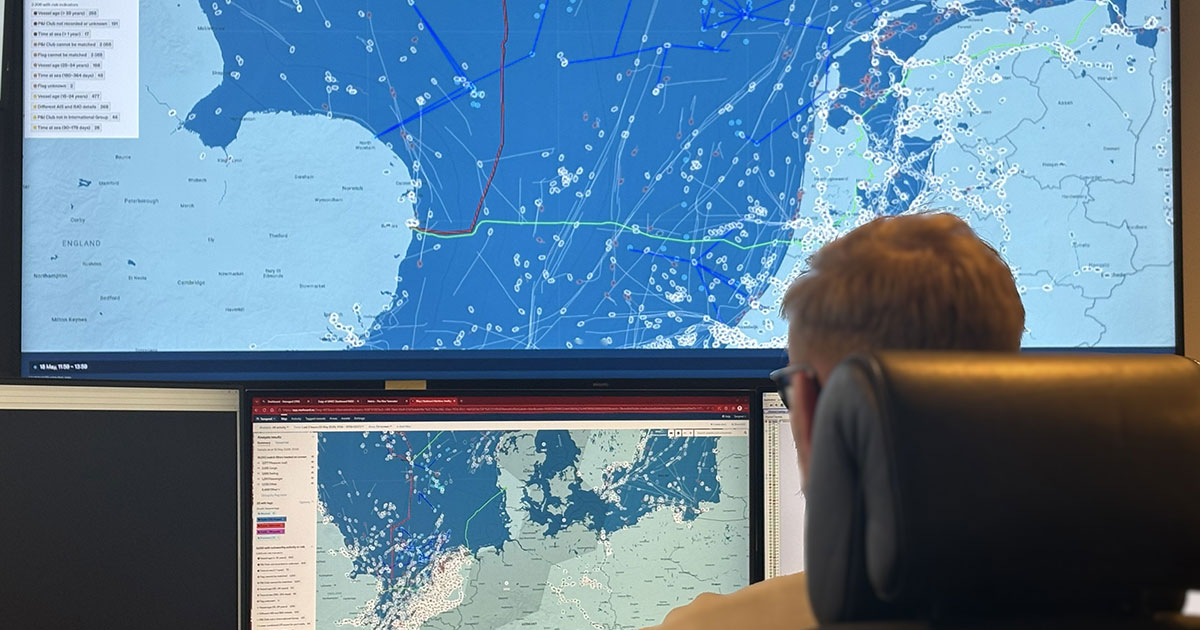
For the first time, this new integration means operators will be able to monitor both Distributed Acoustic Sensing (DAS) and State of Polarization (SoP) signals together on a single operational map, enabling faster identification of potential cable threats and clearer distinction between contact and non-contact events. While DAS detects acoustic and vibrational activity near the cable, SoP adds sensitivity to direct fiber disturbances and contact events, improving confidence when assessing potential threats.
By combining Tampnet’s fiber sensing infrastructure with Starboard’s real-time maritime intelligence platform, operators will gain a more complete operational picture of subsea activity, supporting faster response times and more informed decision-making in protecting critical infrastructure.
“This is an important step forward in how fiber sensing is operationalized,” said Trent Fulcher, CEO of Starboard Maritime Intelligence. “By bringing SoP into the same interface as DAS, analysts can assess multiple sensing modalities together, directly in the context of maritime activity. It strengthens situational awareness while keeping the workflow simple and intuitive.”
With the latest release now live in Tampnet’s testing environment, operators can:
- View DAS and SoP detections directly on the map, color-coded by signal strength
- Quickly distinguish cable contact events from non-contact detections
- Correlate fiber sensing signals with AIS vessel traffic and inferred movement tracks
- Configure per-site thresholds, display duration, and sensitivity through administrator controls
Both sensing types are presented consistently, allowing analysts to interpret events without switching tools or interfaces. This supports a move from research-driven fiber sensing towards day-to-day operational use.
“With fibre sensing already deployed across most of our subsea network, our goal is to make it operationally useful from day one,” said Anders Tysdal, Chief Infrastructure Officer at Tampnet. “Integrating SoP into Starboard alongside DAS gives operators better tools to understand what is happening on and around their cables, enabling faster, more reliable decisions using infrastructure that already exists.”
Supporting Proactive Infrastructure Protection
Fiber-optic sensing uses standard subsea communication cables as long, continuous sensors. DAS measures acoustic movement along the fiber, while SoP detects changes in the polarization state of light caused by physical disturbance. Together, they provide complementary views of activity near the cable, helping operators identify and prioritize events that may require attention.
The combined DAS and SoP capability supports a range of use cases, including:
- Early detection of potential cable interference
- Improved verification of physical contact events
- Enhanced situational awareness when vessels operate near critical subsea routes