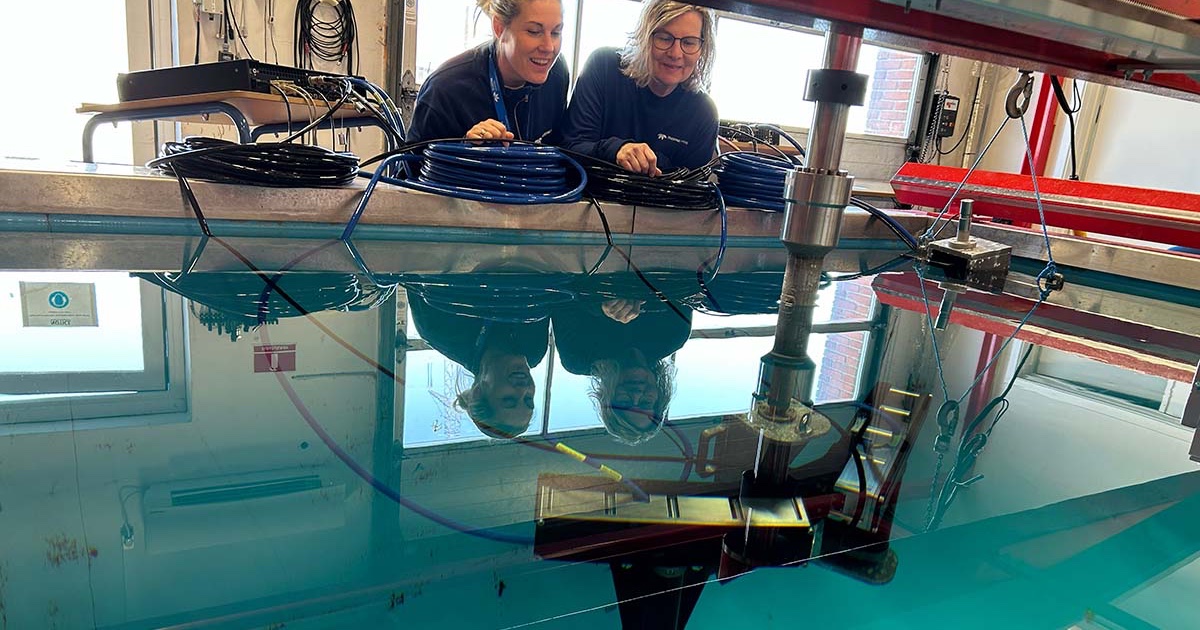
David Evans and Associates (DEA) has taken delivery of a SeaBat T51-R Integrated Dual Head multibeam echosounder. The announcement underscores a long-standing relationship between DEA and Teledyne RESON, for more than three decades DEA has collaborated with RESON on pioneering projects, system developments, and major survey projects across the US. DEA was among the first to deploy Teledyne’s multibeam systems for shallow water bathymetry back in the early 1990s.
DEA’s use of RESON’s sensors has evolved from the early applications of the SeaBat 9001 through to the SeaBat T51 and Integrated Dual Head solutions in use today. Applications include coastal and inland infrastructure inspections, site characterization and habitat mapping using normalized backscatter, navigation and nautical charting surveys, civil works design and construction surveys, cable and pipeline route surveys and inspection, and contaminated site remedial investigation and design surveys.
“The data quality of Teledyne’s technology is what keeps us coming back,” said Jon Dasler, Senior Vice President, DEA. “With the SeaBat T51-R IDH we’re seeing a clear step forward in both data density, unprecedented resolution, and survey efficiency. That combination is critical for the kind of high-resolution work we do and we’re looking forward to deploying the system in operations.”
The SeaBat T51-R Integrated Dual Head system enables full-rate dual head performance from a single integrated platform, allowing surveyors to achieve wider swath coverage and significantly increased data density without reducing vessel speed. By removing the need for staggered pinging, the system helps maximize efficiency while maintaining the high-resolution performance for which the T51 series is known.
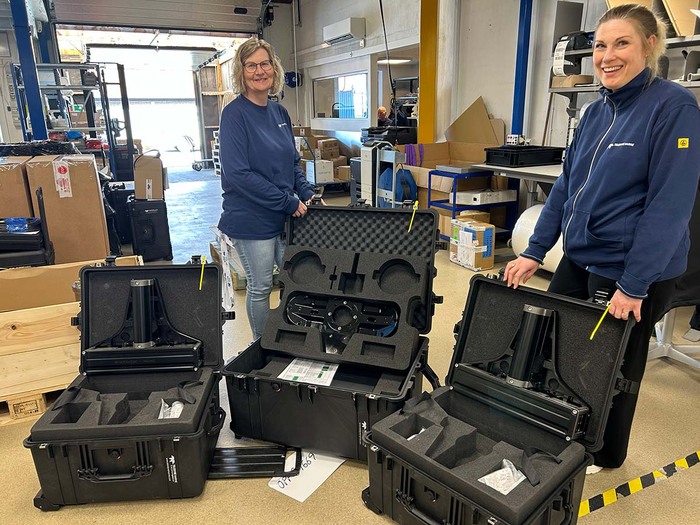
“DEA’s decision to invest in the T51-R IDH+ system is a strong endorsement of both the technology and our long-standing partnership,” added Kristine Beran, Sales Manager of Oceanographic/Scientific, Imaging & Instruments, Teledyne Marine. “It’s also a clear indication of the momentum we’re seeing for the T51 series. As we mark 50 years of RESON innovation, it’s rewarding to see customers we’ve worked with for decades continuing to adopt our latest innovations—partnership like this is a powerful reminder of how collaboration in the field has shaped the technology.”
Introduced at Oi2026, the SeaBat T51-R Integrated Dual Head system extends proven dual head capability, already established on the T20 and T50 platform, into the high-resolution T51 series, enabling both surface vessel and deepwater ROV deployments while allowing survey teams to capture more detailed seabed data in less time and ultimately reducing overall operational costs.