
ACADA represents Atlantic Canada’s aerospace and defense industry and promotes the region as a globally recognized hub of aerospace and defense excellence. (Atlantic Canada includes the provinces of New Brunswick, Nova Scotia, Prince Edward Island and Newfoundland & Labrador.)
With 600 participants, this year’s MASS conference is the biggest ever, according to Victoria Belbin, ACADA president and CEO.
The conference, held at the St. John’s Convention Centre, is examining the policies, technologies and operations to leverage Atlantic Canada’s leadership in environmental management, economic leadership and workforce development.
In his keynote remarks, Newfoundland Labrador Premier Tony Wakeham told the delegates that the province has the strategic geopolitical location as a gateway to the Arctic and Atlantic; a qualified workforce, and unique military and civil capabilities. “Newfoundland and Labrador,” Wakeham said, “is ‘built for defense.”
“Newfoundland and Labrador has always turned challenges into opportunities,” Wakeham said. “Today, those same strengths position us to play an even greater role in Canada’s defense and security future. We have the capabilities. We have the people. And we are ready to do more.”
Wakeham said that Atlantic Canada’s strength is not that every province does the same thing. “It is that each brings different strengths, and together those strengths reinforce one another. The result is something larger than any one province could offer on its own,” he said. “We offer a regional defense and security ecosystem that Canada and its allies can rely on for Arctic and North Atlantic security and support.”
An overarching theme has been the importance of partnerships, and the need for trust and sustained dialogue to achieve successful partnerships.
Presenters discussed the importance of meaningful partnerships with Inuit, First Nations, and Northern communities, emphasizing economic participation, dual-use infrastructure, connectivity, and workforce development. To be successful, these partnerships rely upon trust and sustained dialogue.
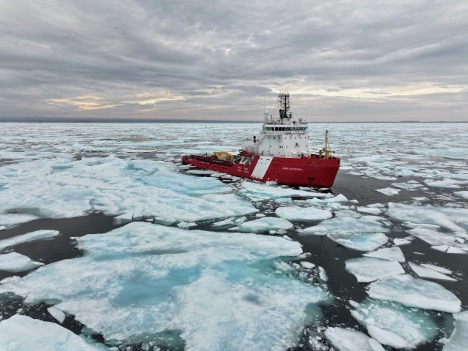
From the naval standpoint, speakers emphasized the importance of robustness and maintainability in Arctic-capable warship designs, highlighting the challenges of technology in harsh conditions. Importance advanced satellite-based maritime surveillance, using AI and machine learning to detect and track ships and icebergs, and the importance of high-resolution ice data collection and sharing for safe navigation in the Arctic.
Technology is enabling new methods of maritime surveillance. Satellites, artificial intelligence and machine learning are helping to detect, identify and track ships and determine which tracks may constitute a threat; as well finding and tracking icebergs for safer navigation in and around ice in the Arctic and the north.
As an added bonus, MASS 2026 is held in conjunction with the Littoral OpTech Workshop, which brings together naval, defense and maritime security experts together to explore and identify technologies and concepts that will enable effective operations in the littoral.
Edward Lundquist is a retired US Navy captain who writes on maritime, naval, defense, and security issues.