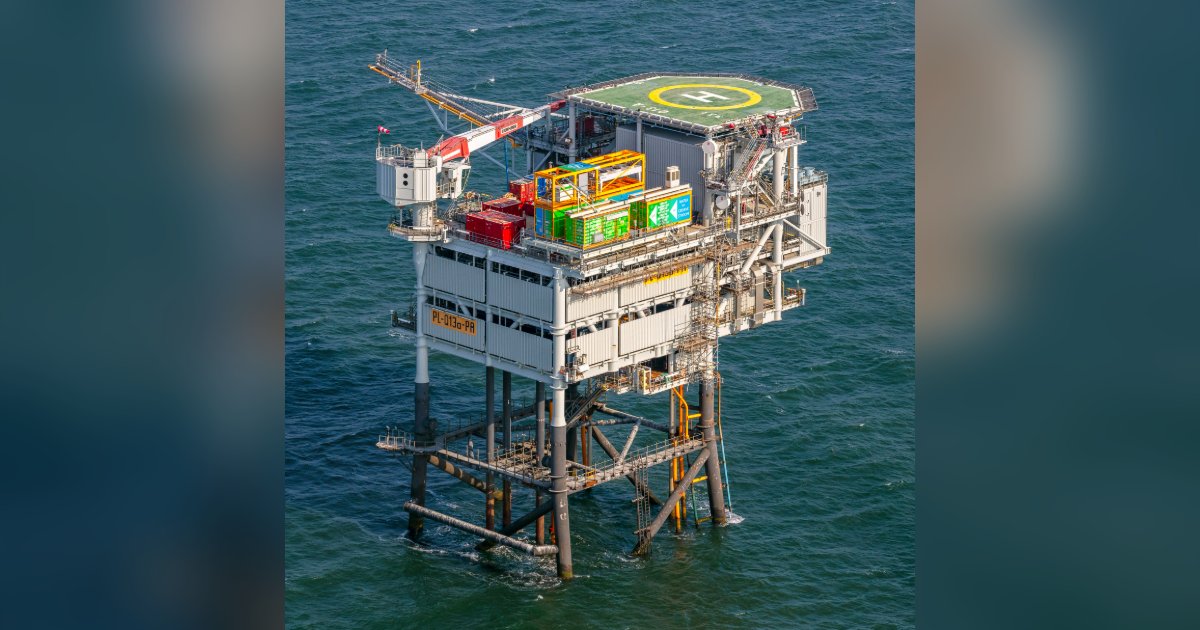
The achievement by the PosHYdon project demonstrates that the infrastructure built for the gas industry could one day be repurposed for a new role: producing and transporting green hydrogen using offshore wind energy. As countries expand offshore wind capacity, one question is becoming increasingly important: how can that renewable energy be transported efficiently to where it is needed?
One possible answer, instead of bringing all electricity ashore through subsea cables, renewable electricity generated by offshore wind can be used directly at sea to produce green hydrogen. The hydrogen can then be transported through offshore pipelines, many of which already exist as part of the North Sea’s extensive gas network.
This successful proof of concept shows that offshore platforms, once their gas production ends, could potentially be repurposed for hydrogen production. In the future, the same offshore pipeline network that currently transports natural gas could also be used to transport hydrogen, reducing the need for entirely new infrastructure.
The quantities of hydrogen currently produced are deliberately small and therefore not used yet. At this moment, the purpose of PosHYdon is to demonstrate that the technology works safely and reliably under real offshore conditions and to collect the operational data needed for future large-scale projects.
Over the coming months, TNO and the project partners will analyze the results and findings from the pilot and present them to Stientje van Veldhoven-van der Meer, Minister of Climate and Green Growth, in Q4. Those results will help determine the next steps towards scaling up offshore hydrogen production and accelerating the reuse of existing North Sea infrastructure.
PosHYdon is an initiative of DEME, EBN, Eneco, Emerson, Gasunie, Hatenboerwater, Investa Expertise Centrum, Iv, Nel, Eni, Nexstep, NGT, Nogat, TAQA, and TNO. Their ambition is to accelerate the development of offshore hydrogen production as Europe expands its renewable energy capacity.