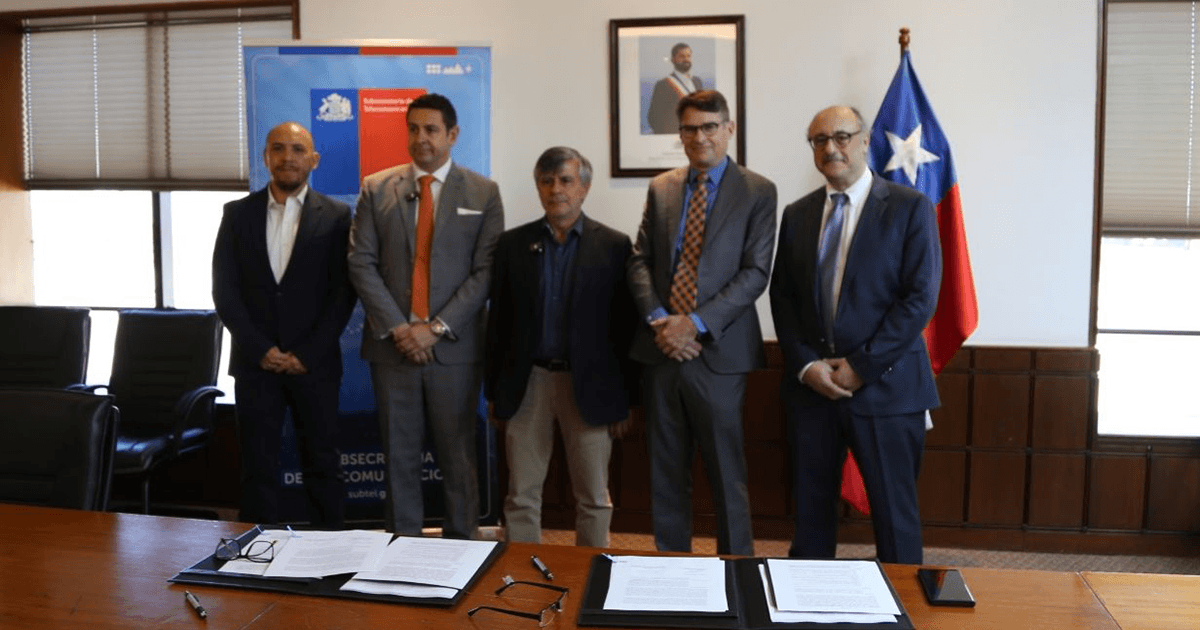
The study will examine the technical, legal, economic, financial, environmental, social, governance, and geopolitical issues surrounding the implementation of a submarine fiber-optic cable system between continental Chile and Antarctica to serve the dozens of international missions scattered among the South Shetland Islands and the Antarctic Peninsula. This digital bridge to link nations with scientific bases in Antarctica will benefit both the well-being of the resident scientists and the scientific research they conduct.
“Pioneer Consulting is continuing its mission to provide its team’s global expertise in communications and undersea fiber optic cables, helping CAF and Chile to contribute to the global scientific efforts in understanding the earth’s climate systems, the unique ecosystem of Antarctica, and the dynamics of ice sheets, which include study in geology, life sciences, and physical sciences,” says Pioneer Consulting Managing Partner Howard Kidorf.
“This project is a direct reflection of Salience’s mission—to transform countries and communities through digital and ICT advisory. Leveraging our experience across global projects, we aim to provide practical, results-driven recommendations to Subtel, ensuring that this initiative is both financially viable and environmentally sustainable. A true transformational project for the region, connecting the last unconnected continent is a historic milestone, and Salience is proud to contribute to Chile’s vision,” said Ivan Skenderoski, Managing Partner of Salience Consulting.
To spread digital connectivity to its population, the government of Chile has already installed high-capacity fiber-optic systems extending 3,000 kilometers (1,800 miles) from Santiago to Puerto Williams, the world’s southernmost city. The extension of this network across the Southern Ocean will allow Chile to serve the rich diversity of scientific investigations in Antarctica.
The Undersecretary of Telecommunications, Claudio Araya, confirmed that “this study will allow us to know if the conditions exist to carry out this project. Telecommunications and digitalization are the driving forces of development in our country and in the entire region. In this sense, Chile is building a solid technological platform that will allow, among other things, the connection of the Antarctic territory with the rest of the world.”
“One of the characteristics of the Magallanes region is its remoteness and isolation, which is why it is essential for us to be connected,” said Jorge Flies Añón, Regional Governor of Magallanes and Chilean Antarctica. “Today, we have our four provincial capitals with 5G, and our dream is to jump to Antarctica and be able to reach its peninsula so that Chile can serve the 23 countries that work with us on the White Continent. This is tremendous news for us.”
The study is expected to conclude by April 2026.