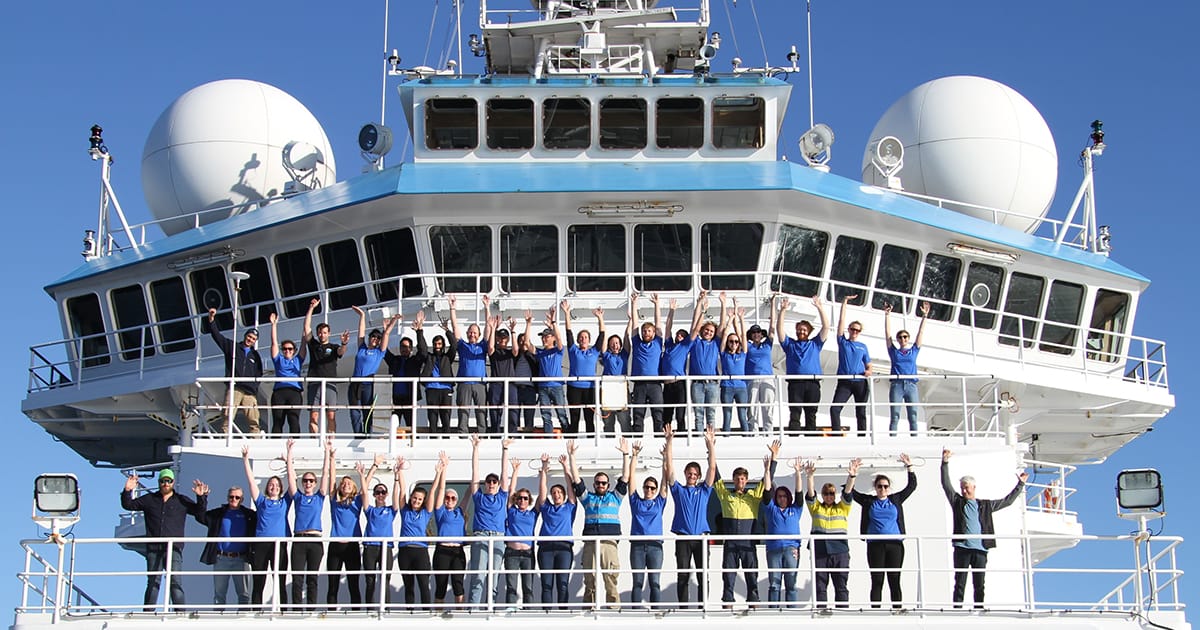
The 10-day voyage is part of an innovative tertiary sea training program called CAPSTAN, the Collaborative Australian Postgraduate Sea-Training Alliance Network, which is being delivered in partnership with Australia’s national science agency, marine science industries, universities, and government.
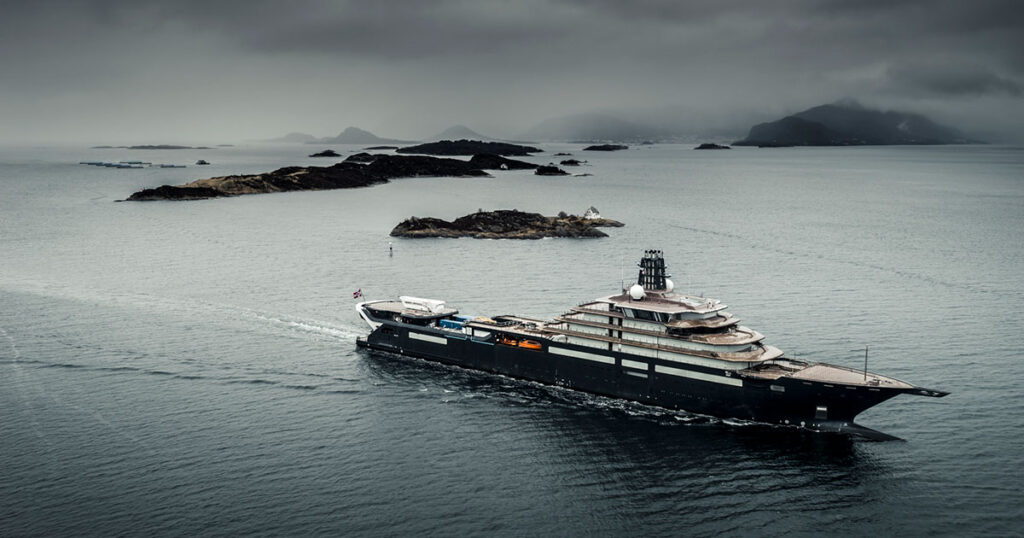
The CAPSTAN program addresses a gap in how marine science education is delivered in Australia and will expose marine science students from 16 Australian universities to life and work onboard CSIRO’s advanced ocean research vessel.
It offers a national approach to applied teaching and learning excellence in marine science and wider science, technology, engineering, and mathematics (STEM) disciplines.
CAPSTAN Director, Dr. Pier van der Merwe from the University of Tasmania’s Institute for Marine and Antarctic Studies (IMAS), said the sea-going experience was invaluable for developing Australia’s next generation of marine experts.
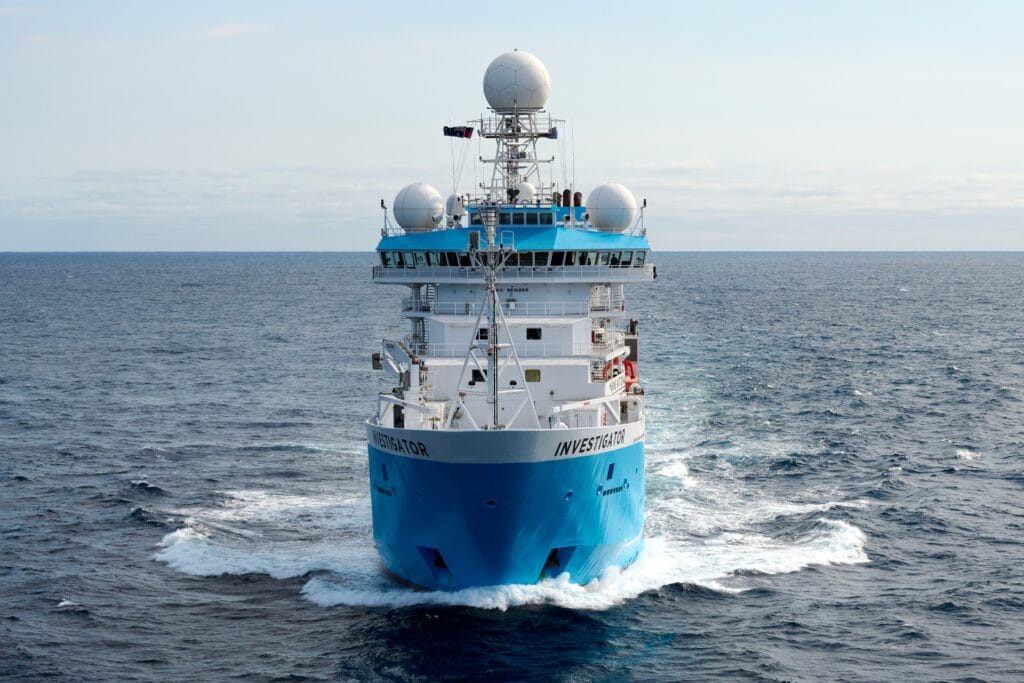
“Nothing compares with hands-on learning. For future marine scientists, this is where the action happens—where theory is put into practice and where concepts sink in because students can observe the ecosystem with their own eyes,” Dr. van der Merwe said.
“They can feel cold wind on their face and relate that to sea surface temperature data streaming into the ship, or experience the sun rise over the horizon and watch photosynthetically active radiation sensors detect that.
“Being at sea is where it all makes sense for marine science students.”
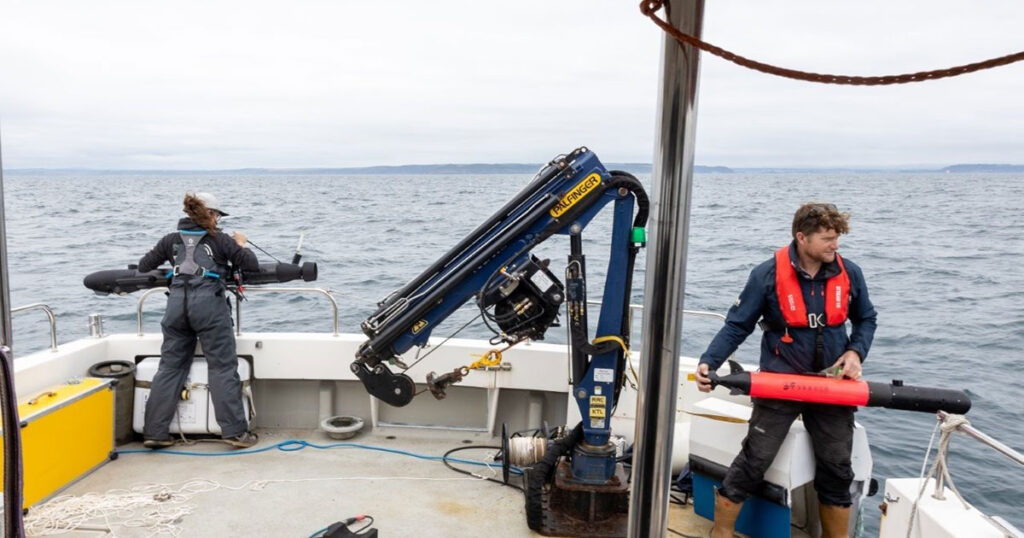
The voyage will immerse students in the full suite of marine science operations, from atmospheric and oceanographic studies to surveys of deep-sea ecosystems and marine life.
Students will be involved in seafloor mapping and sediment sampling and will also participate in the search for a historic shipwreck off the northwest coast of Tasmania.
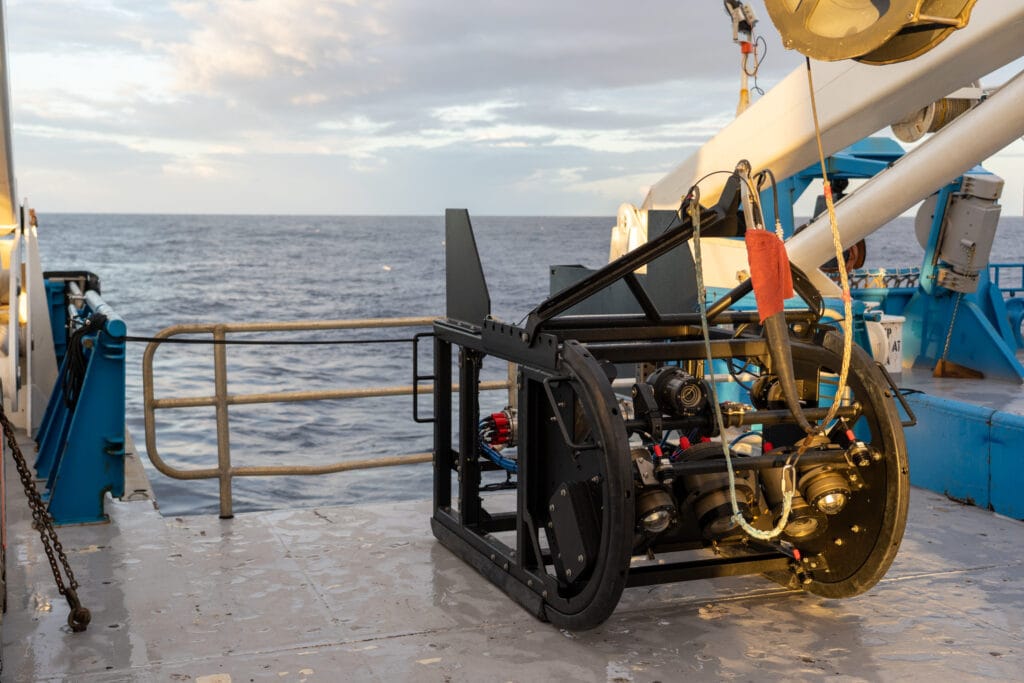
CAPSTAN Voyage Manager Dr. Ben Arthur from CSIRO said students will get experience with RV Investigator’s multidisciplinary science systems, equipment, and operations over the course of the voyage.
“CAPSTAN offers an incredible learning opportunity for students, and they’ll be involved in a wide range of operations to collect data and samples to support real-world research projects that address real-world challenges,” Dr. Arthur said.
“The training program is designed to be like the multidisciplinary research we deliver during each of our science voyages so that students get a wide exposure to science operations at sea.
“They’ll get a bit of everything and even receive training in some traditional maritime skills such as knot tying.”
CAPSTAN students’ background studies range from biological and chemical oceanography to geoscience and engineering.
Women make up two-thirds of students on the voyage.
CAPSTAN student Kim Schwindke said she was excited to have the chance to learn from and work alongside the other students, trainers, technicians, and crew.
“With everyone on the voyage coming from such diverse backgrounds, and with the extensive experience from those onboard, it feels like a huge opportunity to bring together different disciplines and perspectives and build relationships and shared knowledge,” Ms. Schwindke said.
“It really feels like that will be so powerful in shaping the future of our oceans.”
The voyage is the first in the CAPSTAN program following the completion of a pilot program from 2017 to 2020.
Two more CAPSTAN training voyages are planned for the upcoming RV Investigator voyage schedules, and the program lays the foundation for the further development of a national integrated training approach.
“We hope that students will ‘seas the opportunity’ that CAPSTAN offers, and we look forward to seeing them leading research projects on RV Investigator and other research vessels in the years ahead,” Dr. Arthur said.
The CAPSTAN voyage departs Hobart on Saturday, March 8, will complete a circumnavigation of Tasmania over 10 days, and then finish back in Hobart on Monday, March 17.