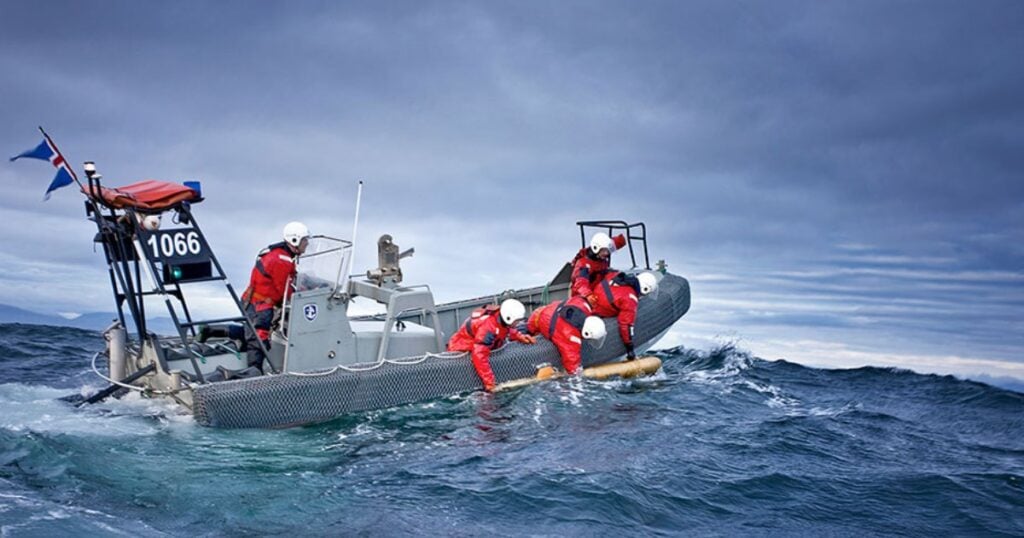
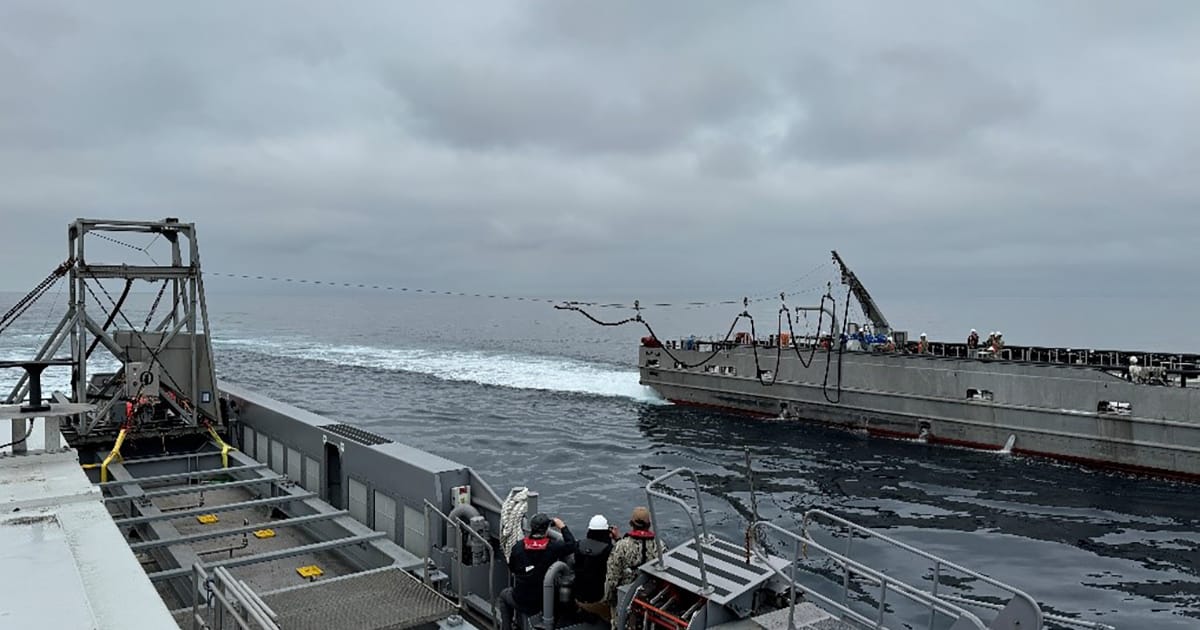
Fueling at sea (FAS) for USVs presents a problem that needs to be solved, as current FAS solutions use personnel to handle lines and hoses on the platform being refueled. Requiring personnel on the USV for the operation adds significant constraints on USV design and operations, as the vessel must then be designed with considerations for the safety of the humans on board, even if for a short period of time. It can also be risky and sometimes dangerous to transport personnel to a USV in rough seas or high winds.
The NOMARS FAS approach is designed for operation without any humans on the USV—but does have humans on the refueling vessel. The FAS approach mirrors a standard refueling concept of operations (CONOPs) as closely as possible to familiarize the Military Sealift Command (MSC) oiler crew and reduce their learning curve. DARPA has worked closely with MSC’s Taluga Group throughout the NOMARS program to advise on the development of the FAS system and CONOPs.
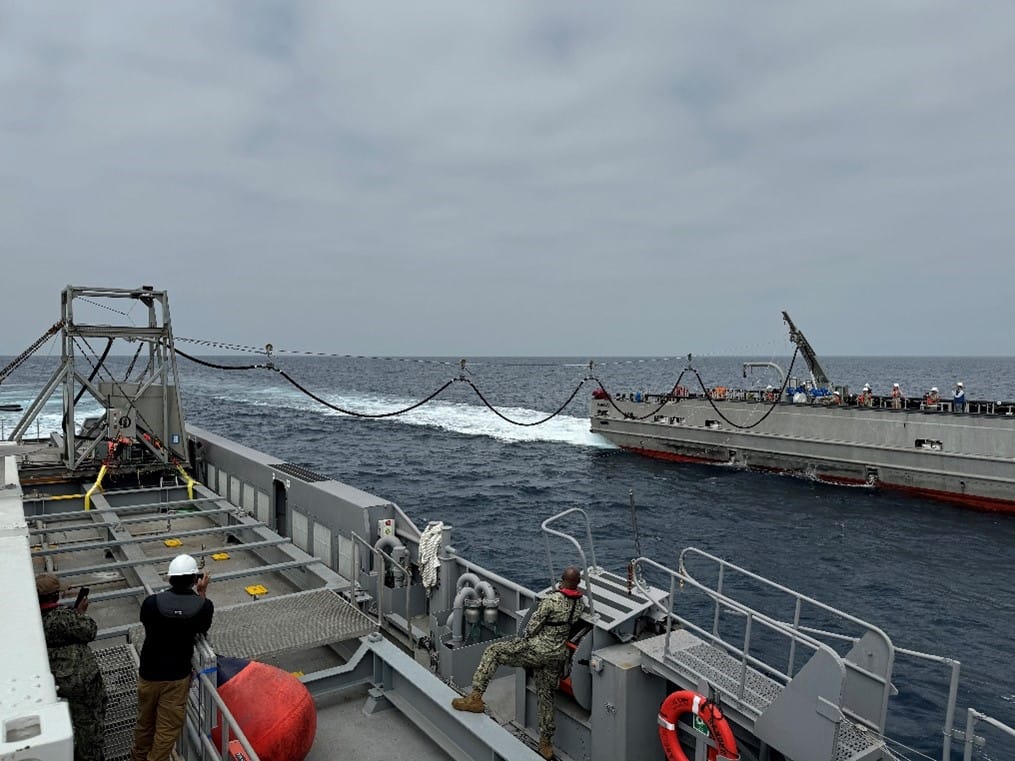
For the recent test, USV Ranger carried a receiving station representative of the system that will be on the NOMARS USV Defiant, and USV Mariner carried a refueling “mini-station,” custom-designed by NOMARS prime contractor Serco Inc. While there were personnel aboard both vessels during the event, no people were involved with operations on the receiving side.
The team demonstrated all parts of the system CONOPs while underway, including passing the lead line to the refueling side, passing and connecting the refueling probe to the USV side, and pumping water. This was the first on-water test of the system, and all parts of the operation were successfully demonstrated. DARPA could not have accomplished this test without the support and partnership of Navy PMS-406 and USVRON-1, both of whom contributed personnel and resources.
The next FAS test will take place with NOMARS USV Defiant during her sea trials period. Defiant is a 180’, 240-metric-ton lightship currently nearing completion of construction and is scheduled to depart for her multi-month at-sea demonstration in spring 2025.