Barnacle’s selection as the study’s approved data collection platform marks a significant milestone for the Victoria, BC-based technology company—and a validation of its military-grade hardware, offline-first architecture, and high-frequency data capture in one of the most demanding research environments in naval science.
About the NATO Study
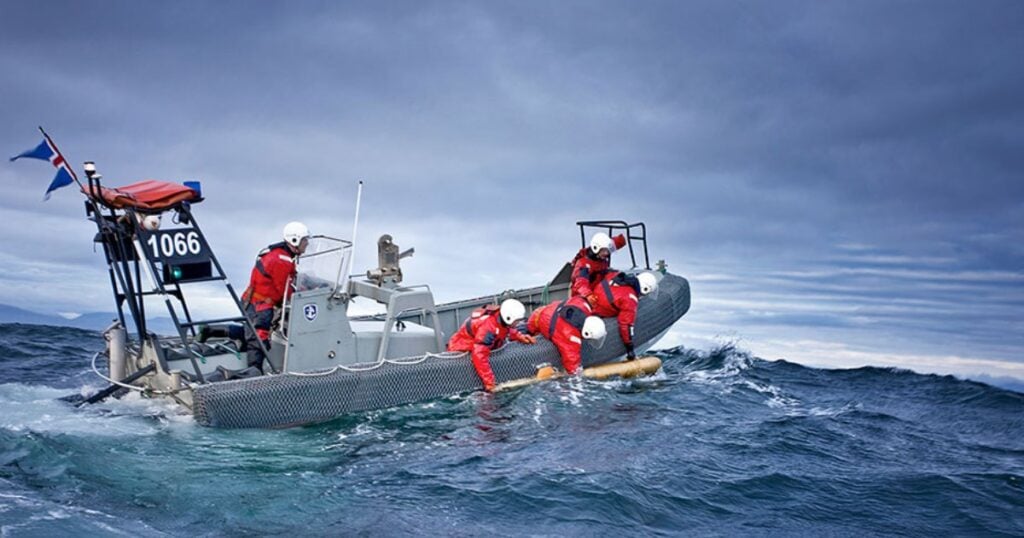
High-speed boat operators routinely face high, rapid-onset impacts of 3–25+ g, causing fatigue, musculoskeletal injury, and traumatic brain injuries (TBIs). The NATO HFM RTG-419 Study standardizes the collection of acceleration data from both vessels and operators to link impact characteristics and identify harmful exposure thresholds across the full range of sea conditions.
Running from December 2025 to December 2028 across 16 participating nations—including Sweden, Norway, Denmark, Finland, Germany, the United Kingdom, France, Belgium, Ireland, Portugal, Italy, the Netherlands, Canada, and the United States—the study aims to establish common NATO standards for operator safety, exposure limits, and real-time operator guidance systems.
Study objectives include establishing the incidence of impact-induced injuries and cognitive symptoms among operators, identifying what impact levels are sustainable versus injurious, and developing smart signal solutions for real-time operator guidance in the field.
The BRNKL NATO Study Package
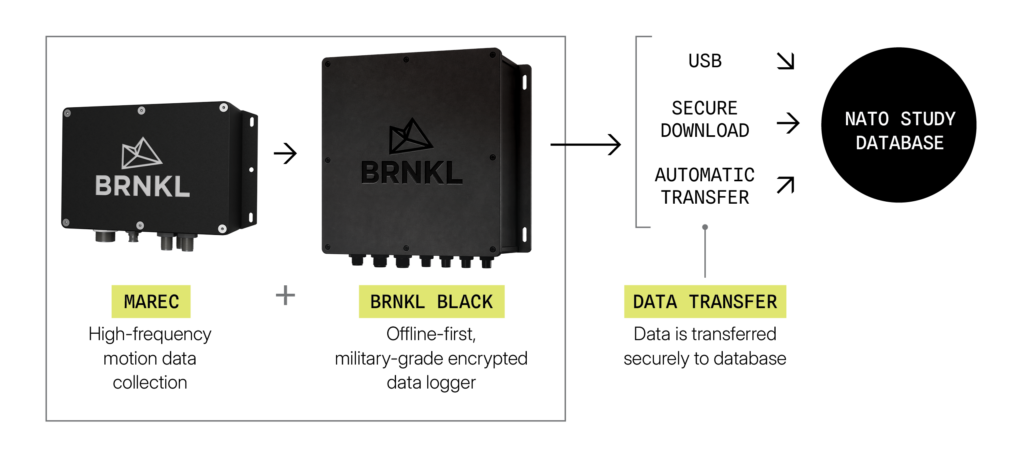
BRNKL Black, paired with MAREC, provides the complete data collection infrastructure for the study. MAREC captures high-resolution, high-frequency motion data using connected 3-axis accelerometers—enabling whole body vibration (WBV) measurement, shock and impact analysis, and high-frequency motion capture. That data is transmitted to BRNKL Black, where it is fused with vessel data and GPS to create a single, time-synchronized mission record—with no internet or cloud connection required.
The NATO Study Package is available in two configurations:
- Fixed Install: BRNKL Black and MAREC mounted directly onto the vessel, connecting into NMEA 2000, IP networks, and other onboard systems
- Portable: BRNKL Black and MAREC, along with a WiFi router, mounted into a waterproof hard-case (16.7″ x 13.4″ x 6.8″) that can be moved between vessels with no setup required
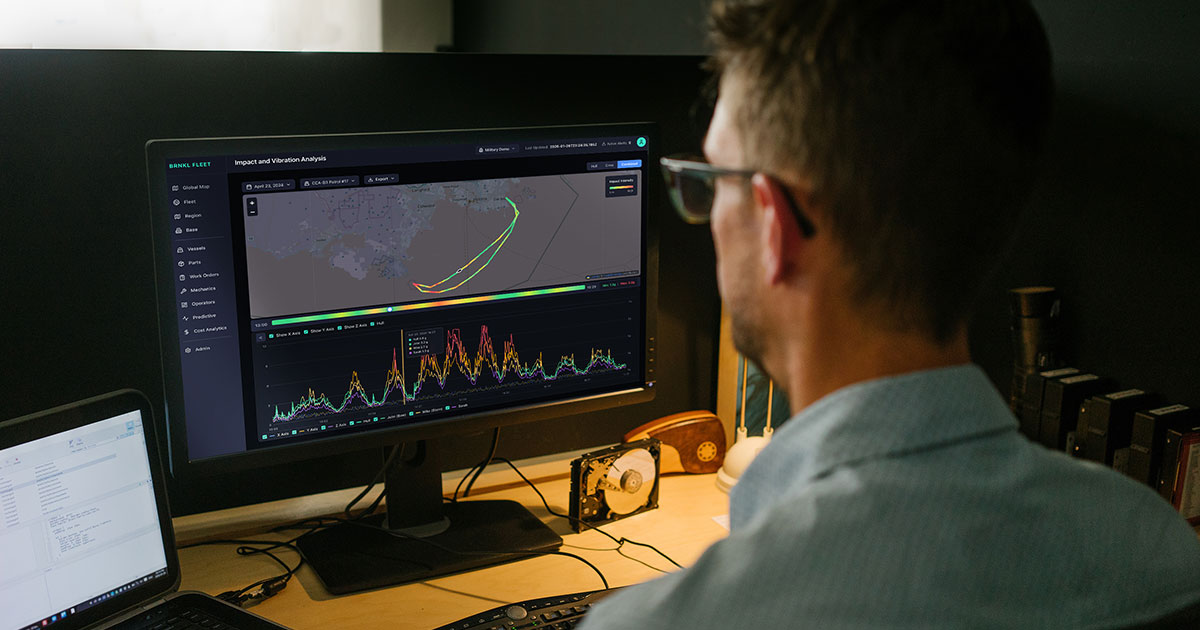
For fleet-wide analysis and reporting, BRNKL Fleet ingests and contextualizes data from BRNKL Black and MAREC deployments. BRNKL Fleet transforms raw vessel and operator data into actionable readiness intelligence—providing vibration and impact analysis, condition-based maintenance alerts, operator exposure dashboards, and automated trip reporting across entire fleets. Deployable on-premise, in government cloud, or fully offline.
“Being approved as the technology platform for the NATO HFM RTG-419 study is a defining moment for Barnacle Systems. This research has the potential to establish the standards that protect naval operators across the alliance for decades to come — and the fact that BRNKL is the platform trusted to capture that data speaks directly to what we’ve built: hardware that performs without compromise, in the most demanding environments, without ever requiring a cloud connection. We’re honored to play a role in protecting the people who operate these boats,” said Brandon Wright, P.Eng., Founder & CEO, Barnacle Systems Inc.