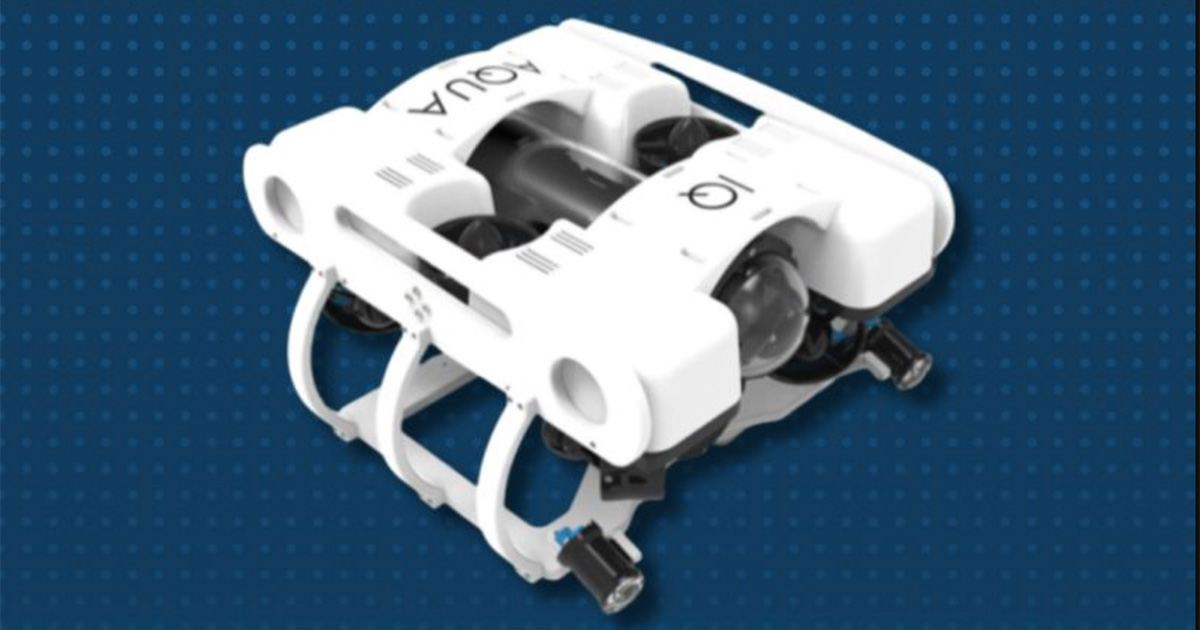
The IQ Aqua marks the company’s entry into underwater robotics, extending Zena Drone’s IQ autonomous product family, which currently spans air, land, and water surface drone operations, to underwater operations. The IQ Aqua prototype has demonstrated baseline autonomous navigation and underwater mobility in controlled environments. The Company is now manufacturing several more prototypes to conduct outdoor underwater field testing in the US and in other international locations to commence over the coming months.
“ZenaDrone IQ Aqua is positioned to address one of the most urgent gaps in modern maritime defense: autonomous mine detection. Mines represent an asymmetric threat that is inexpensive to deploy and extraordinarily expensive to counter using traditional manned methods, and we are building a technology specifically designed to detect them,” said Shaun Passley, Ph.D., ZenaTech CEO. “We intend to change that calculus, enabling defense forces to detect and respond to underwater mine threats without putting divers or manned vessels at risk. Combined with our IQ Glider launch station and interceptor drones, the IQ Aqua will give defense forces an integrated above- and below-surface maritime defense architecture, while also addressing significant commercial demand for autonomous underwater inspection and surveillance across the offshore energy and port security sectors.”
Intended future IQ Aqua defense applications include mine detection and countermeasure support, covert underwater intelligence, surveillance, and reconnaissance (ISR), and port and harbor threat detection. The current prototype operates with a tethered, battery-powered configuration. The company is currently developing the next generation, intended to be tether-free and GPS-independent, enabling fully autonomous operation in contested and GPS-denied underwater environments.
In terms of commercial use, the ZenaDrone IQ Aqua’s design is suited for autonomous inspection of offshore energy pipelines, subsea cables, and maritime infrastructure, reducing reliance on costly diver deployments and manned vessel operations. Gulf Cooperation Council nations—including the UAE, Saudi Arabia, and Qatar—represent a priority future commercial market given their extensive offshore hydrocarbon assets, major port facilities, and coastline protection requirements.
The global underwater drone market is projected to reach over $16 billion by 2034, according to Global Market Insights, with the defense and security segment representing the fastest-growing application category. ZenaTech is targeting future US defense customers, NATO partners, and Gulf Cooperation Council nations as the IQ Aqua program advances. The Company will provide updates on future development milestones as they are achieved.