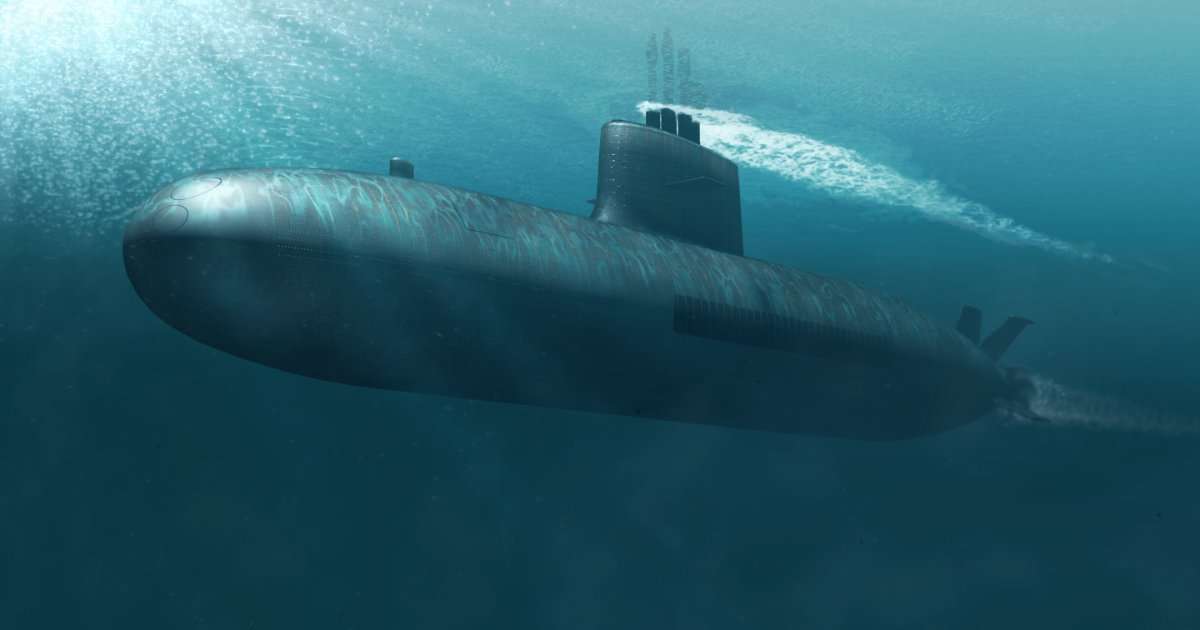
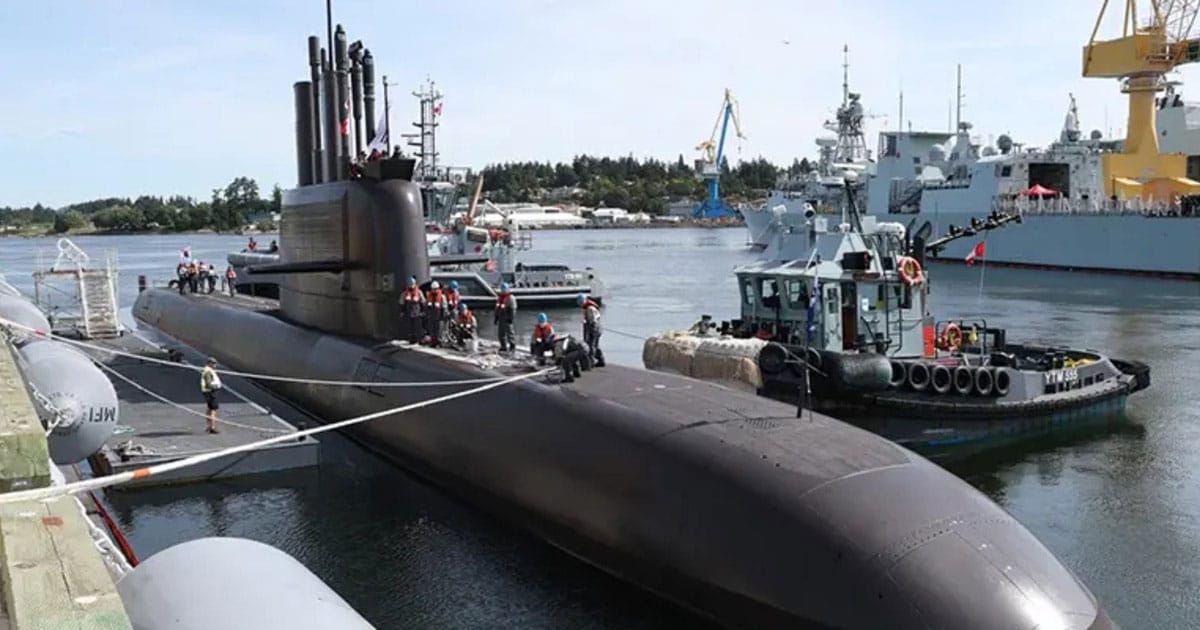
The KSS-III submarine began its two-month, 14,000 km voyage from Jinhae Naval Base in South Korea to Canada on March 25, 2026, making logistical stops in Guam and Hawaii along the way. In Hawaii, two RCN submariners embarked and joined the ROK Navy crew for the voyage onward to Victoria, highlighting the operational integration and partnership between the two navies.
The ROK Navy KSS-III Dosan Ahn Changho submarine, along with the ROK Navy Daejeon frigate that also made the voyage, will participate in joint exercises with the RCN, demonstrating their ability to fully and seamlessly operate with NATO allies such as Canada.
Importantly, Hanwha Ocean has the fastest delivery schedule for CPSP, able to deliver four KSS-III submarines to fully replace Canada’s current Victoria Class fleet before 2035 if on contract in 2026. Earlier retirement of the Victoria Class fleet will result in estimated savings of approximately $1 billion on maintenance and support costs. The additional eight submarines will be delivered at a rate of one per year, meaning the entire fleet of 12 submarines will be delivered to Canada by 2043. No other option can come anywhere close to this delivery schedule.
Hanwha Ocean’s earlier and accelerated schedule also means job creation, trade, and investment in Canada start right away, not in several years as would be the case with other options. This includes construction of maintenance, repair, and overhaul (MRO) facilities on both coasts, training facilities, technology transfer, localization of production, supply chain integration, and other partnerships and collaborations, including:
- Partnership with Canada’s Automotive Parts Manufacturers’ Association (APMA) to establish a new Canadian entity that will produce military and industrial vehicles in Canada. This venture, which is fully contingent on Hanwha being selected for CPSP, will sustain and create tens of thousands of automotive sector jobs for Canadians, and the vehicles will be fully produced in Canada with ‘Made in Canada’ parts and materials, including Canadian steel and aluminum.
- Hanwha’s economic proposal for Canada has increasingly emphasized the localization of key underwater warfare and sustainment capabilities in Canada. As part of this effort, Hanwha Ocean has expanded partnerships with Canadian companies involved in sonar systems, underwater sensors, naval combat systems, and submarine support technologies, including Geospectrum Technologies, Ultra Maritime, OSI Maritime Systems, and Curtiss-Wright INDAL Technologies. These partnerships are intended to support the development of Canadian-based capabilities tied to sonar systems, underwater surveillance technologies, torpedo-related support infrastructure, integration, maintenance, repair, and long-term life cycle sustainment for a future Canadian submarine fleet.
- Hanwha’s plan to establish the Hanwha Arctic and Defence Innovation Centre (HADIC) in Canada reflects the company’s broader emphasis on advanced defense research and development (R&D) and future technology collaboration. HADIC will serve as a hub supporting defense technology development across areas such as AI-enabled systems, autonomy, digital engineering, advanced manufacturing, simulation, naval systems, aerospace technologies, and next-generation defense applications. HADIC reflects Hanwha’s longer-term vision for collaborative innovation involving Canadian universities, research institutions, technology firms, and industrial partners.
Prior to some of the additional partnership announcements Hanwha has made in recent weeks, the proposal that the company submitted on February 27 already contained a very robust industrial and economic package. An analysis completed by KPMG found that, for the period from 2026 to 2044, it represents $60 billion in economic opportunities for Canada, would support an average of 22,500 full-time employees annually, and would generate $94 billion in GDP across Canada.
Hanwha and Korea are committed to building an even more robust and long-term partnership with Canada and Canadian industry in several strategic areas, including energy, critical minerals, aerospace, space, shipbuilding, advanced technologies, advanced manufacturing, and others. Creating jobs and economic growth while accelerating Canada’s defense capabilities and enhancing cooperation, partnership, and supply chains between Canada and Korea, the relationship is becoming increasingly important in today’s world and supports the objectives of Canada’s Indo-Pacific Strategy.
Hanwha has teaming agreements, MOUs, and contracts in place with more than 70 Canadian companies and institutions, including Algoma Steel, AtkinsRéalis, Cohere, CAE, MDA Space, Ontario Shipyards, PCL Construction, and Telesat, as well as with Dalhousie University, Mohawk College, University of New Brunswick, and University of Toronto. The full list is here: www.kss-iii.ca/canadian-partners/
“Canada has been looking for different friends and allies, other ‘middle-powers’, to diversify investment, trade, and defense capabilities. South Korea has opened its arms to Canada and is taking every step possible to enhance and expand a relationship that started 75 years ago when Canada sent more than 26,000 troops to help defend our nation. The Canadian Patrol Submarine Project represents a new platform for Canada and South Korea to build from together—linking our governments, armed forces, navies, and defense sectors closely together for decades,” said Lim Ki-mo, Ambassador of the Republic of Korea to Canada.
“The future of Canada’s defense industrial strategy is not simply about acquiring military platforms—it is about building trusted, long-term industrial partnerships that strengthen sovereign capability, create high-quality jobs, and support Canadian industry across the country. Hanwha Ocean is committed to becoming a trusted long-term partner for Canada through local investment, industrial cooperation, workforce development, and sustained economic engagement that supports Canada’s ‘Buy Canadian’ approach,” said Charlie SC Eoh, President, Hanwha Ocean.