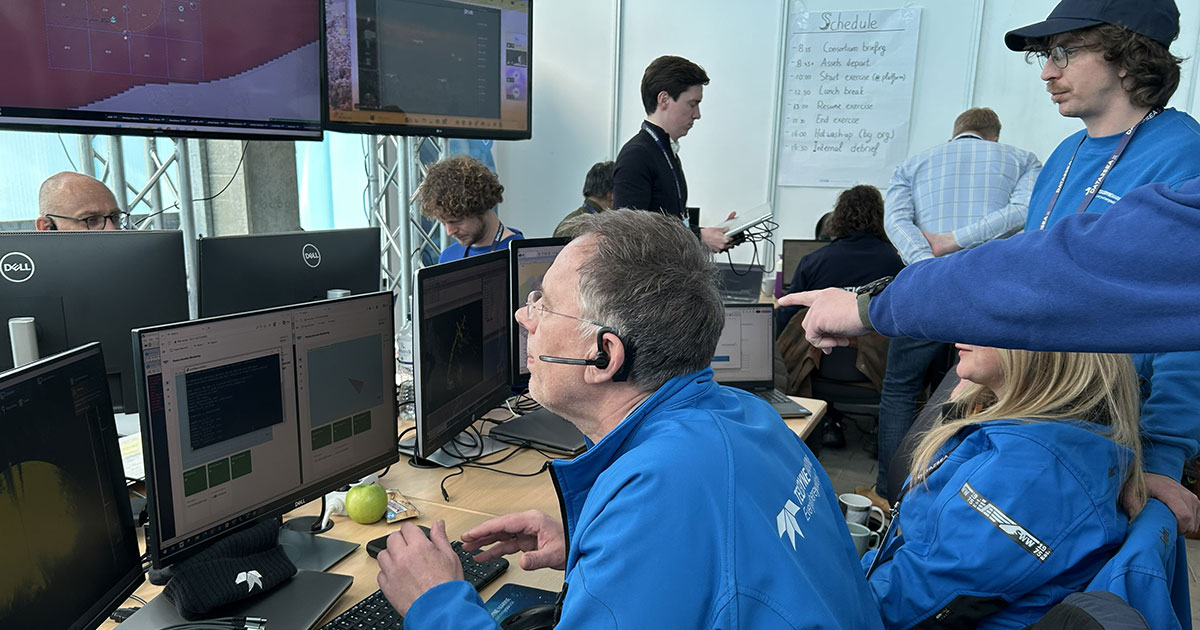
In collaboration with the German Navy and hosted by the Rostock Institute for Ocean Technologies, this year’s DATA2SEA program brings together a range of sensing technologies in realistic operational conditions to explore how real-time data integration can enhance maritime security operations. The exercise shifts the focus beyond individual stand-alone system performance to the integration of multiple data streams, reflecting a key priority for maritime security operators.
Building on its successful participation in previous SeaSEC exercises, Teledyne will take part in a number of challenges, deploying a combination of passive acoustic monitoring, active sonar, and surface surveillance technologies across cable, platform, and harbor protection environments. Teledyne Marine, in collaboration with Teledyne FLIR, will contribute with integrated above- and below-surface surveillance capabilities across these scenarios.
Teledyne’s participation forms part of several consortia as a sensor provider, highlighting the growing importance of cross-industry collaboration in delivering integrated maritime security capability. By combining its technologies with those of partner organizations, Teledyne will demonstrate how coordinated sensing approaches can strengthen monitoring and protection of CUI.
“Protecting critical underwater infrastructure increasingly depends on the ability to connect and interpret data across multiple domains,” said Morten Bernsdorf, Project Lead, Teledyne Marine. “SCWD2S provides a valuable platform to demonstrate how integrated sensing can enhance maritime situational awareness at scale, while bringing together industry partners to collaboratively address shared challenges and showcase what Teledyne’s technology is capable of in real-world conditions.”
SeaSEC Challenge #5: Platform Protection
The platform protection challenge requires participants to locate, identify, track, and report any threats to an offshore platform and its restricted zone.
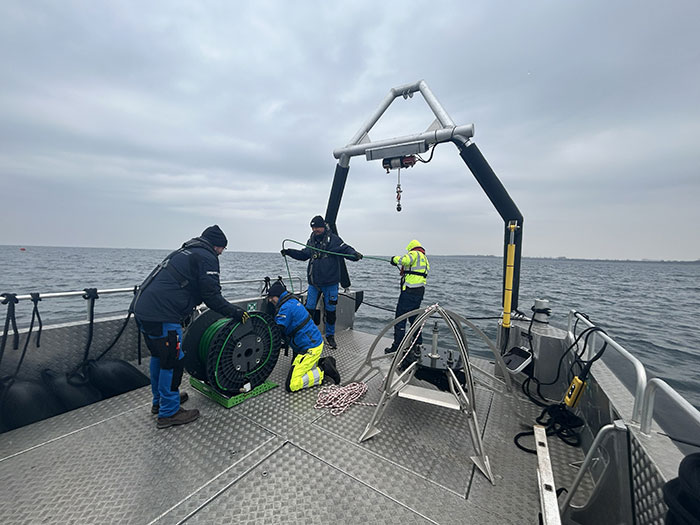
In the Nienhagen area, two Teledyne Marine passive acoustic monitoring (PAM) nodes will be installed around the offshore platform to provide continuous underwater acoustic surveillance and early detection of potential intrusions. When an event is detected, a seabed-mounted SeaBat F50 forward-looking sonar can be turned on to visually investigate and confirm activity around the platform.
In addition to this, in collaboration with Stormborn, their unmanned surface vessel (USV) will be deployed and equipped with a PAM node as well as Teledyne Marine’s SeaBat F50 and SeaBat T51 multibeam imaging sonars, enabling mobile detection and scanning of intruders or underwater objects on the seabed and in the water column. This solution highlights the growing role of unmanned and autonomous systems in enhancing maritime security and awareness.
A shore-based Teledyne FLIR thermal imaging camera provides monitoring of surface activity, completing a full multi-domain situational awareness picture.
SeaSEC Challenge #6: Harbor Protection
This final challenge requires the detection of all traffic and reporting any intruder crossing the harbor entrance.
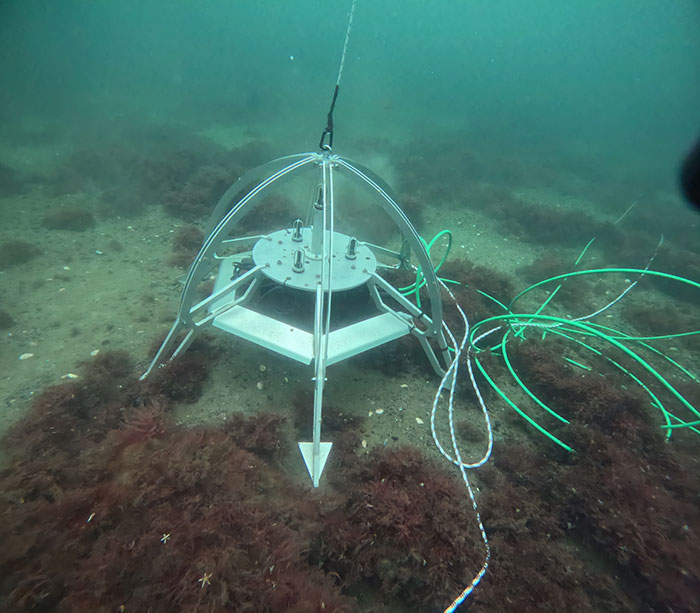
Taking place at ‘Sportschule Warnemünde’ harbor, Teledyne will again deploy a multi-layered surveillance solution as part of Consortium C. A passive acoustic monitoring system will be deployed on the seabed of the harbor area to detect underwater intrusions such as divers and unauthorized AUVs and ROVs. Instead of sending data in real time, the Teledyne team will point out a bearing where unusual underwater acoustic activity is happening. This direction is then checked with the C2 system and compared with radar or AIS tracks to determine whether it’s a target or a known friendly target.
To enhance subsurface awareness, the forward-looking Teledyne Marine SeaBat F50 sonar will provide real-time visualization of underwater activity, supporting rapid assessment and confirmation of potential threats.
Complementing this underwater capability, a Teledyne FLIR infrared camera will be deployed on land to monitor surface activity, providing wide-area visual coverage. Together, these systems will deliver a comprehensive above- and below-water surveillance capability, supporting persistent situational awareness throughout the exercise.
Through its involvement in SCWD2S, Teledyne will demonstrate how its integrated sensing technologies deliver intelligence for the effective protection of CUI, while contributing to collective learning across the maritime security community. With increasing focus on subsea infrastructure protection across Europe, exercises such as SeaSEC play an important role in advancing the development and deployment of next-generation security solutions.
The SeaSEC Challenge Weeks 2026 DATA2SEA takes place from April 13–24, conducted in the Baltic Sea, within the Mecklenburg Bight at the Digital Ocean Lab and in the naval base Rostock. Founded in December 2023, the initiative brings together technology providers, infrastructure operators, public authorities, industry, and research partners to collaborate in realistic maritime test environments, accelerating the development and deployment of innovative security and defense solutions. More information on SeaSEC is available here: www.seasec.org/challenge-weeks/
Teledyne Marine, for more info, visit: www.teledynemarine.com