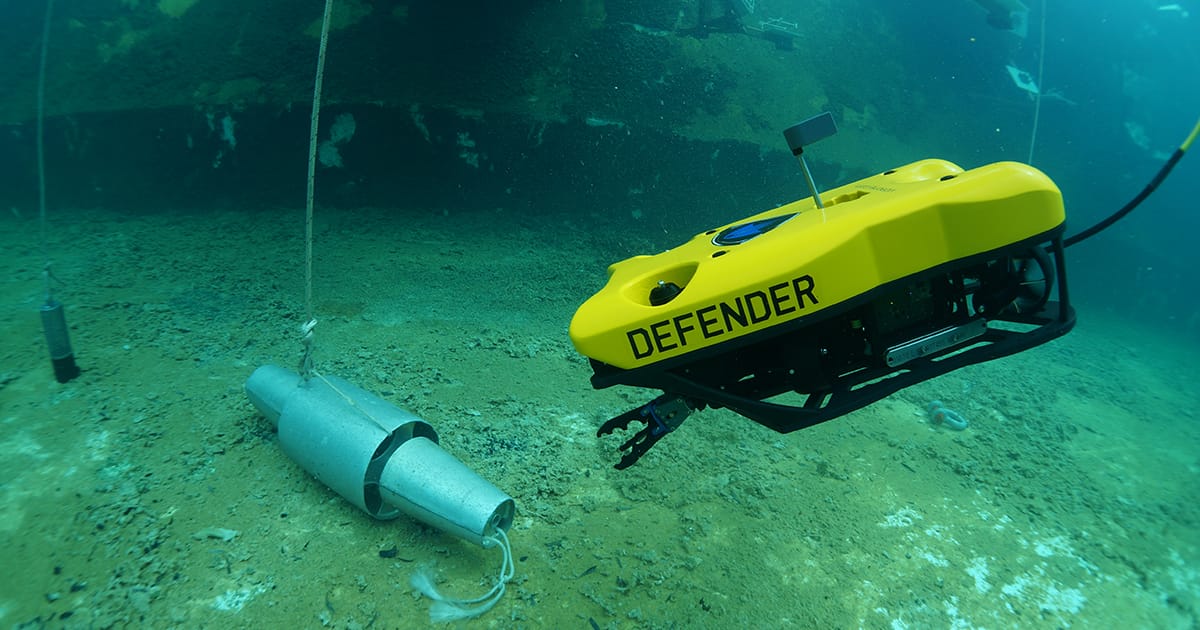
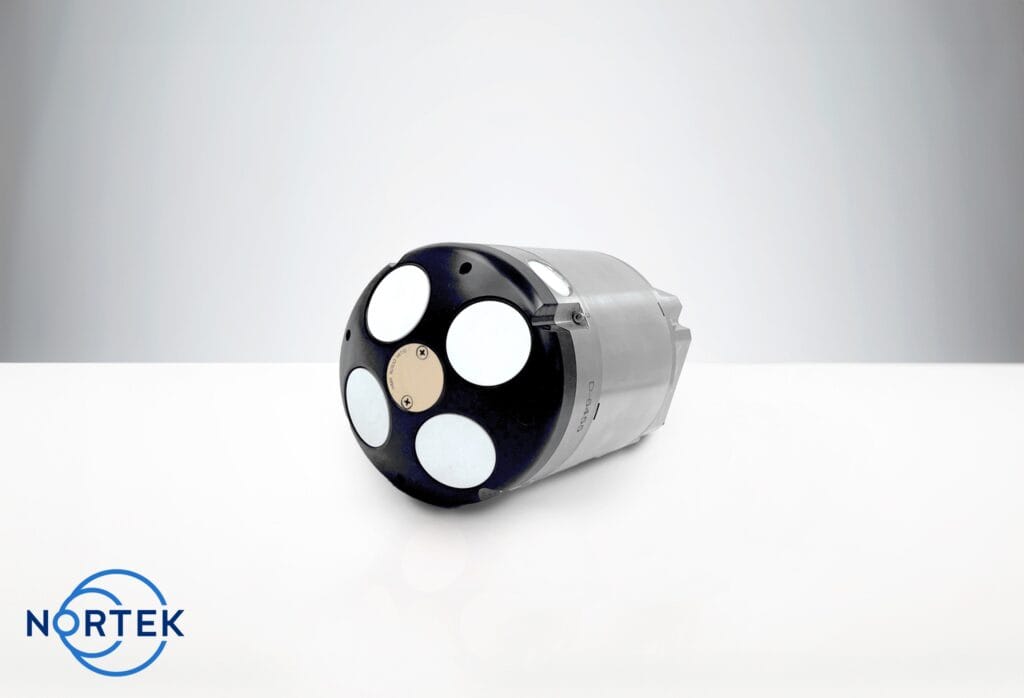
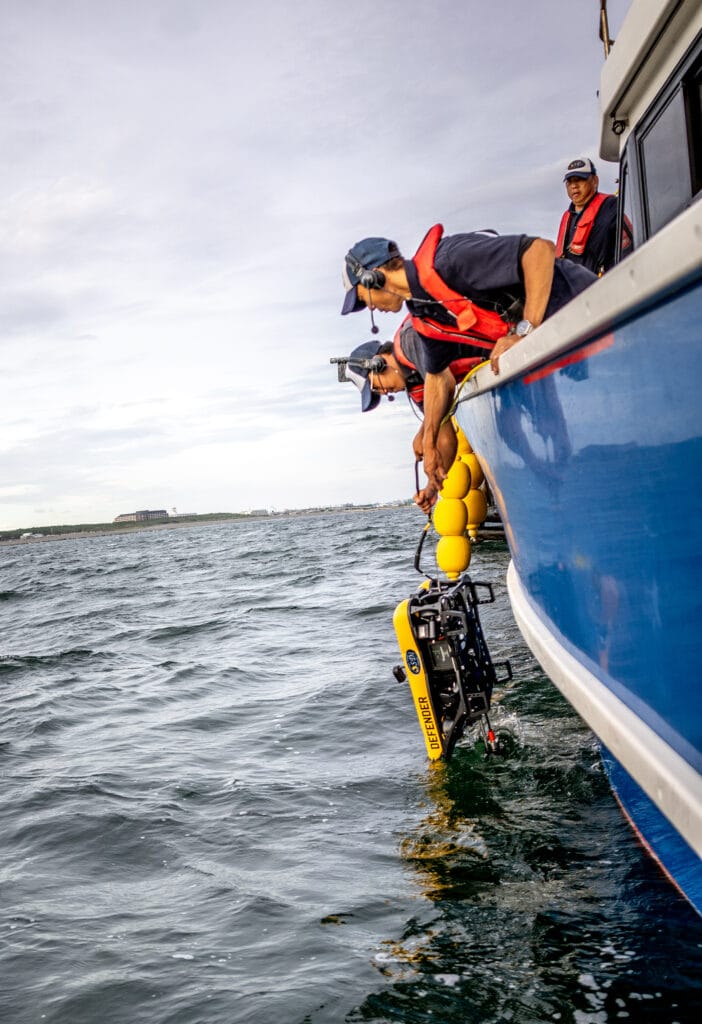
Pennsylvania-based VideoRay, an AV company, is the world’s leading manufacturer of underwater robotic systems. Their Defender ROV is trusted and proven in defense applications and has been selected by the US Navy to support the Navy’s Explosive Ordnance Disposal Underwater Vehicle Program and the MESR (US Navy’s Maritime Expeditionary Standoff Response) program of record. For this application, the Defender relies on Nortek’s DVL 500 Compact for navigation and vehicle control, crucial functions during complex and high-stakes missions.
Reliable Navigation Sensors: Crucial for Vehicle Performance
Underwater operations are increasingly relying on high-performance uncrewed and autonomous systems to perform tasks that previously put divers in harm’s way. Reliable navigation sensors are key to making this transition possible.
The Defender uses Nortek’s DVL 500 Compact as the core of the vehicle’s navigation system, providing pilots with pinpoint positioning in environments where GNSS is unavailable. From station keeping to advanced mission profiles such as automated waypoint following, it is the enabling technology that allows operators to push ROVs into missions once thought to be beyond reach.
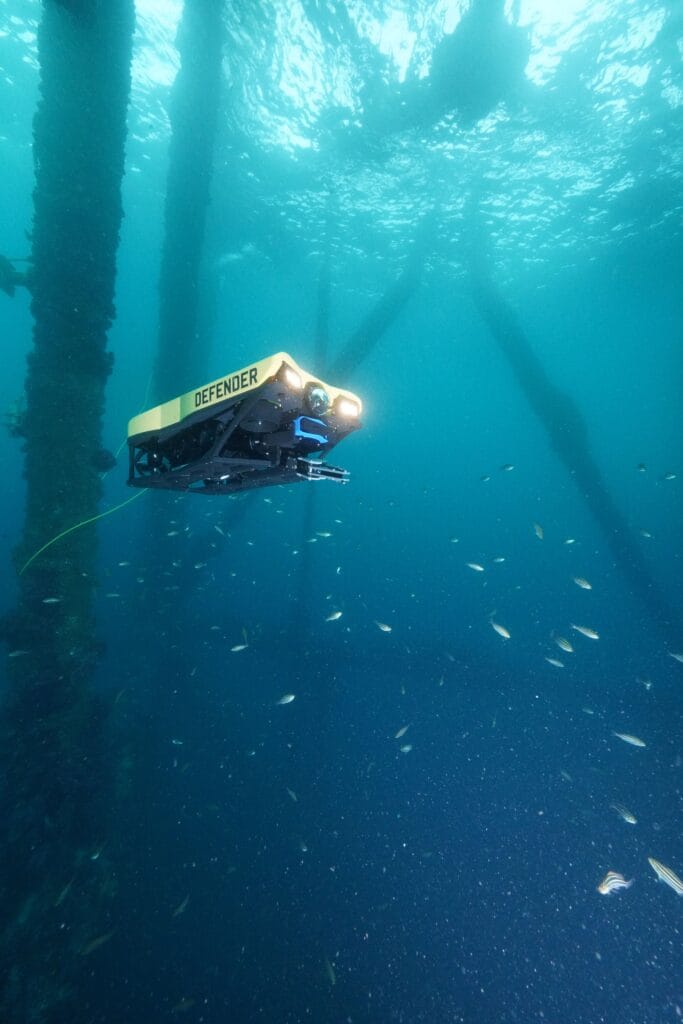
“The DVL is arguably one of the most important sensors we have in the system,” said Andy Goldstein, Product Line Chief Engineer at VideoRay. “As we move forward and add more autonomy, like coupled manipulation and one-click inspections, the performance of the DVL becomes more and more critical.”
Trusted Performance in Defense Applications
ROVs like the Defender are frequently used in Explosive Ordnance Disposal (EOD) missions: locating and safely neutralizing explosive material, such as underwater mines, in high-risk areas in contested environments.
Eric Wirstrom, VideoRay’s Vice President of Sales and Business Development, who previously worked as an EOD officer for the US Navy, emphasizes the importance of replacing human divers with robotic systems when possible, in dangerous underwater environments.
“The vehicle, equipped with advanced sensors and highly accurate navigation, allows military personnel to quickly and reliably detect threats, often at depths that are unreachable by manned solutions like diving,” he explained. “We’re able to provide that reach and standoff to enable dangerous missions to be executed.”
Moving Underwater Technology Forward
As both ROV and sensor technology have developed over the years, VideoRay and Nortek have worked closely together to ensure top performance. While the Defender originally used the DVL 1000, VideoRay required a sensor with a longer range and better performance in a noisy environment.
Nortek’s DVL 500 Compact offers the same housing as the original DVL 1000 but offers more than twice the range, as well as additional features, including noise shielding. This made it the ideal solution for the Defender.
This ability to be agile and quickly develop technology to meet industry needs exemplifies the collaborative and innovative approach both Nortek and VideoRay value highly.
Collaboration that Scales
The Defender is the industry-standard choice for EOD missions and other high-stakes defense applications because of its proven reliability, including the performance of its navigation system. The industry is moving increasingly towards the use of uncrewed and autonomous systems in hazardous and high-risk environments, and innovation and dependability will continue to be key.
As the ocean economy expands and subsea missions grow more complex, one thing is clear: in underwater robotics, the future doesn’t belong to the biggest machines, it belongs to the smartest collaborations.