The research was conducted by Eduardo Haddad, a full professor in the Department of Economics at the School of Economics, Business, Accounting and Actuary (FEA-USP), and Inácio Araújo, a postdoctoral researcher in the same department. An article on the subject was published in the journal Ocean Sustainability.
“What we brought as an innovation was the measurement of the so-called ocean economy, with emphasis on the geographical dimension and the interconnection of the productive structure. This generated knowledge that can serve as a basis for other models,” said Haddad.
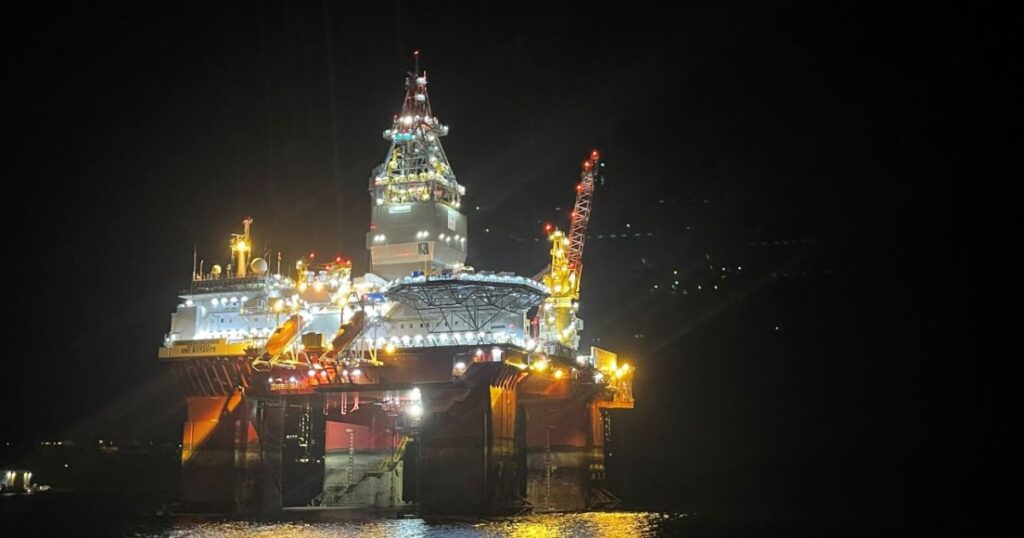
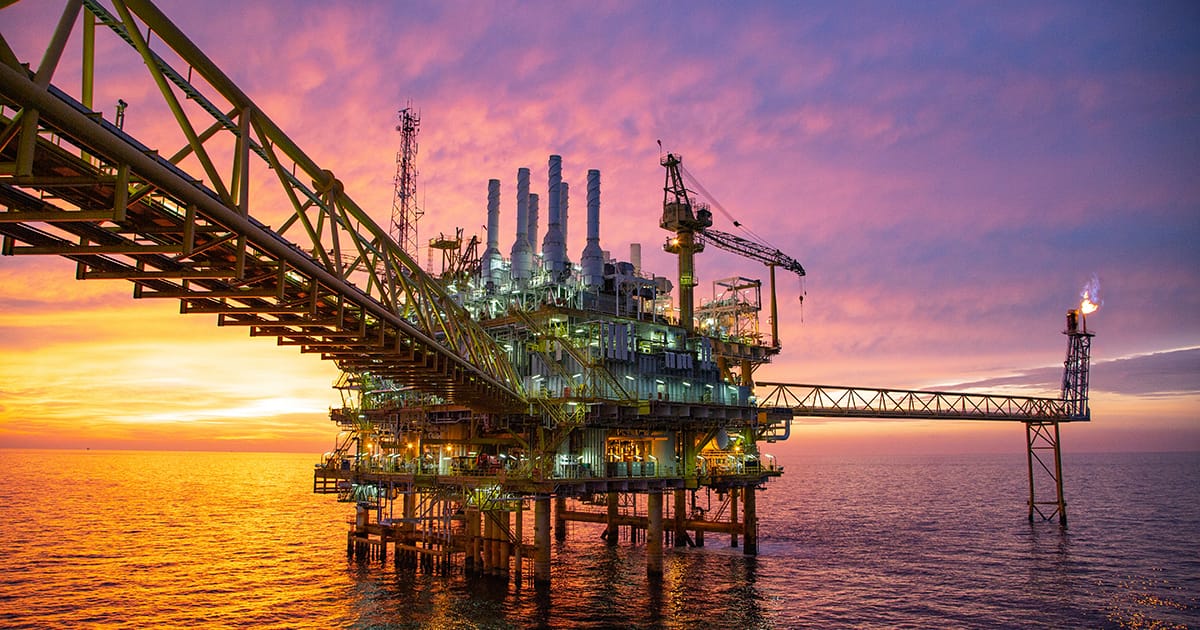
According to the study, activities directly linked to the blue economy accounted for 2.91% of gross domestic product (GDP) and 1.07% of national employment in 2019. The most relevant sector in the composition of this Blue GDP was oil and natural gas extraction (60.4%), followed by public administration and defense (7.4%), and storage and transportation (7.3%). “In terms of value, the bulk is in offshore oil, which contributes more than 60% of Brazil’s Blue GDP. The other almost 40% is distributed among clusters such as defense, coastal tourism, maritime transport, and fishing,” said the researcher.
One of the main results of the study was demonstrating the interconnectedness of the marine economy with economic chains in non-coastal areas. Taking into account the indirect effects of linkages with other sectors, the impact of the blue economy rises to 6.39% of GDP and 4.45% of national employment. “It’s as if I pulled a plant out of the ground and along came the whole root, which had spread very far. When we remove an activity linked to the sea, such as fishing, from the economy as a whole, it affects the entire value chain backwards and forwards. I often joke that it’s through this economic interconnection that the sea arrives in Minas Gerais,” explained Haddad, referring to the only one of the four states in Brazil’s Southeast region without an outlet to the sea.
Although the Brazilian blue economy is heavily concentrated in the Southeast, with Rio de Janeiro, São Paulo, and Espírito Santo accounting for 82% of direct production, the study reveals a variety of regional specializations. “What we see are various regional nuances in coastal economies and this has important implications for the design of sustainable development policies,” Haddad argued. “Hence the title of our study: Shades of Blue.”
While the Southeast and part of the South stand out in oil extraction and maritime transport, the Northeast is more specialized in coastal tourism and artisanal fishing. According to the researcher, “the economy of the sea is important in different ways, depending on the region. In Rio de Janeiro, it’s oil; in Ceará, it’s tourism and fishing.”
The study also ranks the 50 municipalities with the greatest economic activity related to the sea. These municipalities account for 90% of national activity in this sector. “Of the 280 coastal municipalities, most of the most important are in the state of Rio de Janeiro, largely due to oil exploration,” said Haddad.
The authors of the study argue that Brazil needs to overcome the fragmentation of maritime policies. Despite having the National Policy for Sea Resources and the National Maritime Policy, there is still no effective articulation to transform ocean resources into sustainable development.
“What we’ve done is adopt an integrated approach that measures not only the direct effect of activities related to the sea, but also their interactions with other economic activities located both on the coast and inland,” Haddad stressed. “The rationale is to allow regional public policies to be better calibrated to the reality of each territory.”
The methodology developed in the study is already being applied in places with economies that depend heavily on the sea, such as on the island of Madeira and in the Azores (Portugal), as well as in Peru. “Our aim is to contribute to the formulation of more just, territorially sensitive, and effective environmental and economic decisions,” Haddad concluded.
The study received support from FAPESP through assistance for the “INCT for Climate Change” project and the postdoctoral scholarship “Impact Assessment of Extreme Events: An Integrated Computable General Equilibrium and Risk Analysis Approach”.