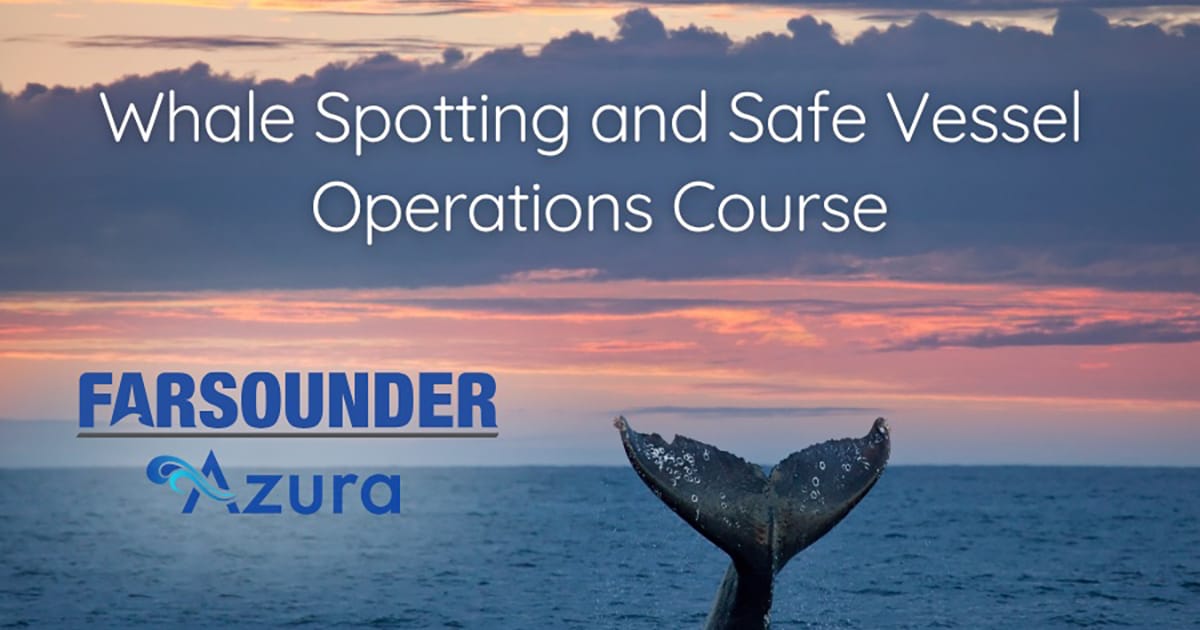
This comprehensive, online training course provides participants with a deeper understanding of whale biology, current protection measures, and practical strategies for minimizing risks at sea. Topics include the basics of whale identification, techniques for detecting whales in open waters, the ecological and safety dangers posed by vessel strikes, and ways mariners can contribute valuable data to scientific studies that further conservation efforts.
The course is tailored for boat owner-operators, ship captains, crew, and support staff, and is an essential resource for anyone involved in vessel navigation or operations. “Protecting endangered whale populations is not only an environmental responsibility, but also vital for the survival of many whale species. The leading cause of death for many of them is vessel collisions,” said Matthew Zimmerman, CEO of FarSounder. “This course bridges the gap between maritime science and conservation and vessel operations, allowing operators to be better prepared to sail responsibly.”
“Knowing how to spot whales, and learning about the regulations for operating your vessel around them, is critical in reducing the risk of ship strikes,” said Amy Whitt, CEO of Azura. “Plus, developing your whale watching and identification skills not only makes your time on the water more enjoyable, but also adds to the value of Citizen Science whale sighting contributions.”
To provide participants with a well-rounded experience, the program will feature guest hosts and experts from a range of respected, related organizations, including:
- International SeaKeepers Society
- Yachts for Science
- Ocean Wise
- Whale Alert
- ORCA
- Marine Mammal Advisory Group
- Water Revolution Foundation
- Blue ESG
- Esri
By blending scientific expertise with practical operational training, this Whale Spotting and Safe Vessel Operations course was created with a commitment to advancing safe and sustainable marine practices in the protection of whale populations.