Following its pioneering full LCA of LNG as marine fuel in 2019, SGMF reinforces its leading position as an independent LCA provider with this latest publication. SGMF’s studies are critically peer reviewed by industry experts and leading academics and cover multiple pathways, reflecting the distinct carbon intensities of each one. The emissions calculations are based on the performance of a wide range of engine types, including medium-speed 4-stroke and low-speed 2-stroke engines, with the findings reflecting industry progress on emissions reductions with LNG, both upstream and downstream.
LCAs provide a snapshot of the state of the industry at a given point in time. Given the fast pace of development in the alternative marine fuels space, regular updates of these studies are essential to ensure the latest technological advances, and the most relevant GHG intensity values are reflected across all fuels. The data that underpins these studies from SGMF is provided by a wide range of stakeholders, from inside and outside its membership.
“Shipowners making decisions on future fuel pathways must rely on independent, fact-based full Well-to-Wake data of all the fuels, ensuring decision making that contributes to reducing the overall emission levels in the maritime industry,” said Mark Bell, Managing Director of SGMF. “That is why, as an organization, we place high value on rigorous independent studies to support our members and contribute to the safe and sustainable decarbonization of the maritime industry.”
Emma Scheiris, Deputy Director-Environment at INTERTANKO, said: “Independent and transparent Life Cycle Assessments are essential for tanker owners and operators. INTERTANKO supports this study’s commitment to robust Well-to-Wake principles that can apply consistently across all fuels and reflect actual supply pathways. It offers a structured assessment to evaluate environmental impact and helps our Members assess their decarbonization strategies.”
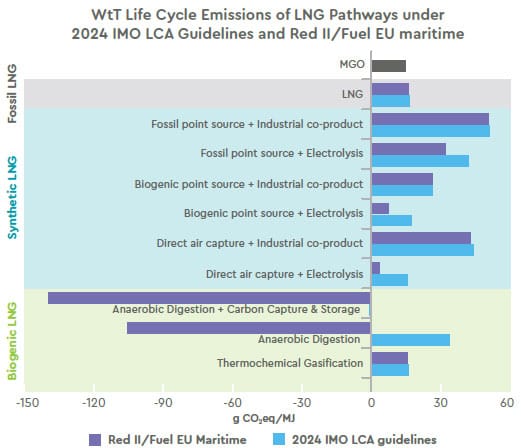
In addition to its LNG studies, SGMF expects to publish its first LCA on methanol as a marine fuel in mid-2026, which follows its LCA on ammonia as a marine fuel, published in 2024. SGMF plans to publish second editions on ammonia and methanol in the coming years. The eventual full portfolio of LCA’s will help the maritime industry to identify the gaps that need to be addressed to enable more uptake of cleaner fuels.
To download the full LCA report on LNG as marine fuel and an accompanying infographic on its findings, visit: https://sgmf.info/sgmf-launches-3rd-lca-on-lng-as-a-marine-fuel/