
The expedition was led by Dr. Silvia Ines Romero of Argentina’s Servicio de Hidrografia Naval. Her team hypothesized that these submarine canyons serve as conduits between the deep sea and shallower waters—providing essential nutrients that support Argentina’s massive phytoplankton blooms, which, in turn, support thriving marine ecosystems.
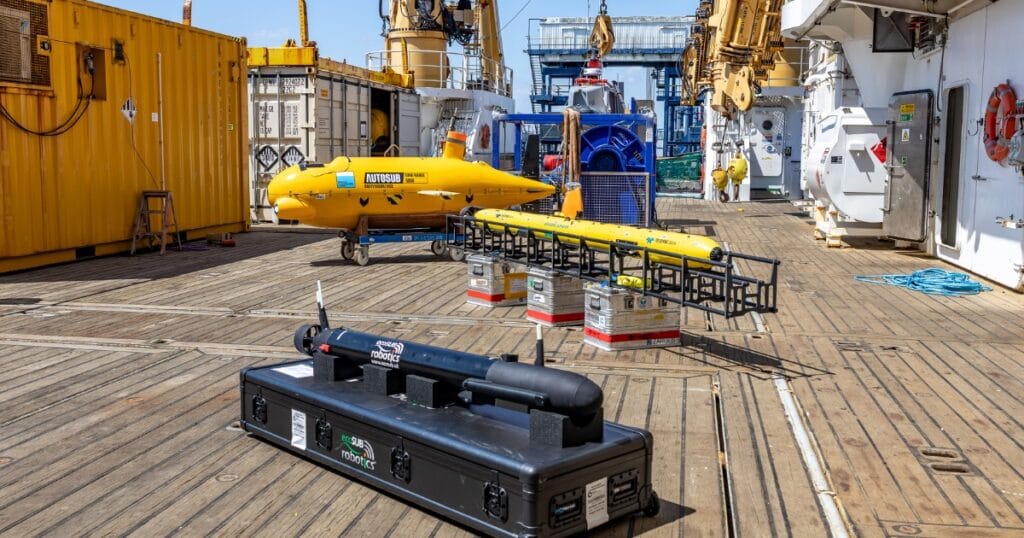
Over 27 days in October, they used a glider, 46 sea surface drifters, two seafloor landers, a moored buoy, and additional shipboard technologies to map four submarine canyons and surrounding areas to collect data on how currents interact with the seafloor.
The expedition was Schmidt Ocean Institute’s second in collaboration with Argentinian scientists and within the country’s waters. The team leading the first expedition to the Mar Del Plata submarine canyon observed rich biodiversity and fragile cold-water coral ecosystems.
“The Mar del Plata expedition explored what lives in these canyons,” said Romero. “We studied how these canyons can facilitate such incredible biodiversity. What are the mechanisms—the currents and the chemistry—that support all of this life?”

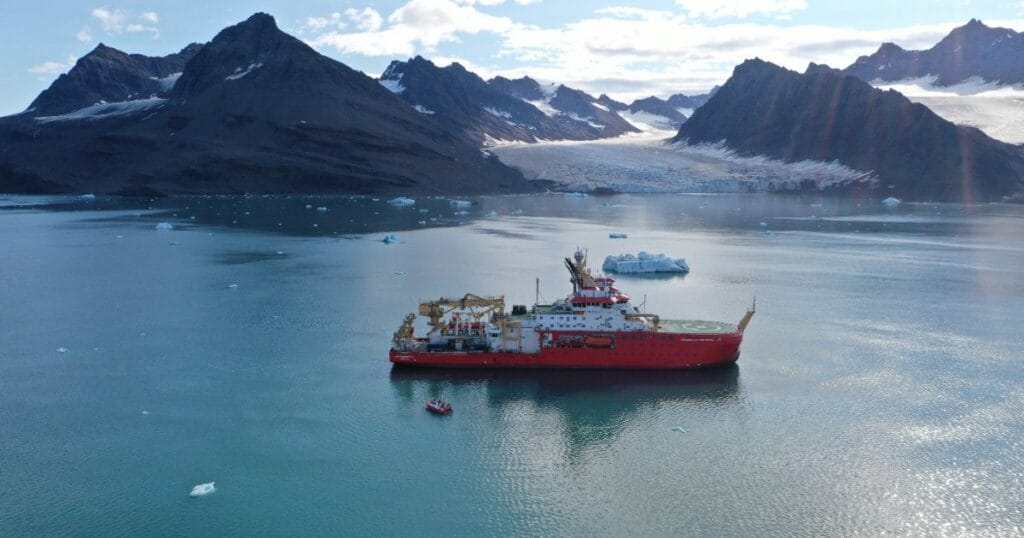
Knowing the shape of the canyons is the first step to understanding how currents move within them, Romero said. The high-quality maps, using data from R/V Falkor (too)’s sonars, revealed striking seafloor features; some canyons had steep walls, while others had terraces.
Scientists know the canyons concentrate phytoplankton, the base of the marine food web, along the shelfbreak, particularly near the canyon heads and surface waters, but no one has collected all the necessary physical and chemical oceanographic data documenting the conditions that facilitate the large blooms in these areas.

The team will spend the coming months analyzing the data to understand the specific mechanisms that fuel phytoplankton blooms and control currents within the canyons. The research will provide insight regarding harmful algal blooms, biodiversity protection, and climate change resilience. The high-quality maps will be given to the Argentine Hydrographic Service to improve navigational charts. They will also be a part of a global effort to map the seafloor through the Nippon Foundation-GEBCO Seabed 2030 project.
“This expedition was a journey of continuous wonder,” said Romero. “We didn’t just carry out multidisciplinary marine science that will yield unprecedented results; we also built a collective memory of the ocean, sparked new questions, and planted the seeds of future vocations. We showed that Argentina is fertile ground for leading cutting-edge oceanography.”

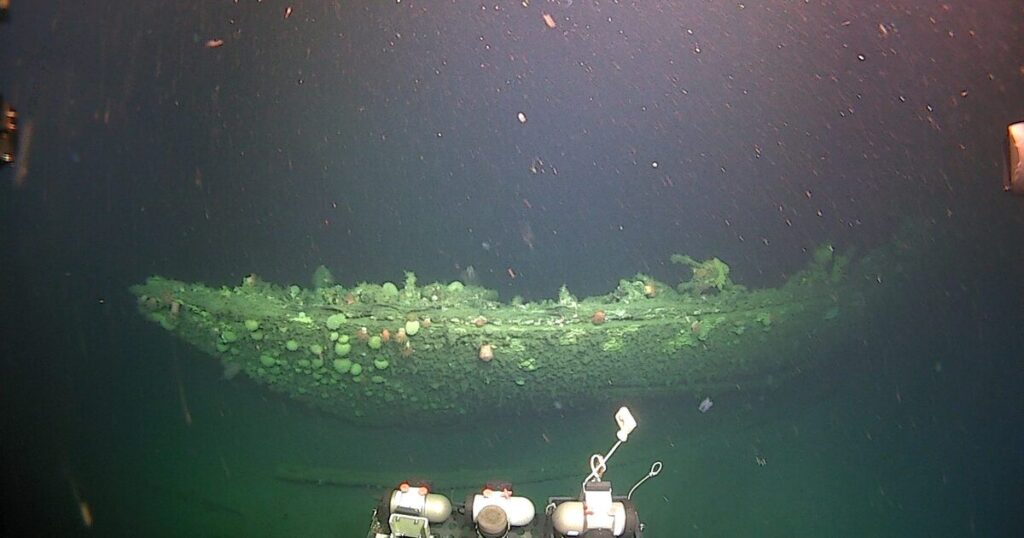
The team also used Schmidt Ocean Institute’s remotely operated vehicle (ROV) SuBastian to observe the biodiversity and collect samples in the canyons. With the high-resolution ROV cameras, they discovered coral-covered walls, black sediment that spewed bubbles, suggesting the presence of methane seeps, and large schools of fish.

“When we think of the Ocean, we often think of the abundance and fantastic life that resides within it,” said Schmidt Ocean Institute Executive Director Dr. Jyotika Virmani. “Yet that life is strongly controlled by the physics, the chemistry, and the geology of the Ocean—it is all intertwined. We cannot understand one without the other, which is why understanding the physical dynamics is vital to marine management and the local ocean economy.”