
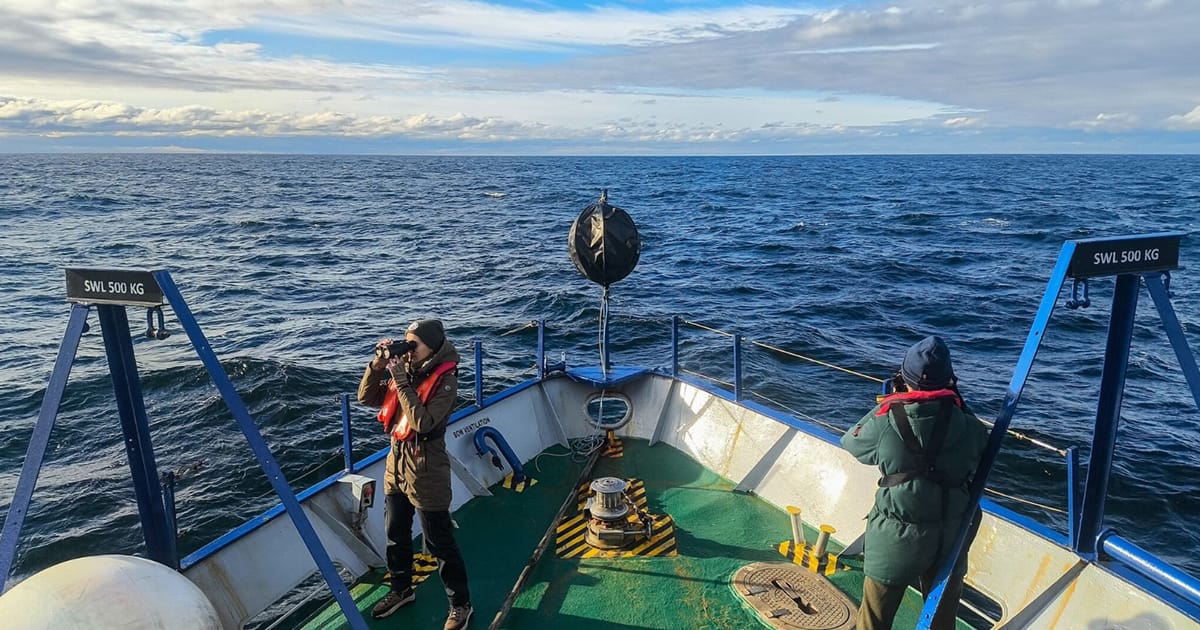
The first year of monitoring is currently underway. An interim report submitted by “BioConsult SH GmbH & Co. KG” focuses on baseline observations of migratory birds carried out from a vessel between July and October 2025 within the planned wind park area and its immediate surroundings. In parallel, aerial surveys are also being conducted.
Observations of migratory birds are planned as part of baseline studies prior to the construction phase of the ELWIND offshore wind park. These studies cover known migration peaks in spring and autumn (July–October and March–May). The objective is to characterize the seasonal species composition, abundance, and flight patterns, providing essential data for the Environmental Impact Assessment (EIA) process, supporting nature protection requirements, and helping to develop effective mitigation and monitoring measures in the subsequent stages of the ELWIND project development.
As noted by the monitoring implementers, “BioConsult SH GmbH & Co. KG OÜ”, observations are carried out from a research vessel.
“This allows us to obtain reliable data on species composition and flight patterns in the study area even before construction begins,” said Rodrigo Martinez Catalan, representative of “BioConsult SH GmbH & Co. KG”.
Rodrigo Martinez Catalan explains that several methods are used during the surveys, including 24-hour migration monitoring. From sunrise to sunset, visual observations are conducted from the vessel twice per hour, primarily focusing on geese, ducks, divers, and gulls. During night migration, from sunset to sunrise, acoustic recordings are used to monitor songbirds. Horizontal and vertical radar systems are employed to obtain precise information on flight directions and altitudes.
The main supporting harbor for project implementation is Pāvilosta. Located closest to the planned ELWIND wind park site, it serves as the operational base for research vessels conducting migratory bird surveys.
The data collected will enable conclusions to be drawn regarding the species present, their numbers, seasonal differences, and flight patterns—including flight altitudes and whether birds fly within the rotor height area of the planned wind turbines.
“The data will contribute to the EIA, enabling a comprehensive assessment of potential environmental effects and helping to define suitable mitigation measures during the permitting process. Baseline studies help us understand the potential impact that infrastructure may have on migratory birds,” emphasized Rodrigo Martinez Catalan. He highlights the importance of baseline monitoring to determine the precise distribution of flight altitudes and the potential collision risk with wind park infrastructure.
Jānis Ločmelis, Head of the ELWIND Project Division at the Investment and Development Agency of Latvia, added: “Similar to other studies conducted within the EIA framework, these data will allow us to make informed decisions regarding turbine technical specifications, potential restrictions, and the protection principles for species observed in the offshore park area. It is essential for us to rely on scientific evidence, which will also contribute to strengthening Latvia’s research base.”