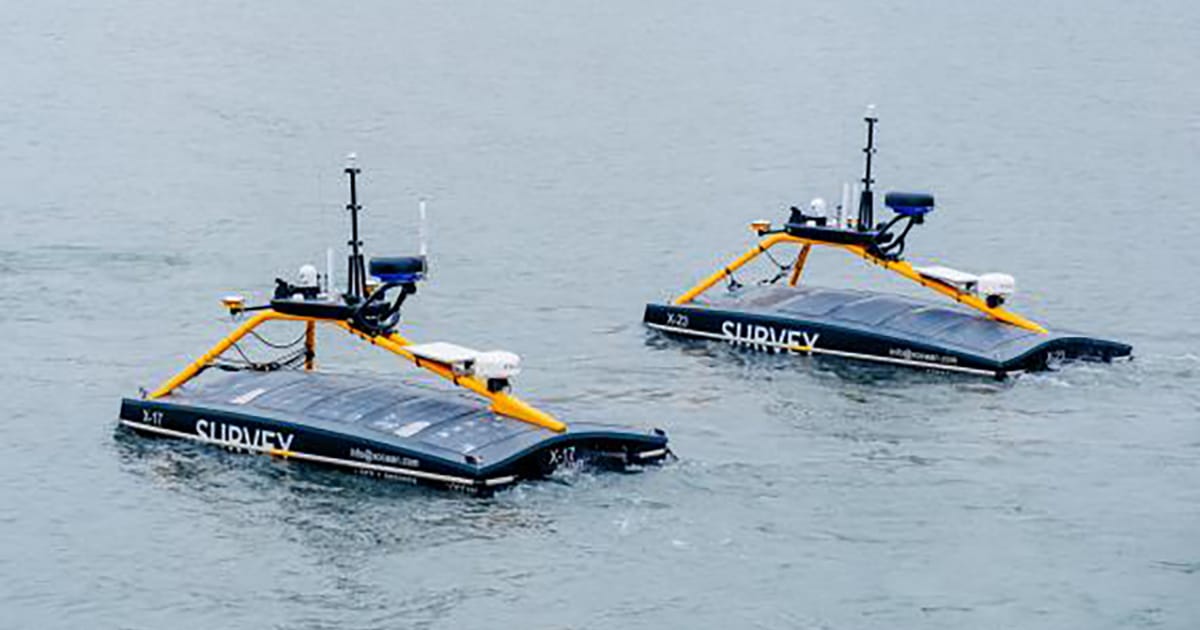
The USVs, operated remotely and equipped with cutting-edge geophysical sensors, such as multibeam echo sounders and sub-bottom profilers, are mapping the seabed to support the planning and development of EGL5, a high-voltage direct current (HVDC) subsea cable designed to transfer clean energy between Scotland and England.
These 4.5 m long vessels are designed for safety and minimal disruption, operating without onboard crew, and are continuously monitored from a shore-based control center. Due to their small size and lightweight, the carbon footprint is 1,000 times less than conventional vessels while also minimizing interaction with other maritime users.
The four USVs will be operating for two months along the proposed EGL5 route from the Lincolnshire coast to the Scottish border, where the collected data will be merged with similar data collected by SSEN Transmission in Scottish waters.
Phil Payne, Marine Survey Manager for National Grid, said: “The survey will provide essential data about the seabed, sub-seabed, potential archaeological features, and marine fauna and flora to guide the safe and efficient installation of the EGL5 cable route, supporting detailed engineering, environmental assessments, and route planning. Launching these uncrewed survey vessels from Scarborough reflects our commitment to innovation and environmental care. As a responsible developer, we’re working with suppliers who offer low-carbon, low-impact survey solutions to minimize disruption to the environment. Every aspect of this operation is being carried out under strict safety procedures, with continuous remote monitoring in place to help protect the marine environment.”
Charlotte Beechey, Head of Business Development for XOCEAN, said: “XOCEAN is pleased to support National Grid and SSEN Transmission on this key stage of the EGL5 cable route project. By using our fleet of USVs to collect high-resolution geophysical data, we can accelerate project timelines through efficient, high-quality data acquisition. Our fully remote operations offer a dynamic, carbon neutral, and safe solution to seabed survey.”
As part of the early development of Eastern Green Link 5, National Grid is running a public consultation in Lincolnshire, Norfolk, and Cambridgeshire until June 23, 2025, to seek local feedback on the proposed route and landfall locations for the new subsea and underground cable. The link, designed to run between Scotland and England, forms a vital part of The Great Grid Upgrade, with National Grid investing in upgrading and reinforcing the UK’s transmission network, accelerating the shift to a more affordable, secure, and independent energy infrastructure. This early consultation gives communities the opportunity to help shape the plans.