The NASBLA Annual Conference brings together state boating law administrators, marine law enforcement, and recreational boating safety professionals from across North America. The staged collision gave attendees a rare, controlled look at the forces involved in a high-speed personal watercraft (PWC) strike, one of the most common and dangerous incident types investigators respond to.
A Controlled Collision, Run by the Experts
The staged collision was managed by Matt Majors, NASBLA Vice Chair and Boating Law Administrator for the Tennessee Wildlife Resources Agency (TWRA), together with TWRA Boating Incident Investigators George Birdwell, Josh Landrum, Roy Smith, and Seth Snow. The pontoon was crewed with crash test dummies, including adult and child mannequins wearing life jackets, to help illustrate what occupants experience during a side impact.
How the Data was Collected
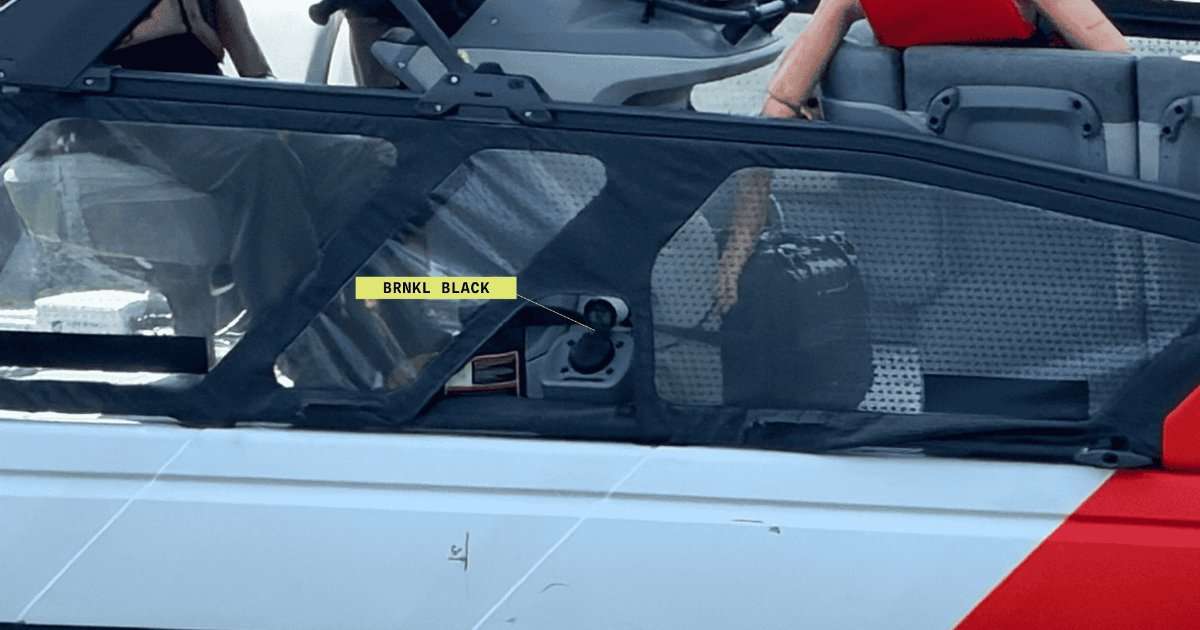
BRNKL Black was strapped down in the center of the pontoon boat ahead of the demonstration and recorded continuously throughout the run. As the PWC struck the pontoon’s hull at 52 mph, the recorder captured high-rate acceleration data across all three axes, GPS position and speed, and synchronized video, logging the full sequence to onboard storage on the BRNKL Black and automatically uploading the incident data and video clip to BRNKL Fleet for review.
The recorder measured a peak of 7.2 g at the center of the vessel. That reading reflects the force transmitted through the entire boat to where the occupants were seated, not just at the point of contact on the hull. The time-stamped record also shows the direction of the strike and how the vessel responded in the seconds that followed. For incident investigators, that kind of objective data can help reconstruct what happened, validate witness accounts, and support findings with evidence rather than estimates.
Why it Matters for Boating Safety
Boating incident investigations often rely on physical damage, witness statements, and post-incident analysis. Onboard flight recorders add a new layer of evidence, recording what happened as it happened. BRNKL Black was originally developed for high-speed manned and uncrewed vessels in defense and government fleets, and demonstrations like this one show how the same technology can support recreational boating safety, law enforcement, and incident reconstruction.
“Seeing a 52 mph impact captured in real time, alongside the investigators who reconstruct these incidents for a living, was a powerful demonstration of what onboard data can do,” said Brandon Wright, CEO of Barnacle Systems Inc. “We’re grateful to NASBLA and the Tennessee Wildlife Resources Agency for the opportunity to be part of it.”
BRNKL thanks NASBLA, Matt Majors, and the TWRA investigation team for organizing and running a safe, well-executed demonstration.