Maritime autonomy relies on a system of systems comprised of positioning data from GNSS and inertial sensors, navigation input from the mission plan, command and control for vessel operations, situational awareness from sensors and perception software, and communications to power each of these and enable interoperability between them. Taken together, they let a vessel understand where it is, what is around it, and what to do next, without a person on board making that call in real time.
The real test of a system of systems is not how it performs when everything works. It is what happens when one or more parts fail or are compromised.
High Stakes for Remote Ops
Picture a vessel 100 km offshore, running a survey mission in uncharted waters, when it loses comms. The nearest support vessel is hours away. Where will the vessel be after hours drifting at sea? Tide, wind, and current all compound the uncertainty, and every hour without contact widens the search area.
When it comes to autonomy, predictable behavior when things go wrong matters just as much as predictable behavior when a mission is going to plan.
Preparing for the Unexpected
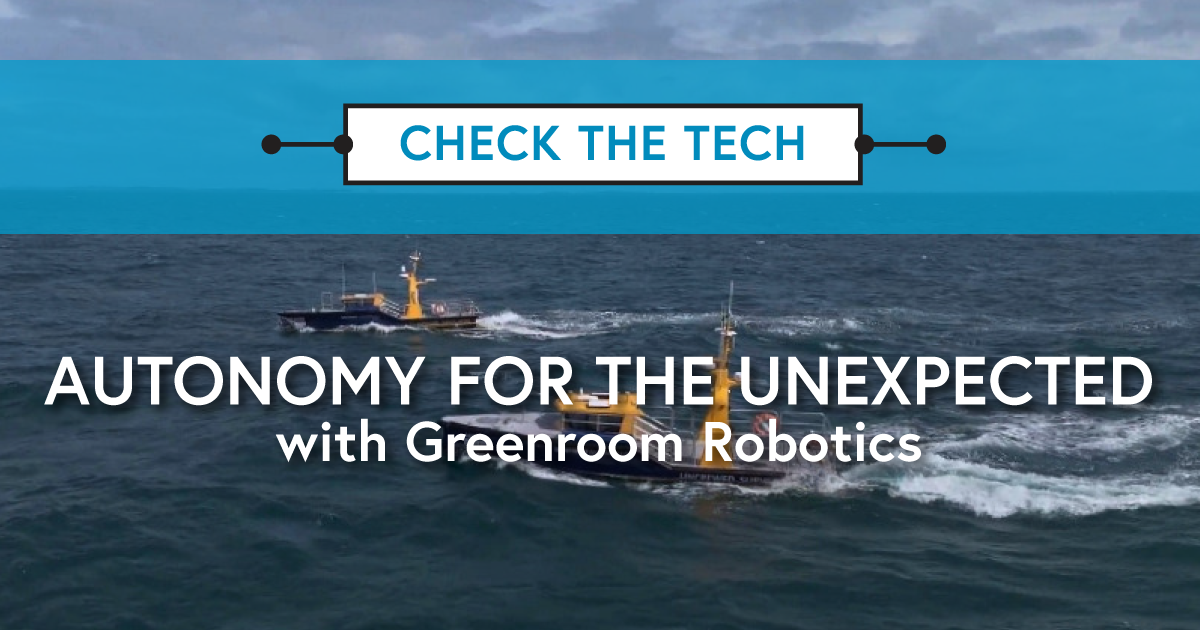
This is where GAMA, Greenroom Robotics maritime autonomy software, comes in. For every stage of an autonomous mission with GAMA, operators can assign behaviors, or sequences of behaviors, that activate when contact with operators is lost.
For example, uncrewed survey vessels operating far from support craft can hold station instead of drifting while communications are restored or assistance arrives. Other safety fallback behaviors include diverting to a safe haven or returning to a known location if contact cannot be re-established or the USV is in conditions not suitable for a crewed support vessel. The point is that a vessel’s behavior in a failure state is as engineered and tested as its behavior in a normal one.
EGS Australia uses GAMA maritime autonomy for its autonomous survey vessel fleet. Their Chief Surveyor, Charles Collins, said: “GAMA’s mission safety behaviors give us the confidence to push survey operations into more remote and uncharted waters. Our autonomous survey vessels operate in some of the most unpredictable maritime environments in the world. We need to know that when things don’t go to plan, our vessels will behave in a defined, tested way.”
Resilient by Design
Predictable failure behavior is what gives operators the confidence to send an uncrewed vessel into remote or uncharted areas. When something fails, whatever the cause, they need to know exactly what will happen to the vessel next.
A vessel that knows what to do when communications are lost doesn’t drift away or, like the earlier example, get recovered by a foreign military. That is the difference between a system that goes dark and one that comes home.
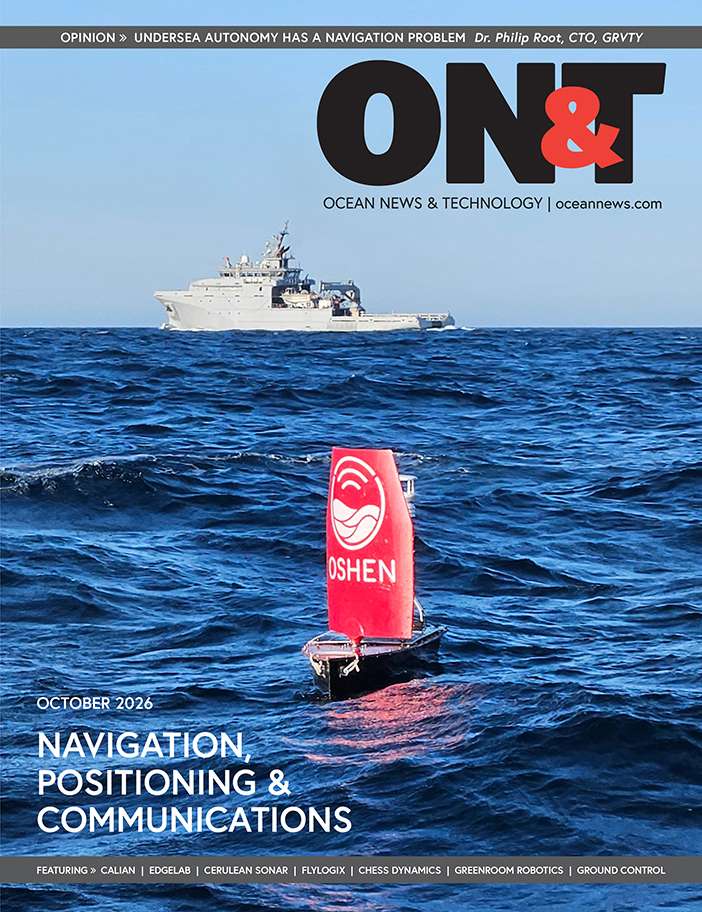
This feature appeared in ON&T Magazine’s 2026 October Edition, Navigation, Positioning & Communications, to read more access the magazine here.