The milestone follows a 12-month full-scale FEED study of the system, funded by the Offshore Wind Growth Partnership and Wave Energy Scotland.
The certification confirms the PALM QCS has been independently reviewed against recognized industry standards and can now progress towards full technical qualification and Type Approval.
The PALM QCS is designed to simplify the connection and disconnection of dynamic cables from floating wind turbines, without the need for specialist vessels, divers, or personnel transfer. The process is shown here:
Proven at Sea
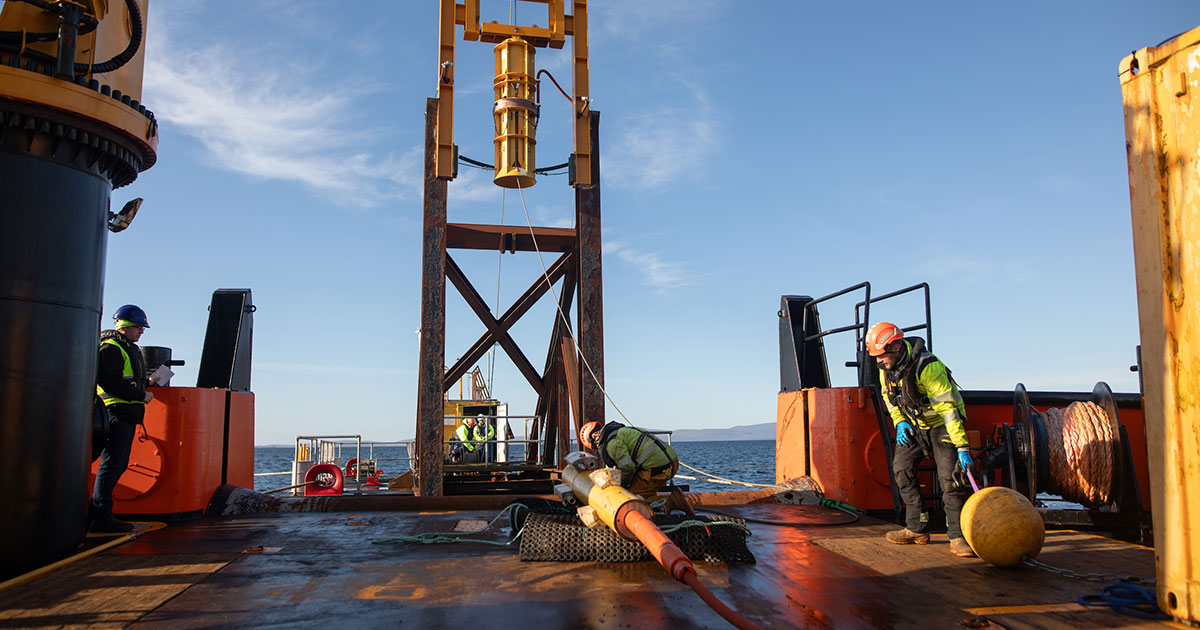
Apollo’s PALM QCS has already demonstrated strong performance in field trials, including 50 successful connect and disconnect operations in an offshore environment.
Key benefits of the full-scale system are:
- Dynamic cable reconnection in 5.5 hours, compared with marine operations that can take several days
- Potential through-life savings of £120 million in a gigawatt-scale floating wind farm
The system reduces offshore downtime, lowers exposure to weather risk, and, by avoiding the need for personnel transfer, enhances operational safety.
Supporting Commercial-Scale Floating Wind
As floating offshore wind projects move towards commercial scale, developers are increasingly focused on reducing operational complexity, risk, and cost.
The combination of independent assurance and proven offshore performance offers developers and investors confidence in the PALM QCS as a deployable solution for future projects.
Originally developed as part of a Wave Energy Scotland technology program, the PALM QCS has progressed through multiple development stages, including offshore trials and design for floating offshore wind applications.
Apollo is also planning more subsea electrical trials in 2027 as part of an EU Horizon project led by European Marine Energy Centre.
Next Steps
Apollo will continue working with Bureau Veritas to progress the PALM QCS through technical qualification and towards full Type Approval.
The company is now seeking partners to support full-scale pilot deployment as the floating offshore wind sector accelerates towards commercial delivery.
Nigel Robinson, Marine Energies Director at Apollo, said: “This milestone is another important step towards commercial deployment of our PALM QCS technology, crucially helping demonstrate the bankability of the system.
“Working with Bureau Veritas has been a pleasure. We were pleased with the in-depth technical scrutiny they applied to our design and trials work, which added real value as we progressed our full-scale FEED.
“The team is looking forward to the next level of qualification as we progress towards that first full-scale deployment.”
Stéphanie GASC, BV M&O Design Assessment S.U.R.F Engineer commented: “We conducted a comprehensive review of Apollo’s PALM QCS FEED design and first approach offshore trial documentation. Constructive feedback throughout the assessment process was appreciated, and we feel it supported compliance with subsea industry standards. This collaborative approach between our teams provided a good understanding and confidence for the next step of technology qualification assessment.”