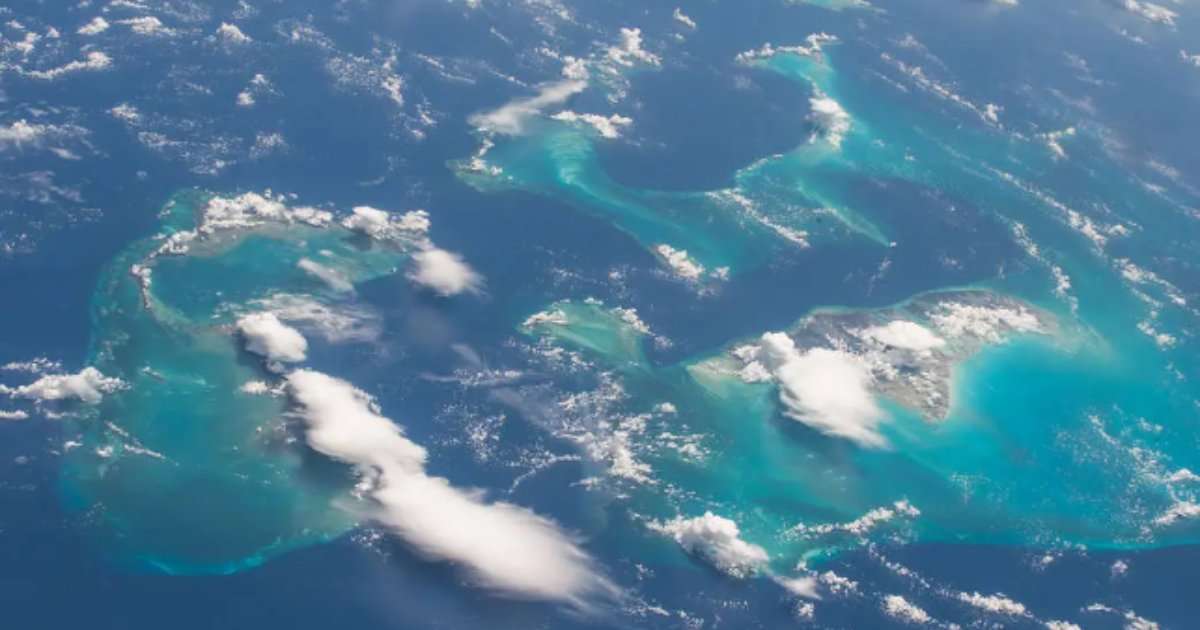
The Bahamas is an archipelago of more than 700 islands and cays with a population of roughly 400,000. More than 90% of its electricity is generated from imported diesel and heavy fuel oil, leaving households and businesses exposed to volatile international fuel prices and some of the highest electricity tariffs in the Caribbean. The archipelagic geography produces multiple isolated grids across the Family Islands, each with its own generation and distribution constraints.
The energy challenge is inseparable from a water one. More than half of the potable water in the Family Islands is produced by energy-intensive seawater reverse osmosis desalination, creating a direct dependency between energy security and water security. OTEC addresses the generation of baseload electricity around the clock, from the temperature difference between warm surface seawater and cold water drawn from depth, while making that same cold water available for desalination and cooling.
This feasibility study will assess integration with seawater reverse osmosis, seawater district cooling, and data center cooling alongside the core power system.
Global OTEC considers the data center application commercially significant for attracting international investment. In tropical latitudes, cooling rather than compute dominates data center operating costs, and it is a major constraint that keeps digital infrastructure away from island markets. Deep cold seawater removes that barrier by providing an abundant resource of cooling for both air and liquid processes, known as ‘hybrid cooling.’ The Bahamas is well positioned in this respect, with proximity to North American internet interconnection nodes and existing desalination plants.
“Any renewable technology can produce electrons, but only one of them also delivers a valuable cooling and drinkable water resource as a byproduct. That is the difference between OTEC and everything else in a tropical island context. In the Bahamas, you have huge thermal resource, the subsea connectivity and a government that has been willing to do the groundwork through progressive studies. Our role over the next year is to establish, with real data and engineering, whether a site can carry a first-of-a-kind installation for the Caribbean,” said Dan Grech, Founder and CEO, Global OTEC.
Deep ocean water facilities are not a new phenomenon, with approximately 38 around the world. They have been used for decades in Hawaii, French Polynesia, and Japan for a variety of applications, from cooling hospitals and resorts to supporting aquaculture and agriculture. The Bahamas already has a foothold: the Baha Mar resort in Nassau draws seawater from roughly 300 meters to cool its facilities. What has not yet happened is the transfer of the full model to the Atlantic, where the Caribbean’s combination of high energy costs, water scarcity, and deep water close to shore makes the case unusually strong for an entire region.
This assignment will build on several years of prior work led by the Bahamas, including a NOAA temperature and salinity measurement campaign conducted off Eleuthera in 2023 using an autonomous seaglider, which collected profiles from the surface to 900 meters and confirmed the presence of a substantial thermal gradient in the water column. The review will also cover matters related to environmental and social concerns and considerations.
OTEC and the Caribbean Fuel Trap
The Caribbean’s dependence on imported fossil fuels is often described as a ‘fuel trap.’ Electricity across the region averages around $0.25 per kWh, more than double the United States average, and exceeds $0.40 per kWh in some territories. High and unpredictable power costs suppress competitiveness and productivity across every other sector of these economies. Escaping the trap calls for technologies suited to the region’s actual conditions: limited land, exposure to tropical storms, and small isolated grids that need firm power rather than intermittent supply.
The Bahamas assignment follows Global OTEC’s Memorandum of Understanding with the Barbados Investment and Development Corporation (BIDC), signed at the UN Ocean Conference in June 2025, and the company’s technical leadership of PLOTEC, the EU-funded project that designed and tested a storm-resilient floating OTEC platform structure for deployment in weather-exposed waters. PLOCAN coordinated the PLOTEC project and hosted the testing of the OTEC prototype at its offshore test site. Their collaboration on PLOTEC gave the two organizations an established working relationship ahead of this assignment.