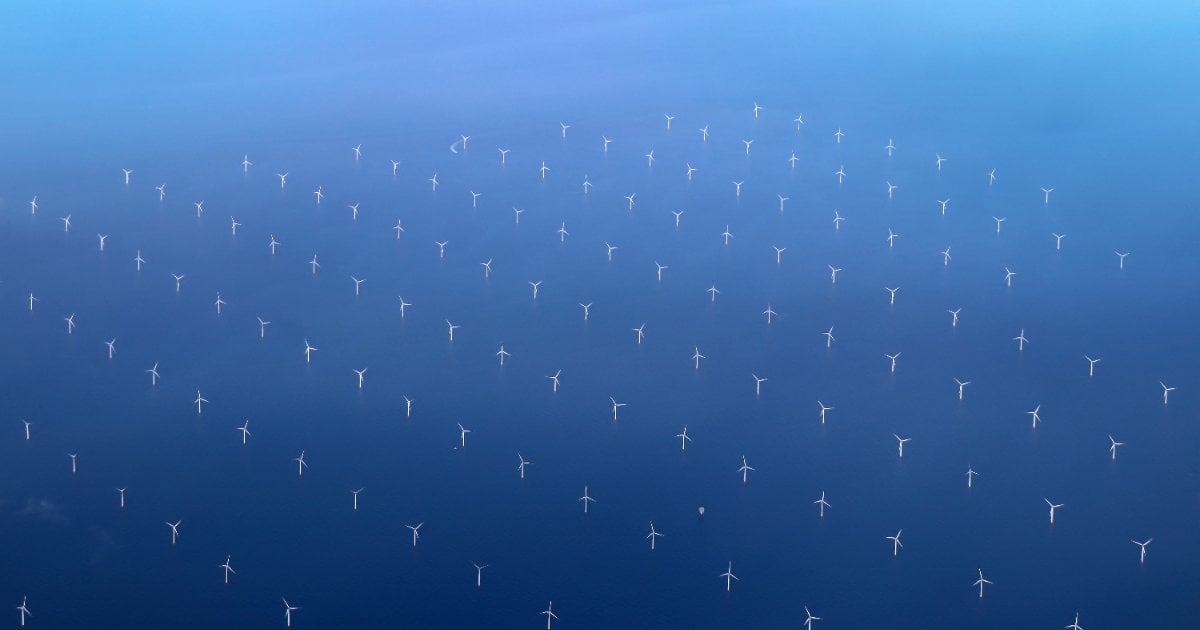
GlobalData’s latest report, “Turkiye Power Market Trends and Analysis by Capacity, Generation, Transmission, Distribution, Regulations, Key Players and Forecast to 2035,” reveals that Türkiye’s broader renewable energy strategy targets 120 GW of combined solar and wind capacity by 2035 and explicitly includes offshore wind. However, offshore wind capacity is expected to enter the capacity mix only in 2032, and 1.3 GW of offshore wind capacity is likely to be operational by 2035, producing roughly 2.7 TWh—well below the aim of 5 GW.
The Turkish government has identified four candidate offshore wind zones—Saros Bay, Gökçeada, Bozcaada, and Edremit—and aims to reach 5 GW of offshore wind capacity by 2035. A draft specification has been released for a 1 GW offshore wind YEKA tender that includes long-term licensing, construction deadlines following approvals, and a price range of $0.07 to $0.11 per kWh.
Attaurrahman Ojindaram Saibasan, Power Analyst at GlobalData, said: “Türkiye’s launch of its first offshore wind YEKA tender is a watershed moment. It signals a shift beyond onshore renewables. If planned well, with clear rules and timely permitting, it could mobilize investment, deliver clean, firm power, and help the country reduce its dependence on thermal generation.”
The gap between the government’s 5 GW ambition and the likely 1.3 GW outcome arises from multiple obstacles. First, permitting and regulatory processes are complex and time-consuming: environmental reviews, seabed licensing, and marine regulations all require many steps and coordination among agencies. Second, key infrastructure, including grid connections, subsea cables, landing stations, and reinforcement of the onshore network, needs early planning and substantial investment, or projects may face bottlenecks.
Third, financial challenges such as inflation, fluctuations in currency, and supply chain disruptions increase the cost and risk of projects. Fourth, technical and environmental issues like variable seabed quality, harsh marine conditions, ecological sensitivities, and stakeholder concerns can slow progress or limit development.
Saibasan added: “To close this gap and help projects reach their full potential, several measures are critical. Streamlining permits by defining clear approval pathways and setting firm timelines can reduce delays. Coordinating grid infrastructure and port facilities in advance such as agreeing on connection sites, rights of way for cables, and ensuring grid reinforcement will remove major hurdles. Financial certainty should be bolstered through mechanisms that protect against inflation and currency risk, as well as incentives for using local components.”
Early, thorough environmental and technical assessments for offshore wind projects can uncover potential complications before they become costly delays. Providing transparent auction terms and stable contract conditions, especially regarding grid connectivity and compensation will enhance investor confidence. Finally, launching pilot or phased projects can build momentum, experience, and credibility.
Strong opportunities exist for developers, turbine manufacturers, EPC firms, and investors, especially as this is a nascent segment in Türkiye’s renewables mix. Offshore YEKA tenders, backed by 2035 clean energy goals, offer early-mover advantages in premium zones, local content, permitting norms, and hybrid asset models. Ancillary services, corporate power purchasing, and export opportunities are additional value streams if projects deliver stable output.
Saibasan said: “For incumbents and newcomers alike, Türkiye’s offshore wind YEKA tender will test the gap between ambition and delivery. Policymakers must ensure auction design is transparent, environmental and marine permits are expedited, and grid infrastructure is scaled to avoid bottlenecks. If these enablers align, offshore wind could emerge not just as a major source of clean power but as a marker of how strategic policy and market clarity can unlock large-scale large-scale renewables growth.”