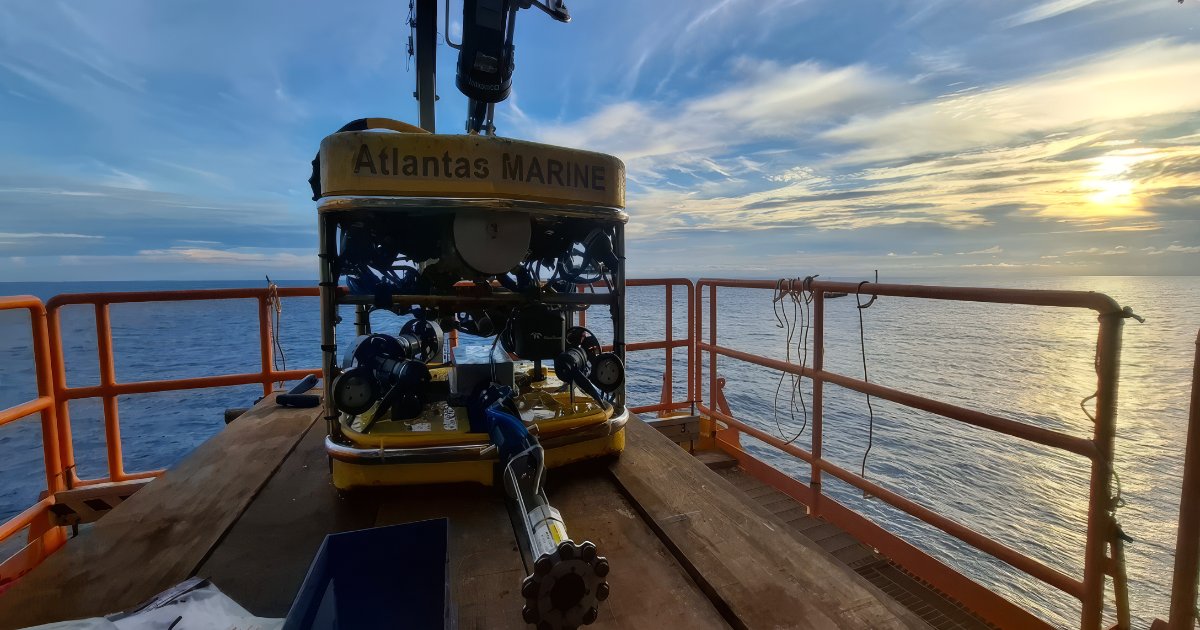
Depth like this changes the nature of an inspection campaign. Currents, pressure, and reduced margin for error all increase the deeper a system operates, and there is little scope to improvise once a vehicle is committed to a dive. Reaching 490 meters twice, on schedule, reflects careful planning, a well-proven platform, and an experienced team behind the controls.
Operational Context
The Malikai Tension Leg Platform operates in a deepwater environment, where subsea inspections require specialized technology and precise execution. Maintaining confidence in the integrity of the tendons and hull structures requires reliable verification at water depths approaching 500 meters, demanding precise positioning, high-quality imaging, and dependable sensor performance. The inspection program was executed in phases, progressively extending operational depth and capability, culminating in this record-setting achievement.
What the Dives Covered
At depth, the team carried out a full scope of inspection work using Atlantas Marine’s own equipment:
- General and Close Visual Inspection (GVI/CVI), using the Atlantas Marine Storm IP Camera, providing high-definition imagery of the tendon and hull structures for direct visual assessment of condition.
- Cathodic protection surveys, using the Atlantas Marine Cyclone CP System, quantifying protection potential readings along the structure to confirm the corrosion protection system is performing as designed.
- Flooded member detection, identifying any structural members that have taken on water, an early indicator of a breach that could otherwise go unnoticed.
Together, this gives a clear, verifiable picture of the asset’s condition at depth: visual confirmation of structural condition, quantified CP readings, and flooded member data, all captured in a single mobilization. Each data set feeds directly into the client’s asset integrity records, giving engineers a documented baseline to measure future surveys against.
Why Atlantas Marine
This kind of result comes from the combination of equipment and experience that sits behind every Atlantas Marine job:
- Advanced ROV technology. The Ocean Modules V8 M500 is a compact, purpose-built system that holds full inspection capability at significant depth, without the footprint or mobilization overhead of larger, containerized alternatives.
- An experienced team. Ricardo Souza and Fabio Andrade are backed by Atlantas Marine’s 25+ years of underwater inspection experience, applying real operational know-how built up across hundreds of campaigns, not just working strictly to a specification sheet.
- Rapid, global mobilization. Compact systems like the V8 M500 are quicker to mobilize and deploy internationally, reducing lead time and logistics complexity for projects like this one, wherever in the world they are based.
- Comprehensive reporting. Visual inspection, cathodic protection survey, and flooded member detection data are consolidated into clear, actionable reporting that supports Bayu Asli and Sirrihatt Subsea’s asset integrity decisions, rather than leaving the client to interpret raw footage and sensor logs.
- Expertise across sectors. Years of inspection campaigns across oil and gas, offshore renewables, defense, and nuclear inform how the team approaches increasingly demanding depths and conditions, and how they plan for the unexpected.
- Regulatory and quality standards. Every survey is planned and executed to meet the client’s own compliance and reporting requirements, so the data can be relied upon for engineering and regulatory purposes without further verification.
Working with Bayu Asli, Sirrihatt Subsea, and SSPC
This project is delivered under the Bayu Asli JV, main contractor to SSPC on the TLP Malikai, with Sirrihatt Subsea as Atlantas Marine’s direct client for the inspection scope. That collaboration has allowed the scope to be built up in a structured, staged way, with each dive adding to a growing body of verified data on the platform’s condition.