The wreck of SMS Mainz sank in August 1914 west of Heligoland—and has already been a subject of research for the team led by Dr. Matthias Brenner from the Alfred Wegener Institute, the Helmholtz Center for Polar and Marine Research (AWI), for several years. The biologist is leading a two-week expedition with the research vessel Heincke from October 17–31, 2026, and besides SMS Mainz, he will also visit the wreck of the battle cruiser Blücher. The vessel is equipped with three underwater robots for the REMARCO project: two autonomous underwater vehicles (AUVs) and a tethered remotely operated vehicle (ROV) from the German Research Center for Artificial Intelligence. These units will map and visualize the wrecks to enable the researchers to analyze their condition.
Matthias Brenner, leader of the REMARCO project, explained: “After over 100 years on the sea floor, there is a heightened risk that the wrecks will collapse. That is why it’s important to monitor their condition. In addition, with increasing corrosion, toxic and carcinogenic explosives are released from the remaining munitions. These pollutants pose a threat to marine life, food safety, and human health.”
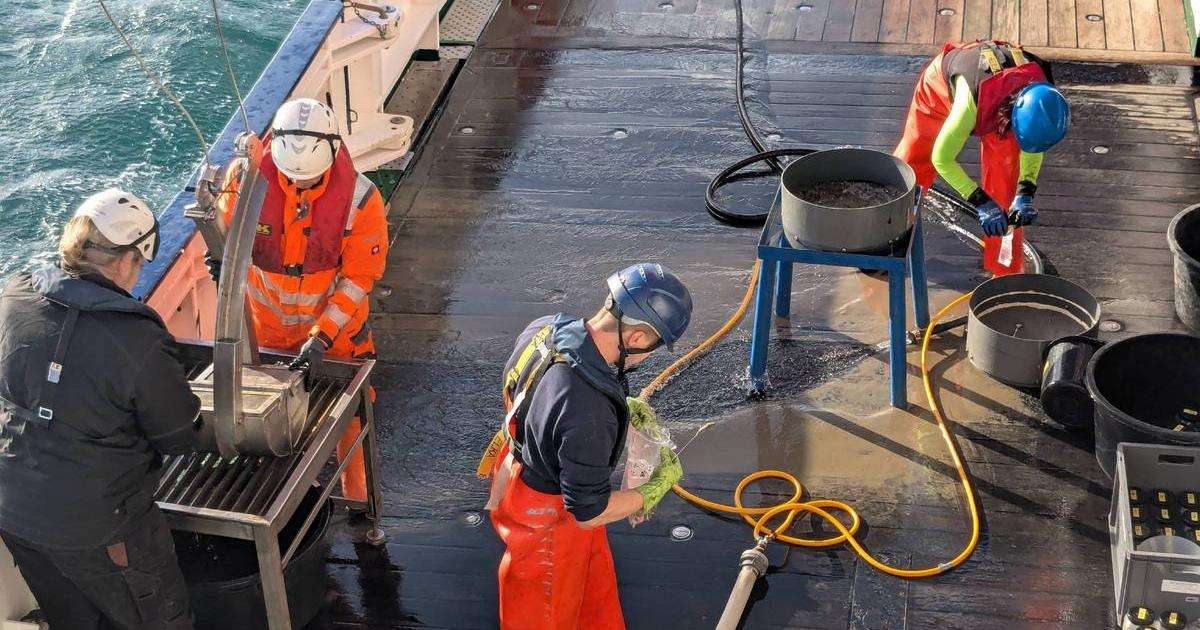
In order to investigate the effects of the leaking contaminants, the expedition team is sampling water and sediments around the wrecks. The sea floor will also be trawled and organisms living there collected. The samples and organisms will then be tested for explosives. The health of the fish will also be examined to identify whether fish near to the wrecks show more diseases and tumors than in comparable uncontaminated areas. In addition, researchers from Senckenberg by the Sea are examining the composition of species and the number of invertebrates from the sediment, the so-called infauna, in relation to contamination levels.
The federal police will also be on board for a day in order to test an AUV. Matthias Brenner states: “In our projects we work with authorities and industry to enable us to better monitor and reduce the risks of underwater munitions. A further objective of the project is to develop automated monitoring and remediation solutions. This collaboration is therefore a perfect fit with our mission.”
As part of a further project by the name of CONMAR, the Heincke will subsequently visit seven dumping sites in the German Bight where munitions were dumped in the sea after the World Wars. There, the munitions are under the sand and can therefore only be mapped with the aid of magnetometry. “We are delighted that SeaTerra has joined us with their MagWing system to help us explore the dumping area. This has never been done before, and also the ordnance clearance service has little idea right now of exactly what we will find on the sea floor,” Matthias Brenner, head of the AWI expedition, explains. “This is also preparation for the clearance phase of the federal government’s immediate program to recover munitions in the North Sea and Baltic Sea. The construction and operation of a recovery platform have recently been commissioned, and now the task is to develop a clearance concept for the North Sea. Magnetic maps are a very important part of the process, as they will enable us to flush out munitions as part of a pilot recovery operation.”