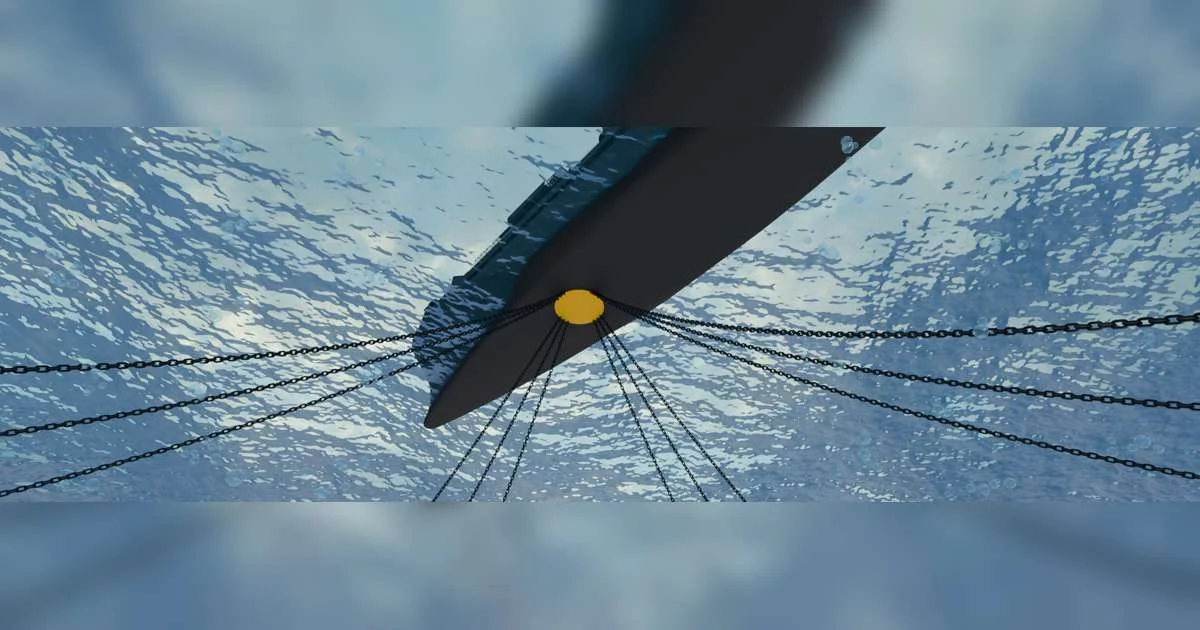
Floating offshore installations rely on mooring systems to maintain their position safely throughout their operational life. Failure of a mooring system can have significant safety, environmental, and financial consequences. The revised ISO standard incorporates results developed through more than a decade of collaborative research under the DNV-led NorMoor JIP. The work used reliability-based calibration to establish more consistent requirements for ultimate, accidental, and fatigue limit state.
Established in 2011, the NorMoor JIP brings together operators, engineering companies, manufacturers, regulators, and technical experts to improve the design and assessment of offshore mooring systems. Around 20 organizations have participated in the project over its lifetime, including major operators and suppliers from across the offshore value chain.
“NorMoor has become much more than a research project. It is a unique meeting place where companies openly share mooring system design and operational experience,” said Siril Okkenhaug, Project Manager for the NorMoor JIP at DNV. “The work has shown that safety factors can be reduced through reliability-based calibration while maintaining the required level of safety. Seeing these results now incorporated into ISO 19901-7 is an important milestone for all of us involved,” said Prajeev Rasiah, Senior Vice President and Regional Director, Northern Europe, Energy Systems at DNV.
“This achievement highlights the important role that standards play in enabling safe and reliable offshore development,” said Prajeev Rasiah, Senior Vice President and Regional Director, Northern Europe, Energy Systems at DNV. “The incorporation of NorMoor results into ISO 19901-7 provides the industry with a more consistent framework for mooring system design and assessment. As offshore energy systems evolve, including the growth of floating wind, this type of collaborative work will be essential in building confidence and supporting sustainable development.”
Through three phases of the JIP, DNV and industry partners developed reliability-based methodologies and calibrated safety factors covering key mooring design conditions, including ultimate limit state (ULS), accidental limit state (ALS), and fatigue limit state (FLS) assessments.
The methodologies were progressively incorporated into DNV’s offshore standards, with ULS and ALS approaches implemented in DNV-OS-E301 in 2018 and FLS methodology incorporated in 2024. Their inclusion in ISO 19901-7:2026 extends the application of the framework to an internationally recognized standard.
DNV participated actively in the ISO working group and the Norwegian national committee responsible for the revision of the standard. This work helped align methodologies in the updated standard with the reliability-based framework developed through NorMoor, while the calibrated safety factors for ULS and ALS were incorporated into Annex B.2, which contains requirements applicable to the Norwegian Continental Shelf.
“The fact that DNV implemented the results continuously in DNV-OS-E301 was crucial. It helped establish confidence with the authorities when Annex B.2 was revised and demonstrates the value of long-term research and collaboration between the industry and DNV,” said Kjell Larsen, Advisor Marine Technology, Equinor.
The industry is already seeing tangible benefits from applying the updated framework. According to Equinor, projects using the 2026 edition of ISO 19901-7 have achieved significant reductions in mooring-related costs while maintaining required safety levels, for both new developments and existing assets, including the Wisting FPSO and Heidrun B FSO.
The NorMoor results incorporated in Annex B.2 of ISO 19901-7 are relevant for both new and existing offshore assets on the Norwegian Continental Shelf, where compliance with Annex B.2 will be required by the Norwegian Ocean Industry Authority (Havtil) and the Norwegian Maritime Authority (NMA).
The updated framework is also expected to provide significant value for lifetime-extension assessments of floating assets. According to Equinor, the reduced safety factors, calibrated to meet the required safety level, can help reduce the need for costly replacement and redesign of mooring components.
The NorMoor JIP is currently in its fourth phase, focusing on methodologies for assessing mooring chain degradation and criteria for chain replacement. The first three phases demonstrated that significant cost savings can be achieved while maintaining the required level of safety, helping operators make more informed life-extension decisions. For a typical 16-line mooring system, estimated savings are around NOK 40+ million for a two-year life extension and NOK 100 million for a five-year life extension. Due for completion in 2027, phase four is expected to further strengthen the industry’s ability to evaluate aging mooring systems and optimize replacement strategies.
List of JIP participants in phase four includes, among others:
- Equinor
- Shell
- Aker BP
- Vår Energi
- TotalEnergies
- Petrobras
- Modec
- SBM
- Vicinay Marine
- Norwegian Maritime Authority (NMA)