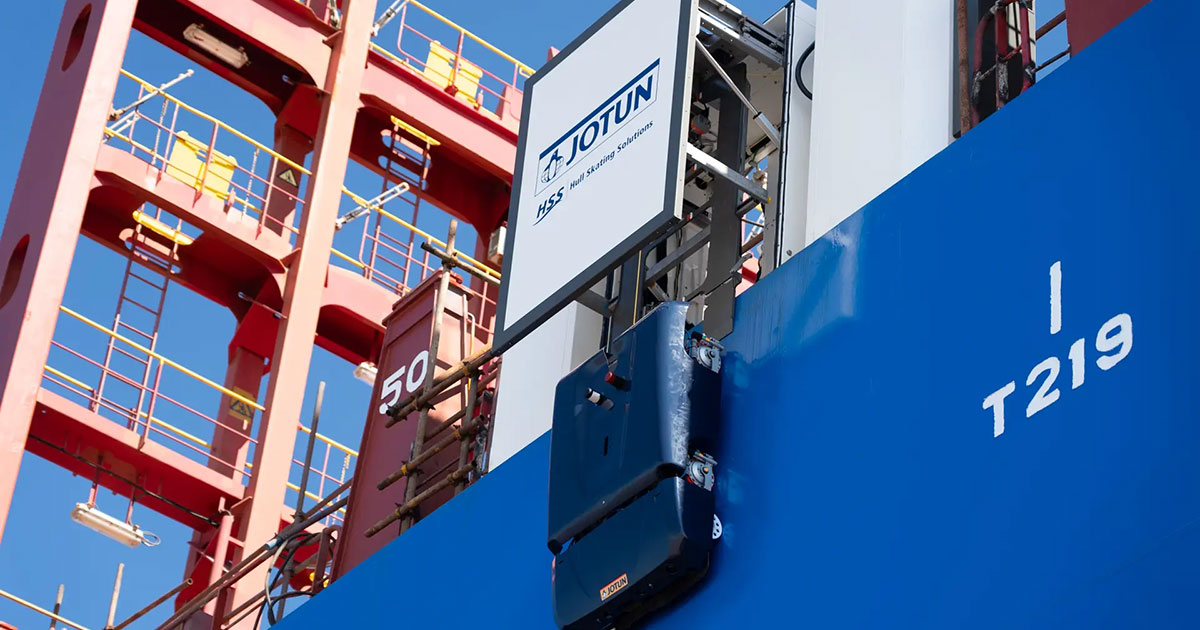
The latest additions include speed loss data for SeaQuantum Pro U and the SeaQuantum III- and S-series, alongside the recently announced results for Hull Skating Solutions (HSS). Together with earlier results for SeaQuantum X200 and the company’s previously announced avoided CO2 emissions figures for 2025, this means Jotun now has documented speed loss results across a broader share of its hull performance portfolio.
“Transparency is fundamental to building trust in our industry,” said Morten Sten Johansen, Global Category Director for Hull Performance at Jotun. “For many years, performance claims have been difficult to compare. Through this work, we aim to bring clarity to our customers’ decision-making.”
“For many years, performance claims have been difficult to compare. Through this work, we aim to bring clarity to our customers’ decision-making,” said Morten Sten Johansen, Global Category Director for Hull Performance at Jotun.
The speed loss verifications follow established ISO 19030 methodologies and are based on in-service operational data from a representative range of vessels. Jotun’s portfolio now consists of a broad range of products and solutions verified using this methodology, including:
- SeaQuantum III/S-series with an average of 1.8% speed loss.
- SeaQuantum Pro U with an average of 2.5% speed loss.
“Being able to validate the performance of these products is important for us, as they are relevant for many owners and operators in various trades and operations,” said Habibe Escobar, Global Category Manager Hull Performance in Jotun. “As with all our hull performance products and solutions, the analysis follows ISO 19030 methodology with 1 year as the reference period.”
Earlier verified products and solutions include:
- SeaQuantum X200 with an average of 1.0% speed loss.
- Hull Skating Solutions (HSS), with assessments indicating no measurable speed loss and an “always clean hull”.
“These verifications are based on standardized methodologies and a structured assessment of in-service operational data,” said Olav Rognebakke, Head of Section Hydrodynamics and Stability at DNV. “By applying ISO 19030 principles and independently assessing data quality and representativeness, we provide trusted and consistent verification of vessel performance, giving owners and the wider industry greater confidence in the real-world impact of these solutions.”
Earlier this year, Jotun published verified figures for total avoided CO2 emissions from vessels coated with Jotun products in 2025, further linking hull performance to measurable environmental impact.
“Last year our customers avoided 11.8 million tonnes of CO2 emissions through the use of our hull performance products and solutions. By combining speed loss data across our portfolio with avoided emissions figures, we are able to translate performance into operational outcomes such as lower emissions and fuel saving,” said Morten Sten Johansen in Jotun. “We think making decisions based on real evidence is fair for our customers, and we will continue to develop products and solutions that will make a difference for the industry.”