The partnership and subsequent investment are enabled through the Industrial Technological Benefits (ITB) policy and in support of KONGSBERG programs in Canada. This CAD 76.5 million investment will directly support improved facility infrastructure, onboarding of applied research and faculty expertise, and ongoing research and long-term capability development.
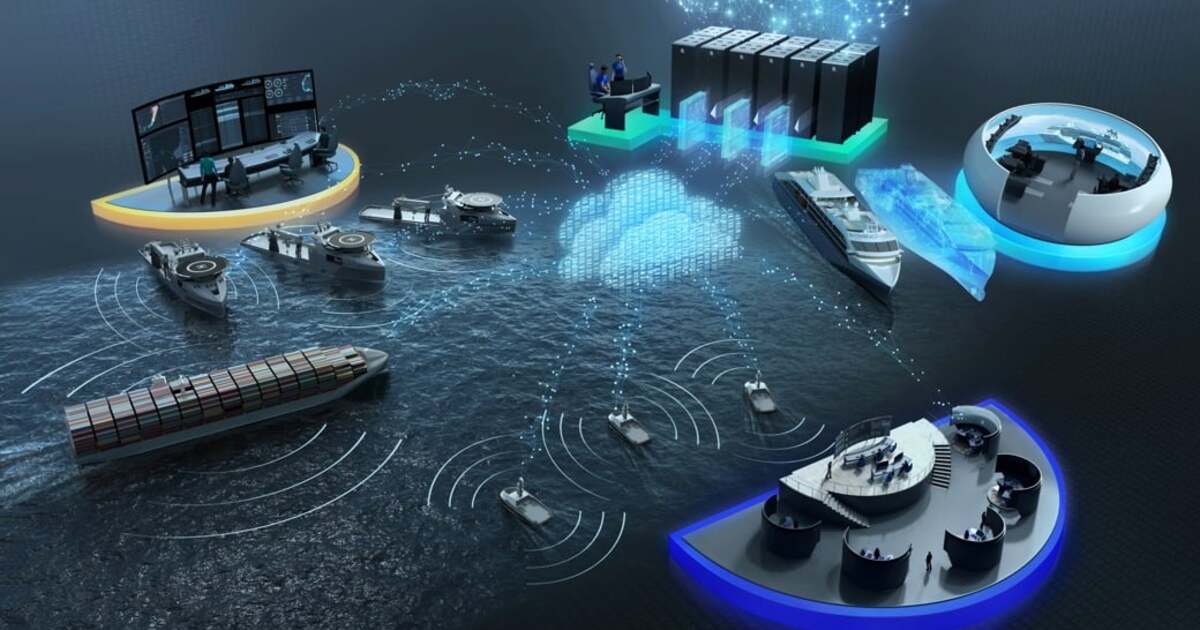
Through the partnership, BCIT’s new Simulation Center will be built around Kongsberg Maritime’s simulation technology, providing a synthetic environment, development tools, and APIs to support collaborative applied research with Canadian industry, academia, defense, and public-sector stakeholders. It will serve as a platform for prototyping, human factor studies, testing, and accident and incident analysis, including de-risking new concepts in areas such as maritime safety, autonomy, cyber resilience, critical infrastructure, port development, and low- and zero-emission operations. The hub will also help accelerate commercialization opportunities and support the development of sovereign Canadian capability in a strategically important sector.
“KONGSBERG’s investment in the Marine Innovation Simulation Centre of Excellence in British Columbia, made through Canada’s Industrial and Technological Benefits Policy, is a significant step forward for Canada’s maritime sector. As the first national hub for maritime simulation and applied research, the center will help address the shortage of certified mariners and drive innovation. It will also support Canadian small and medium-sized businesses in developing new products and bringing them to market, while strengthening Canada’s defense industrial base. It directly addresses a skills shortage that both commercial and DND operators have identified, in advance of the new fleets being delivered,” said the Honorable Mélanie Joly, Minister of Industry and Minister responsible for Canada Economic Development for Quebec Regions.
The partners will implement a strategic long-term capability to support sustainable and future-oriented maritime development. The technology partners will deliver the core systems, simulation environment, and technical expertise required to enable high realism, scalability, and innovation across the project’s solutions.
“We are very pleased to demonstrate our continued commitment to Canada through this partnership. Sovereign digital systems are a key capability outlined in Canada’s defense industrial strategy. Our company is pleased to play a role in building out key defense capabilities, based on KONGSBERG and Norway’s long history of maritime domain research and infrastructure,” said Jordan Freed, President and Managing Director at Kongsberg Geospatial, KONGSBERG’s Ottawa-based subsidiary.
“Together with BCIT, we are establishing a long-term innovation and research hub for Canada’s maritime sector—one that can support safer operations, faster competence development and the testing of new concepts before they are deployed in the real world,” said Are Føllesdal Tjønn, Managing Director, Maritime Simulation at Kongsberg Maritime. “By combining advanced simulation with collaborative R&D, MISE will empower Canadian maritime capability and support future sustainable growth.”
To expand access and increase training capacity, the partnership will provide licenses for cloud-based simulation systems, enabling BCIT to extend learning beyond the campus—supporting flexible delivery, additional practice hours, and remote and distributed training models for its students, while also helping increase access to maritime education and skills development opportunities for Indigenous communities.
“The Marine Innovation Simulation Centre of Excellence speaks to the power of collaboration and partnership. This innovative project will enable the creation of new education and training programs, support small and medium-sized businesses to commercialize new products, and create the most advanced marine education research environment in Canada,” said Dr. Jeff Zabudsky, President of BCIT. “This unique partnership combines workforce development, applied research, and industry collaboration in one environment.”
“MISE reflects BCIT’s commitment to preparing the next generation of talent for Canada’s evolving marine sector,” said Jennifer Figner, Provost and Vice President, Academic, BCIT. “By expanding access to advanced maritime training and immersive learning opportunities, MISE will equip learners with the skills, experience, and industry connections needed to succeed in a rapidly changing sector. It will strengthen BCIT’s ability to deliver responsive, future-focused education that meets the needs of employers and communities across Canada.”
BCIT’s strong academic capability, applied research expertise, and educational leadership are central to the implementation and development of the project. Together, the partners expect the initiative to generate significant socio-economic value through workforce development, stronger industry–academia collaboration, innovation opportunities for Canadian small and medium-sized businesses, and broader knowledge transfer across the maritime sector. The project is also expected to support regional economic activity, strengthen sovereign industrial capability, and create long-term benefits for training, research, and commercialization in Canada.