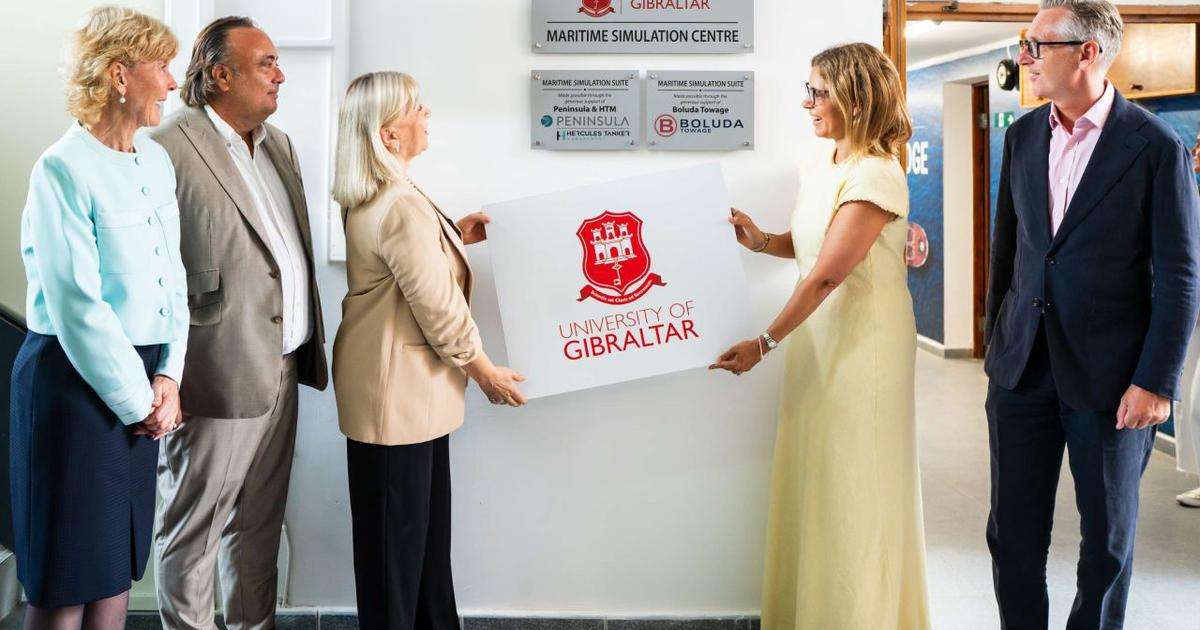
As the only facility of its kind in the region, it includes two new Simulation Suites that leverage the latest technology from maritime simulation developer Wärtsilä and fulfill training requirements mandated by the UK’s Maritime and Coastguard Agency (MCA).
The center has been funded by global bunker supplier Peninsula, Hercules Tanker Management, and Boluda Towage and provides students and maritime professionals with immersive training in a safe and controlled environment. This supports in bridging the gap between theoretical classroom learning and the practical application of skills offshore.
John Bassadone, Founder and CEO of Peninsula and Hercules Tanker Management, said: “Investing in the next generation of maritime industry professionals is hugely important. This initiative will support the talent pipeline, providing crucial skills in handling alternative fuels, which is undoubtedly going to become a bigger part of the job in the future.”
The facility features a Part Task Navigational Bridge Simulator, fully compliant with the MCA’s sea-time equivalency requirements. With multi-language instructions, the simulator also delivers tailored training modules for Peninsula officers and crew, including for LNG bunkering.
The launch follows a partnership between the University and Peninsula, which kicked off in 2025, designed to support the region in becoming a global center of excellence for maritime training, in line with industry needs. The Memorandum of Understanding between the two organizations also aims to address the gaps in knowledge around alternative marine fuels with the development of training frameworks.
Under the wider agreement between the organizations, Peninsula and the university have also been working to establish a joint study group to support the development of educational and training content for alternative marine fuels, including the transportation, storage, and supply of these fuels.
Aaron Lopez, Head of Maritime Academy at the University of Gibraltar, added: “Working with maritime industry leaders to help develop the future talent of this crucial sector has been a truly valuable experience. The launch of this simulator is a prime example of how industry and education organizations can work together effectively to develop the skills seafarers need and ensure they are prepared for the real-world challenges they will face in their future careers.
“We’re excited to see how our partnership with Peninsula grows even further in the future, helping us to address critical skills gaps and embrace fuels, like biofuels, that will unlock decarbonization efforts on a global scale.”