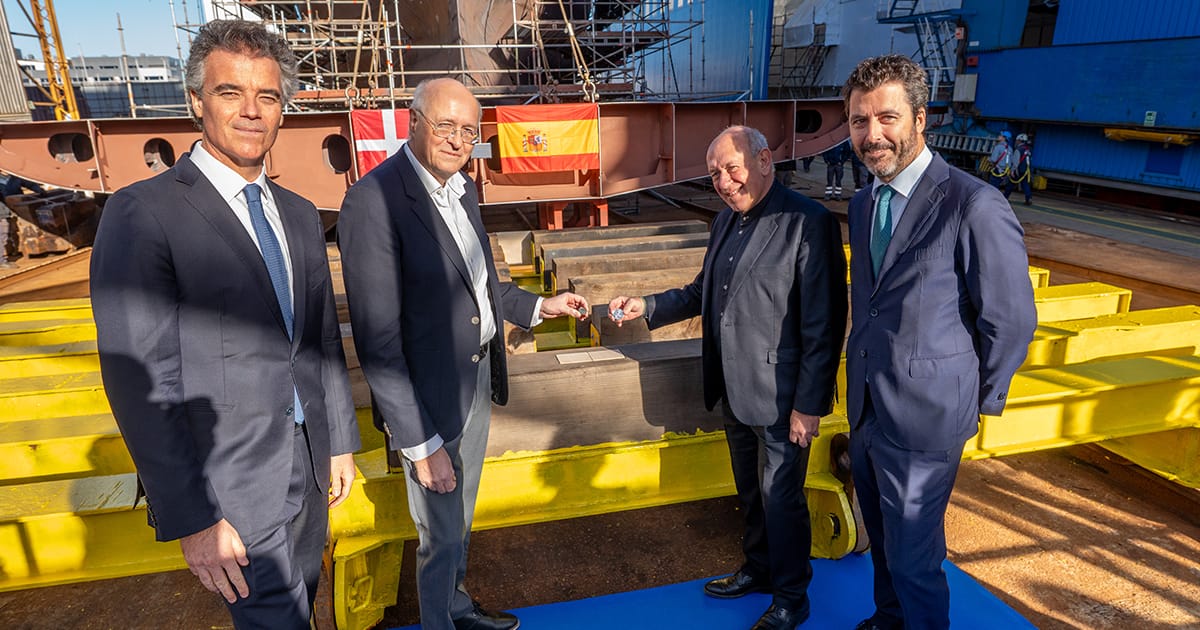
“It is a great pleasure that we can now mark the beginning of the physical construction of Dana V. With the construction of Dana V, Denmark will have a research vessel at the latest and most advanced technical level, which can sail almost silently in Oceans and Arctic water. Dana V will be a crucial platform for a wide range of research tasks in the Danish Realm,” said DTU Director Claus Nielsen.
“This keel laying of Dana V is an important milestone, and I am looking very much forward to the final delivery of Dana V in the fall of 2027. With Dana V, we will be able to conduct multidisciplinary research, including advanced hydroacoustics, in noise-reduced environments and having a polar-class,” said Fritz Köster, professor at DTU.
“The Dana V represents a major leap forward for Danish marine research. Equipped with state-of-the-art technology, it combines long-range navigation capabilities with a strong focus on marine ecosystem preservation, allowing it to operate in the most demanding Arctic conditions. This vessel reflects our commitment to innovation and marine science,” said Marcos and Guillermo Freire, general managers at Freire Shipyard.
Cutting-Edge Technology for Marine Research
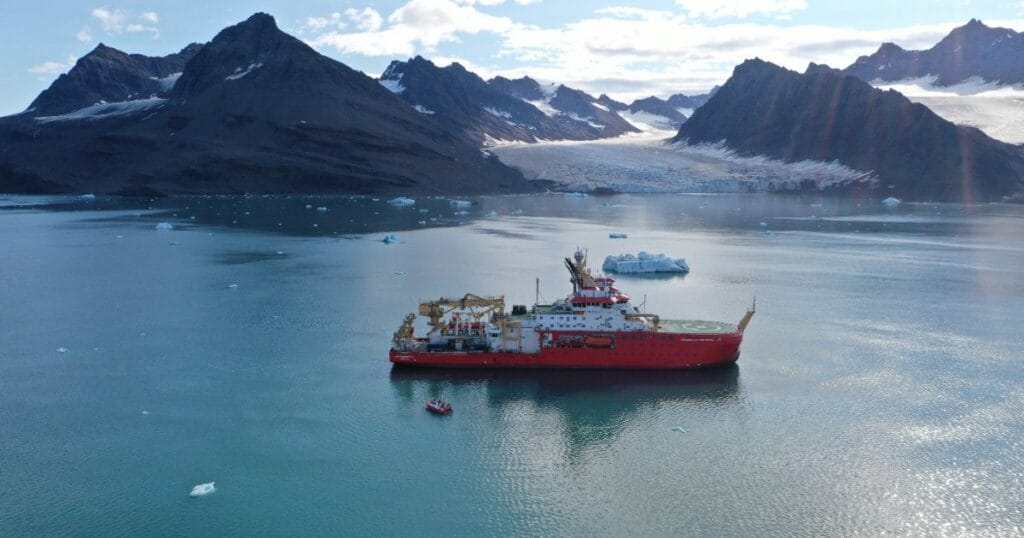
Successor to the Dana IV, the Dana V was designed by the Knud E. Hansen A/S consortium, Odense Maritime Technology A/S, and Naval Architects, with environmental sustainability at its core. The vessel can operate on either biodiesel or electric batteries, switching between propulsion systems as mission requirements dictate, particularly for operations demanding silent navigation.
Dana V will be a multidisciplinary research platform, including research on fish stocks, marine ecosystems, ocean currents, and biodiversity variations. The design allows for studies on the interactions between biology, physics, and climate, as well as the geological conditions of the seabed and water column.
To support these missions, the Dana V will be equipped with advanced systems ensuring high-quality data collection and documentation. Its instruments include cutting-edge scientific sonars, sound velocity meters, trawl control systems, and other specialized marine research equipment.