This work builds on the five-year technology collaboration between Shearwater and NVIDIA. Reducing cycle time and lowering emissions are key objectives for Shearwater, and enabling Reveal to run on the power-efficient Arm-based Grace Hopper Superchip is a significant step forward in this work, helping energy companies deliver faster time-to-image while reducing the power and cost of compute-intensive seismic processing.
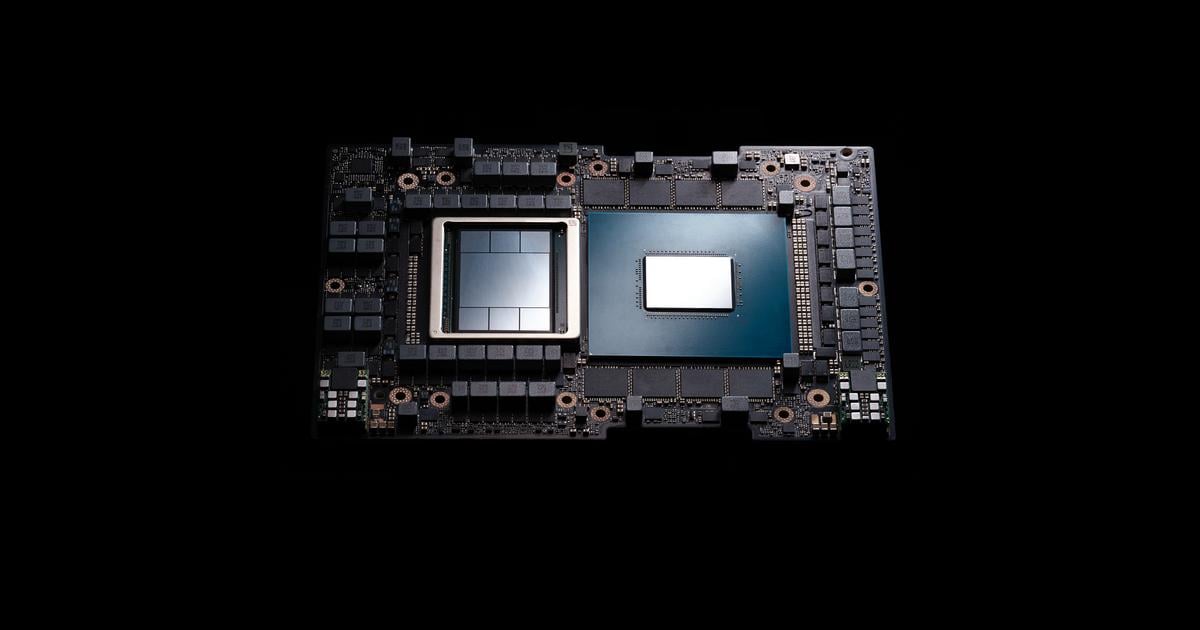
Shearwater engineers ported the full Reveal platform, a complex package of more than 350 tools spanning several programming languages, to run on Arm, and then benchmarked it on an NVIDIA GH200 Grace Hopper system against an x86 system with NVIDIA Hopper GPUs. The early results are encouraging across both AI and geophysical workloads:
On the deep-learning training benchmark, the tightly integrated NVIDIA NVLink-C2C interconnect between the Grace CPU and Hopper GPU delivered the largest benefit, particularly for data-movement and launch-sensitive operations. On the Kirchhoff Depth Migration imaging workloads, Grace Hopper delivered consistent double-digit speed-ups together with near-linear scaling across multiple nodes. The Arm-based Grace CPU also brings the low power consumption for which Arm processors are known, supporting Shearwater’s objective of lowering emissions from compute-intensive high-performance computing (HPC) workloads.
“We are committed to keeping Reveal at the forefront of evolving technologies and giving customers the flexibility to deploy it where it best serves their business, whether on ARM or x86, on premises, or in the cloud,” said Simon Telfer, Chief Technology Officer at Shearwater. “This approach ensures customers have the freedom to choose the deployment model that meets their needs while maximizing the value of their investment.”
Shearwater and NVIDIA have collaborated since 2022 to accelerate Reveal on NVIDIA platforms, previously achieving a 10x speed-up of its most compute-intensive imaging algorithms using NVIDIA accelerated computing. In June 2024, Shearwater announced plans to harness the NVIDIA GH200 Grace Hopper Superchip to accelerate seismic workloads, with Shearwater becoming the first seismic processing independent software vendor to adopt the GH200. The latest work marks the next chapter in this collaboration, bringing that ambition close to a commercial product.
Grace Hopper pairs an energy-efficient Arm-based NVIDIA Grace CPU with an NVIDIA Hopper GPU over the high-bandwidth NVLink-C2C interconnect. Arm-based processors are known for their low power usage and cost-effectiveness, which supports Shearwater’s work to reduce emissions from running HPC workloads and to promote sustainability within the energy industry. Throughout the porting and benchmarking effort, NVIDIA provided both technical and hardware support.
“Energy companies are processing increasingly complex datasets while working to reduce the power required for their most demanding HPC workloads,” said Marc Spieler, Senior Managing Director, Global Energy Industry at NVIDIA. “NVIDIA accelerated computing, including the Arm-based NVIDIA Grace Hopper Superchip, is helping Shearwater’s work to shorten time-to-image, lower compute costs and advance more energy-efficient imaging.”
Work continues towards a beta release of Reveal on Arm planned for November 2026, followed by a commercial release in May 2027, including ongoing validation across the full tool set and further performance optimization. Beyond exploration and production, Reveal is used to process seismic data for shallow hazard mapping, wind farm planning, geothermal projects, and carbon capture and storage (CCS), all of which stand to benefit from faster and more efficient subsurface imaging.