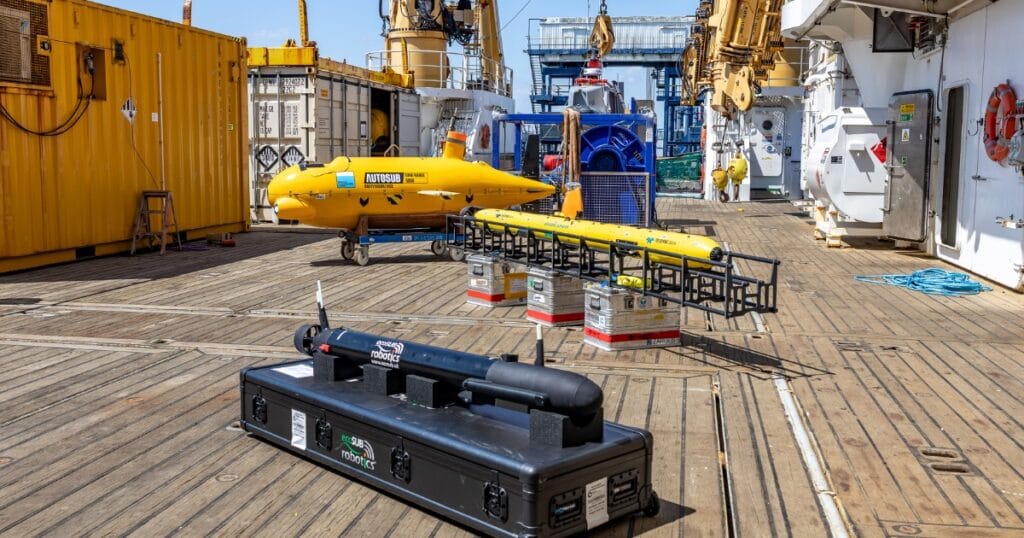
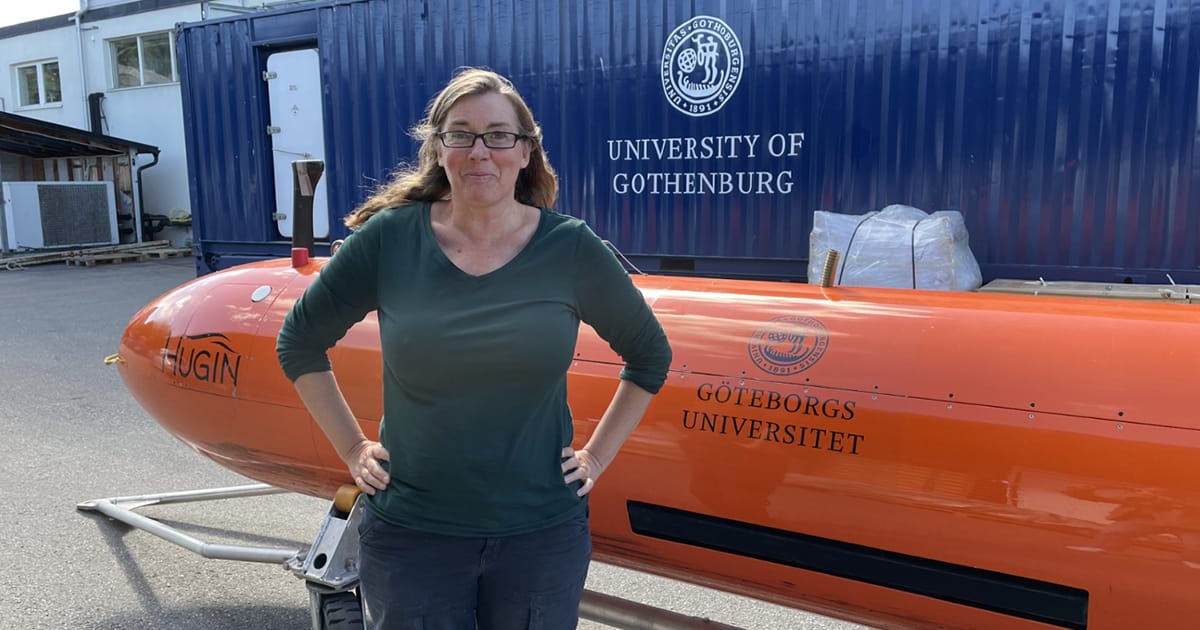
The University of Gothenburg has announced the purchase of a new underwater vehicle, which will enable the continuation of its vital research activities.
“Thanks to Ran, we became the first researchers in the world to enter beneath the Thwaites grounding-line glacier. Although ice melt and movement can be observed through satellite data, we were able to get close-up images of the underside of the ice and detailed information about the exact mechanisms driving the melting,” said Anna Wåhlin, professor of oceanography, who led the expedition with Ran in Antarctica.
Stene Førsund, Executive Vice President for Sales and Marketing in Kongsberg Discovery, is pleased that the research in Antarctica will continue with a new autonomous underwater vehicle.
“The new vehicle, Ran II, will have better capacity than Ran, with more robust emergency decision support and improved navigation. These upgrades enhance both safety and precision in hard-to-reach environments such as beneath glaciers, sea ice, and near the seabed,” he said.
About the HUGIN AUV
The HUGIN AUV combines IHO quality positioning with the highest resolution sensors on the market. HUGIN collects data from many different sensors concurrently, providing a comprehensive geophysical dataset from a single mission. This HUGIN is equipped with a 3,000-meter range, and it can access areas unreachable by ships, such as beneath glaciers, thick sea ice, and deep-sea regions. Equipped with high-resolution sensors, it measures topography, currents, and water properties simultaneously.