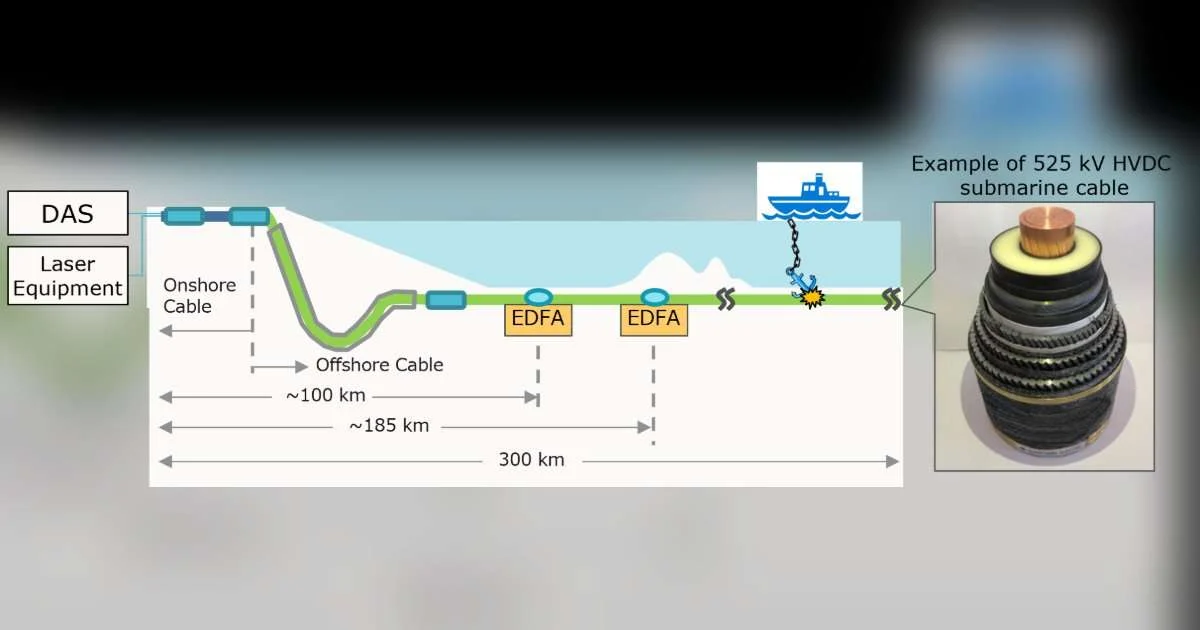
The technology has been developed and successfully demonstrated by combining Sumitomo Electric’s ultra-low-loss optical fiber and erbium-doped fiber amplifier (EDFA) technologies with a commercially available Distributed Acoustic Sensing (DAS) system provided by AP Sensing GmbH. This achievement was highly acclaimed at the recent CIGRE Paris Session 2026, one of the world’s leading international forums for electric power systems, where the paper on the topic received the Best Paper Award in the B1 PS1 Category.
Long-distance HVDC submarine cables are vulnerable to third-party damage, including impacts from ship anchors and fishing equipment. In recent years, a series of incidents involving submarine optical fiber cables—another form of subsea critical infrastructure—has highlighted the potential risks faced by HVDC submarine cables. Concurrently, the expansion of renewable energy is driving the development of HVDC submarine cables with increasingly large transmission capacities in the gigawatt range and increasing transmission distances, spanning several hundred kilometers between geographically distant regions. HVDC submarine cables, also classified as important critical infrastructure, are attracting growing attention in terms of energy security.
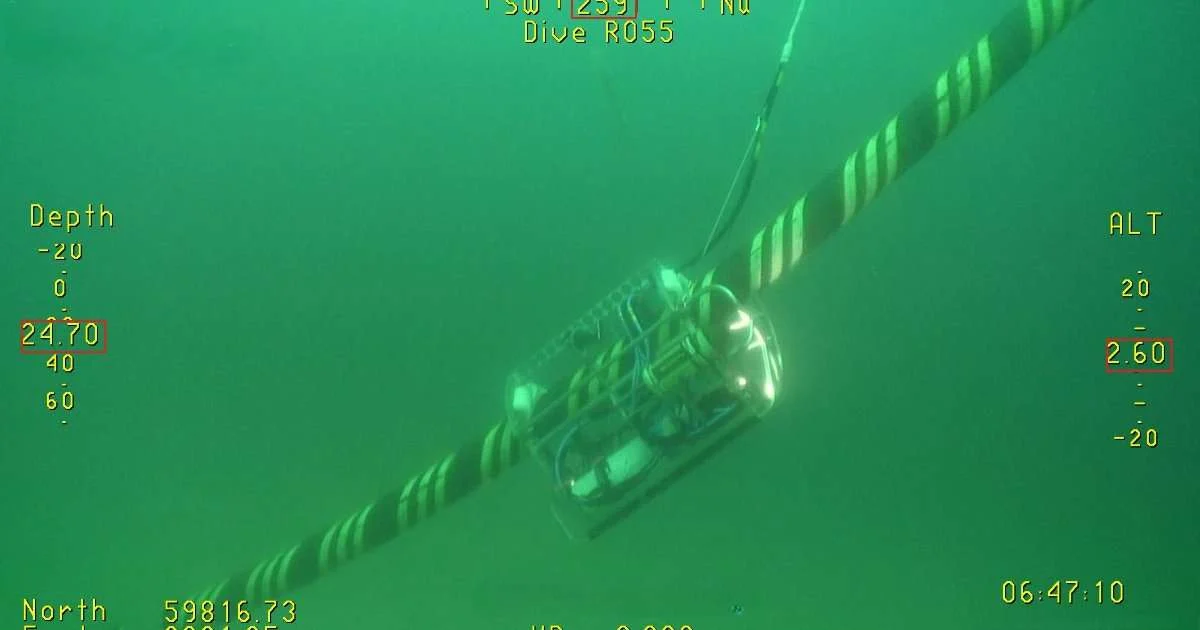
For many years, one of the key challenges associated with long-distance submarine power cables has been that most of the cable is effectively “invisible” due to limitations of current technology, thus making continuous monitoring impossible. Once an incident occurs, specifically in a blind spot, considerable time and effort are required to investigate and locate the fault on the seabed, resulting in high repair costs and prolonged interruptions to the power transmission relied upon.
Conventional fault-location methods have an accuracy limited to approximately one percent of the cable length—around 6 km on a 600 km cable—resulting in a wide area that must be surveyed on site. For submarine cables with extensive sections installed beneath the seabed, the need to investigate such a large area significantly increases the time required to identify the precise fault location.
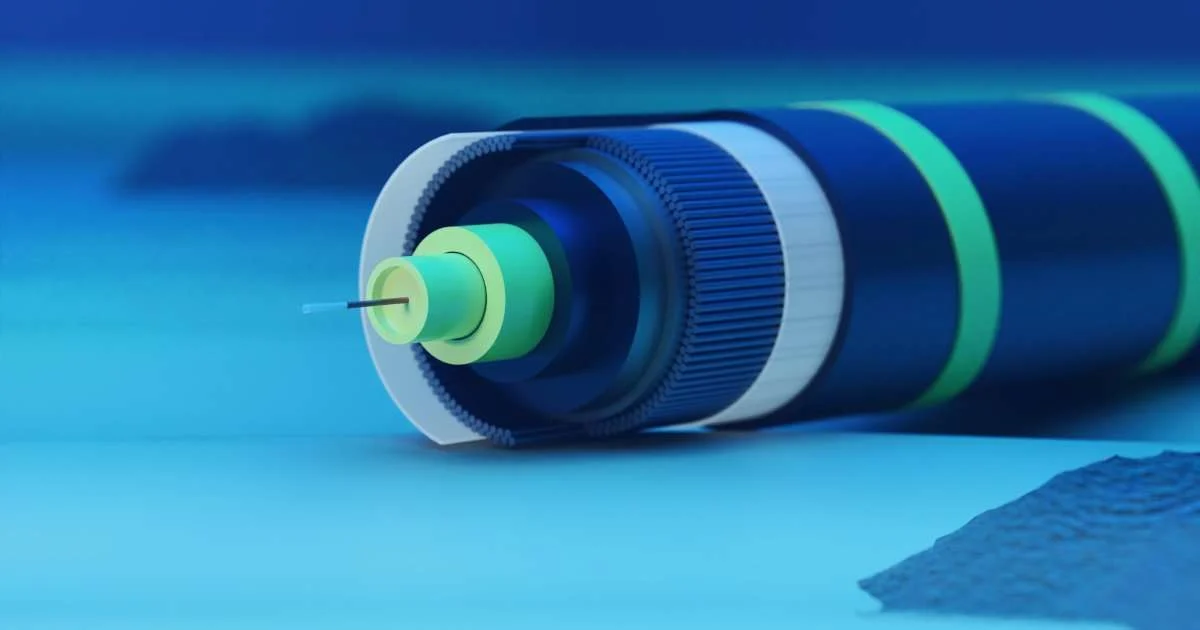
AP Sensing has developed a Distributed Acoustic Sensing (DAS) system capable of detecting minute vibrations in optical fibers and identifying abnormal events in real time. The system had traditionally been capable of monitoring distances of approximately 100 km or less. By combining AP Sensing’s expertise and cooperation with Sumitomo Electric’s long-distance optical transmission technologies—including the ultra-low-loss Z-PLUS Fiber™ 130ULL optical fiber and remotely pumped erbium-doped fiber amplifiers (EDFA)—a monitoring target distance of more than 300 km is now achievable. At the time the paper was submitted, a monitoring distance of 270 km had already been successfully demonstrated.
In a remotely pumped configuration, the laser equipment and power supply required to operate the EDFA are not installed on the seabed. This eliminates these potential sources of failure and enhances system reliability. Long-term operation of the system is also expected to be achievable through maintenance of the laser equipment installed on land. Furthermore, the ultra-low-loss optical fiber, the EDFA, and AP Sensing’s DAS system are all based on technologies with extensive field-proven track records. By combining these established technologies, the monitoring range has been extended without requiring the development of additional core technologies, paving the way for early practical deployment.
Using this monitoring capability of more than 300 km, measurements can be performed from both ends of a submarine power cable circuit, enabling continuous, real-time monitoring of the entire length of an HVDC submarine cable exceeding 600 km.
Over a 600 km monitoring distance, the theoretical location accuracy has improved by a factor of 33 compared with conventional methods, limiting the uncertainty to less than 200 meters (0.03 percent). During a practical demonstration of the technology conducted off the coast of Awaji Island, Japan and using an optical fiber integrated into an HVDC submarine cable, a weight designed to simulate a ship anchor impact was dropped onto the cable near the 262 km point. The system successfully detected the impact location with an error of only 68.4 m from the actual point of impact.
By enabling faults and external impacts to be located rapidly and accurately, this technology offers the advantage of significantly reducing the duration of power transmission downtime. Furthermore, the demonstration indicated the potential to develop methods for identifying vessels based on their approach to the cable infrastructure and the characteristic vibration signatures transmitted to the monitoring equipment by vessels in proximity to the critical infrastructure.
As HVDC networks continue to expand over longer distances, long-distance HVDC submarine cables are becoming increasingly essential to the development of renewable energy and the enhancement of energy security. Sumitomo Electric believes that enhanced visibility, early detection of abnormal events, and protection of critical assets will play an increasingly important role in improving the resilience of power infrastructure.
Reducing the time required to locate a fault following an incident also contributes significantly to lower repair costs and is therefore important from the perspective of optimizing overall project operating costs. Against this background, Sumitomo Electric aims to promote the practical implementation of this world’s first submarine cable monitoring technology.
This achievement is based on results obtained from a project commissioned by the New Energy and Industrial Technology Development Organization (NEDO).