From manufacturing special parts no longer obtainable, to bringing defunct equipment back into service and attaining the skills and qualifications to manufacture key bits of kit, the engineers of the Forward Support Units (FSUs) are driving through efficiencies and savings with a direct impact on the front line.
Forward Support Units can be found in Portsmouth (Archimedes and Brunel) and Devonport (Campbell), comprising 275 personnel in all.
They provide a combination of additional support to ship/unit engineering teams, advanced manufacturing capability and specialist engineering knowledge, and forward support around the globe to deployed ships such as the Offshore Patrol Vessels in Singapore, the Falklands, a carrier in Iceland or HMS Dragon on her mid-deployment break in Kenya.
As part of the 2029 Navy-wide drive to make the service “warfighting ready,” engineers are expanding their skillsets, adopting modern manufacturing technologies and developing innovative engineering solutions that increase operational resilience while reducing cost.
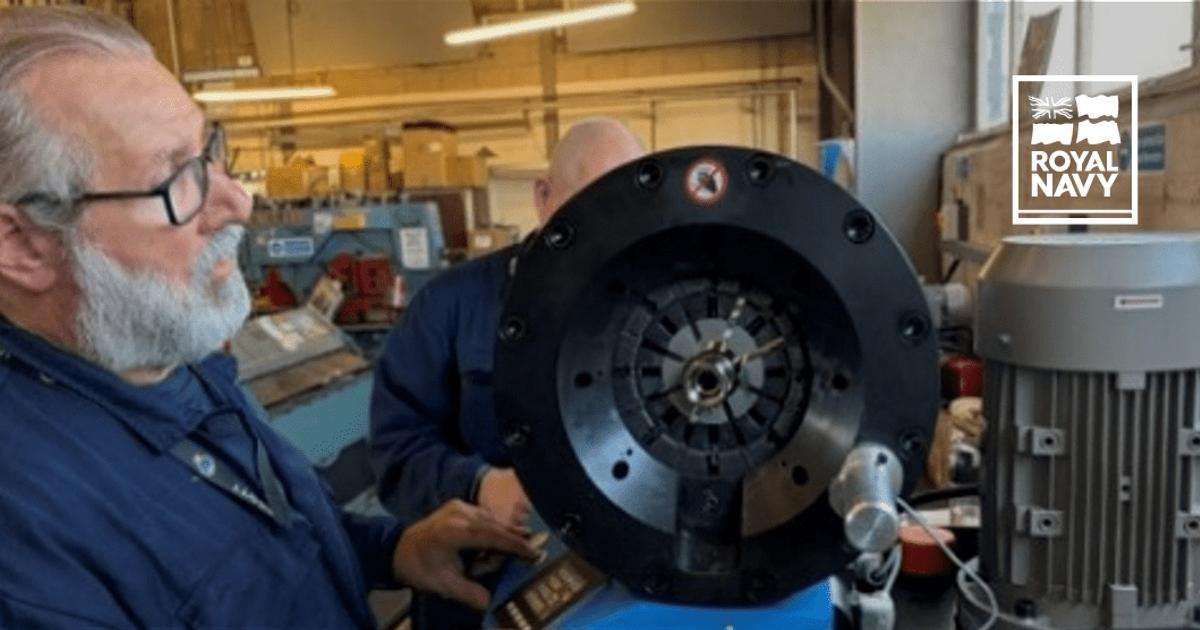
In Portsmouth, thanks to training from the British Fluid Power Association, six FSU engineers are qualified to manufacture and test flexible hoses—safety-critical components used extensively across the Fleet.
This autumn they will produce 48, all of which will undergo thorough testing; once they pass, they will be legally allowed to produce hoses which can be fitted to ships—saving time waiting for manufacturers to deliver replacements.
At the same time, the Royal Navy’s latest metal additive manufacturing capability will complement the existing polymer 3D printing capability already supporting the Fleet, allowing engineers to manufacture approved metal components, address obsolescence challenges and restore selected equipment through advanced repair techniques.
A new Metal X system has been installed in HMNB Portsmouth, whilst a large-scale containerized cold spray additive manufacturing system is being introduced to provide the ability to manufacture components up to one cubic meter in size and repair selected metal items. Together, these capabilities will significantly expand the engineering support options available to front-line ships.
The “ultimate repair shop” project—repairing and re-using equipment held in storage—has saved the Service around £340,000 this year alone.
Announced earlier this year, rather than buying replacement kit from the original manufacturer (often at huge cost/potential delay) or store-robbing other vessels, the focus has been on bringing broken equipment back into use—and if it can’t be fixed, recycling the components and metals.
The FSU Campbell Tandy Workshop in Devonport has reverse-engineered and manufactured obsolete valve guide seats for an Astute-class submarine, restoring the ability to use its on-board air conditioning plant—and ruling out the need to rent shoreside cooling equipment. Components are now being manufactured for a second boat.
And alongside all these initiatives and programs, there’s also day-to-day business to attend to. Over the summer, FSU engineers collectively delivered 27,500 hours of work (more than three years’ worth of support) to 15 vessels spanning 10 classes—everything from capital ships to submarines and autonomous boats.
“These are fantastic examples of Royal Navy engineers combining innovation, technical expertise and practical problem-solving to enhance Fleet warfighting readiness,” said Captain John Brennan, Royal Navy, SURFLOT Captain Engineering.
“By investing in new capabilities and developing our people, we are creating a more agile and resilient engineering support organization, better equipped to meet both today’s operational demands and the challenges of the Hybrid Navy.”