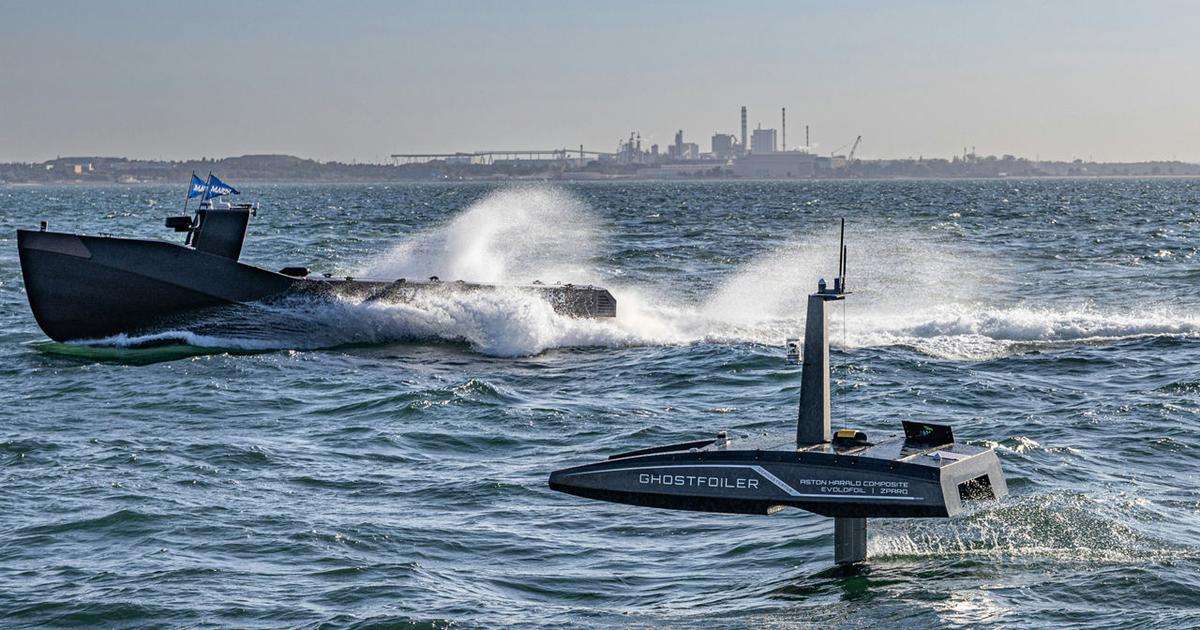
Zulu Squadron, of the Royal Navy’s Mine and Threat Exploitation Group (MTXG), is entering a new era in mine warfare with the use of three cutting-edge autonomous technologies.
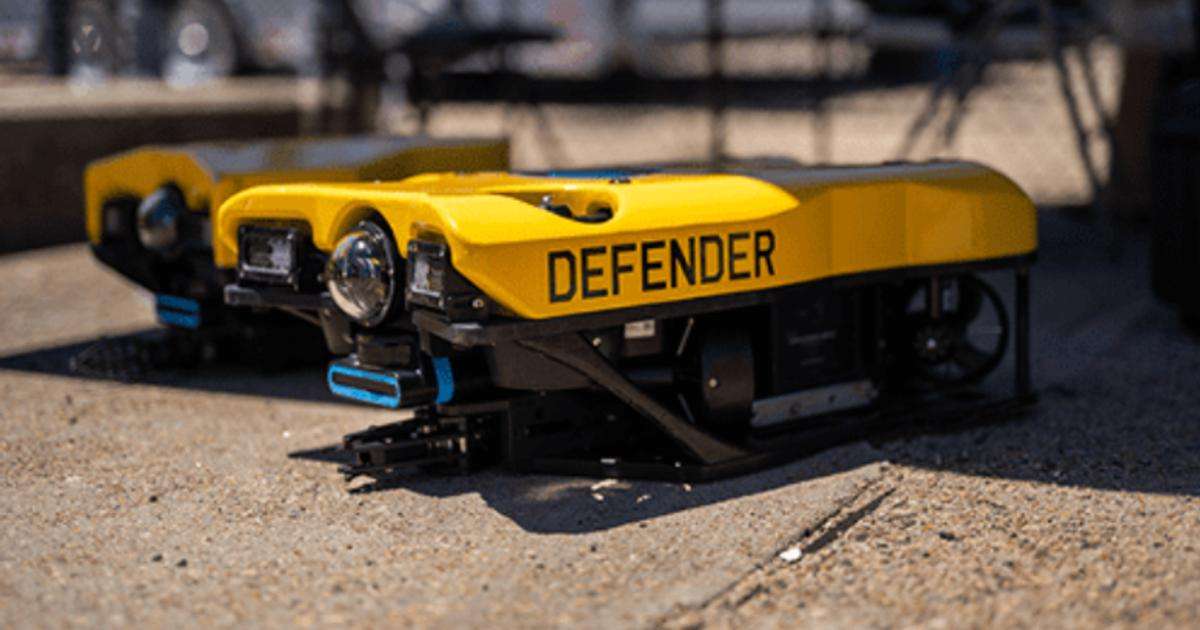
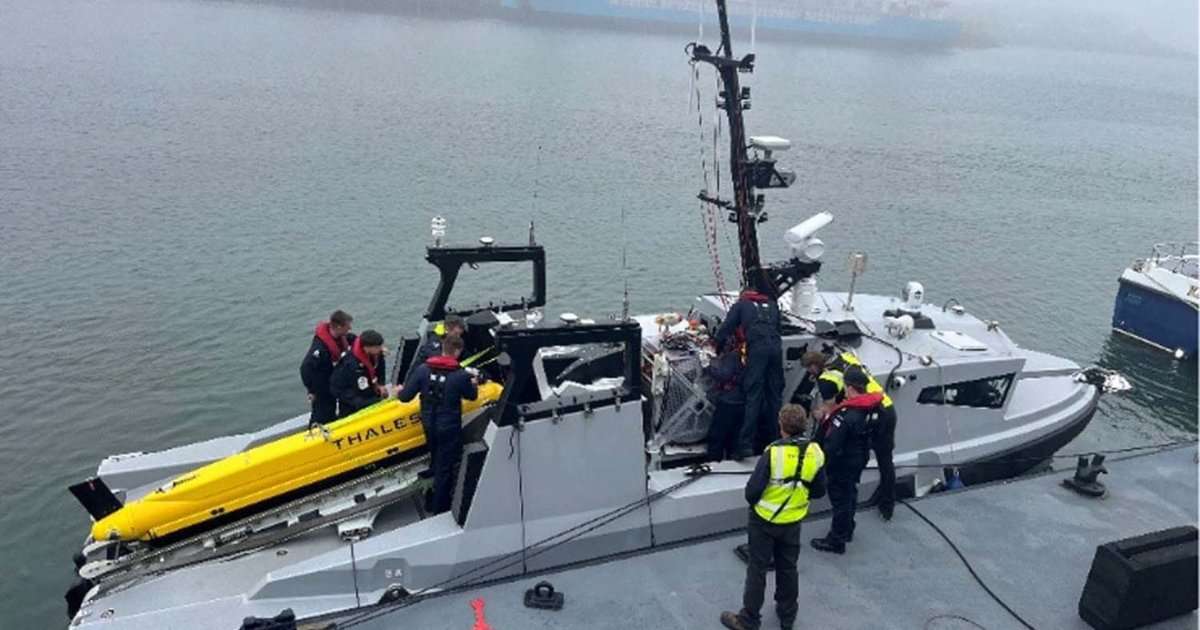
By the end of the year, the squadron will have trained on—and taken delivery of—Thales’ minehunting countermeasures system, the TKMS’s Seacat medium uncrewed underwater vessel and their Sweep Portable System: an autonomous towed acoustic system designed to mimic target signatures.
Deployed from either a vessel or the shore, it can be used to reduce the risk ahead of sending in personnel and more traditional minehunting methods.
The introduction of the kit marks a transition away from commercial off-the-shelf equipment to more purpose-built military technology.
To support these changes, Zulu Squadron has evolved its structure into two distinctive units. Unit 1 has spent most of 2026 in Plymouth carrying out intensive training and development for operators and maintainers of the Thales systems.
Meanwhile, Unit 2 has adopted the TKMS equipment, training in Weymouth to ensure they can use and look after the kit.
With training finished, the teams are moving into the next phase and conducting sea trials to validate procedures and demonstrate the systems in conditions they will be used in on operations.
Lieutenant Scott White, from MTXG, said: “The significance of this change extends far beyond the equipment itself. Autonomous mine warfare is rapidly becoming a cornerstone of maritime security, offering the ability to detect, classify and neutralize underwater threats while keeping personnel at a safe distance.
“This approach preserves freedom of maneuver for the fleet and ensures the protection of the UK’s sensitive waters, critical infrastructure and key maritime routes.”
As training progresses and sea trials continue, Zulu Squadron is helping shape the future of Royal Navy mine warfare with the introduction of these new systems, including the first sweep system in more than 60 years.
Innovation and modernizing warfare were at the centre of the recent Exercise Sea Breeze in the Channel which brought together mine countermeasures forces from multiple countries, with MTXG’s X-Ray Squadron Unit 2 part of the UK contingent.
For them, the exercise demonstrated how effective integration with partner nations can enhance capability, accelerate learning and ultimately increase operational lethality.
Working alongside US Navy expeditionary mine countermeasures teams exposed Unit 2 personnel to new equipment, procedures and concepts, providing fresh perspectives on how autonomous systems can be employed more effectively in different operational contexts.
The squadron also successfully completed the full detect-classify-identify cycle—known as the ‘MCM kill chain’—on multiple contacts, including two items assessed as historic ordnance. The ability to independently close the entire MCM kill chain not only highlighted the technical proficiency of the team but also underlined the maturity and effectiveness of autonomous systems within the mine warfare domain.
Lt Scott added: “As autonomous systems become increasingly central to mine warfare and seabed operations, exercises such as Sea Breeze provide a vital environment in which to test concepts, integrate with allies and learn from partner nations.
“For XU2, the exercise reinforced the value of multinational cooperation and demonstrated that the path to greater lethality lies not only in new technology, but in the ability to integrate, adapt and learn faster than potential adversaries.”
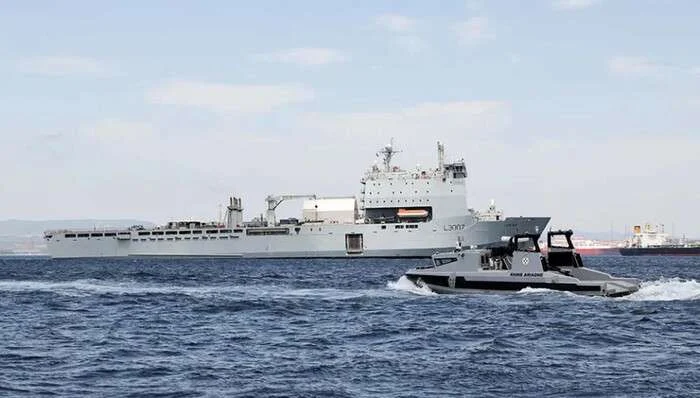
Meanwhile, away from the UK, X-Ray Squadron Units 1 and 3, Yankee Squadron Units 1 and 2 and Delta Unit from the Diving and Threat Exploitation Group have had new experiences while on board RFA Lyme Bay, in the Middle East.
After transiting through the Suez, the minehunting teams completed training to ensure they would be ready to operate in the region if called up—from Combined Effect Tactical Force Integration Training to Mission Rehearsal Exercises.
But as the Iran-Israel-USA conflict continued, Lyme Bay headed south to Mombasa in Kenya with 27 personnel from X-Ray Squadron having never “crossed the line”: the rite of passage of crossing the Equator was carried out in true Royal Navy tradition.
It is believed this was the first time in more than five decades that a significant proportion of the Mine Warfare branch had participated in a crossing-the-line ceremony. The last comparable occasion is thought to have been in 1971, when the 6th Mine Countermeasures Squadron (Dragon Squadron) was disbanded in Hong Kong.
Following the closure of the Suez Canal during the Six-Day War, HMS Maxton, HMS Bossington and HMS Hubberston undertook a 73-day passage back to the UK via the Cape of Good Hope.
For those of Yankee Squadron on RFA Lyme Bay the experience has been a highlight as they’ve gone from focusing on trials and experimentation of autonomous systems to being on the frontline.
They saw capabilities that only months earlier had been undergoing trials in UK waters being deployed as part of a multinational force operating in the Middle East and delivering operational effect thousands of miles from home.
In the space of 12 months, the squadron has completed its first Basic Operational Sea Training, accelerated the delivery of autonomous mine warfare capability, integrated with allies, supported Homeland Defence and deployed thousands of miles from the UK.
The teams in the Middle East have been supported by the MTXG Headquarters at HMNB Clyde, which brings together specialists from operations, engineering, logistics, communications and support branches to generate, sustain and develop the Royal Navy’s autonomous mine hunting capability.
Beyond current operations, MTXG HQ has also been heavily involved in introducing the Royal Navy’s latest kit and MMCM by working closely with the Naval Armaments Director Group (NADG) and delivery partners.