Fuel consumption of the vessel’s gen-sets can be around 40% less than that of a traditional CSOV using internal combustion engines for power and propulsion, reducing operator exposure to volatile fuel prices and rising carbon costs.
Gen-sets that operate at a consistent and efficient load to charge onboard batteries can provide the offshore wind industry with a sustainable, competitive route to increased efficiency and reduced OPEX on its service vessel fleet. Battery-first vessel designs can also take advantage of onshore and offshore charging infrastructure as it is deployed, enabling zero-fuel operation as charging infrastructure becomes increasingly available.
Bibby Marine urges the offshore wind industry to recognize that it need not wait until electric charging infrastructure becomes the norm to choose service vessels that can deliver operational efficiencies tied to lower fuel consumption and carbon emissions.
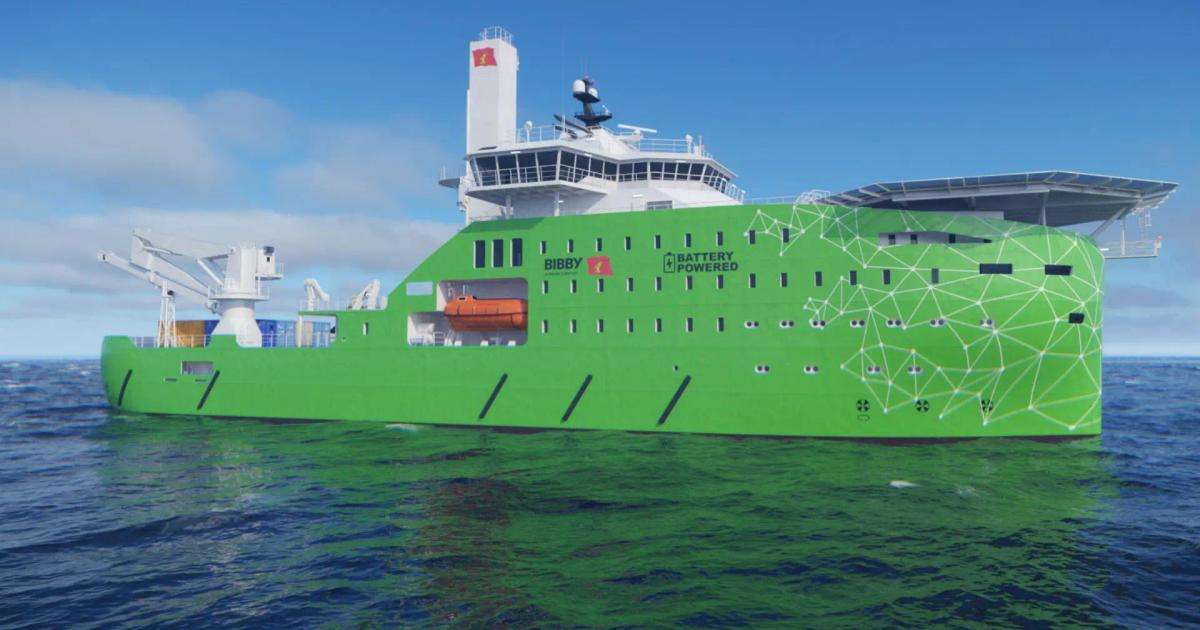
Bibby Marine’s battery-first eCSOV, launching in mid-2027, has been designed to operate efficiently in a self-charging, battery-first mode, using less fuel than a conventional CSOV, while delivering market-leading operational flexibility for offshore wind operations. Battery-first vessels deliver cost savings for operators immediately, reducing exposure to volatile fuel markets and rising carbon costs, while retaining a clear future pathway for the vessel to deliver fully electric operations as offshore charging infrastructure expands.
Importantly, this is not a zero-fuel proposition. The eCSOV’s self-charging, battery-first system still uses fuel, but its battery-first design allows onboard generators to operate at a more consistent and efficient load rather than continuously responding to changing power demand. This reduces fuel dependency and contributes to lower operating costs and emissions.
“One of the biggest misconceptions surrounding vessel electrification is that it only delivers value once offshore charging infrastructure is in place. That’s simply not the case,” said Kevin Brown, Commercial Director at Bibby Marine.
“Our battery-first design has been developed to deliver meaningful commercial benefits from day one. The batteries provide the primary source of power, while onboard generators recharge the system at a steady, efficient load. That significantly reduces operating costs compared with conventional propulsion, while giving operators the flexibility they need today.”
This creates immediate commercial advantages for both offshore wind developers and vessel operators, particularly at a time when fuel prices remain volatile, and pressure continues to grow to reduce both operational expenditure and carbon emissions.
While offshore charging will ultimately unlock even greater benefits, Bibby Marine believes it should not become a reason to delay electrification.
“The industry doesn’t have to choose between today’s reality and tomorrow’s ambition,” Kevin continued. “Battery-first vessels allow operators to begin reducing operating costs immediately, while ensuring they are ready to take advantage of offshore charging as the infrastructure develops. That makes the self-charging, battery-first eCSOV a practical vessel for the transition—commercially viable from day one, with a clear pathway towards fully electric operations whilst simultaneously buffering clients from ever-rising fuel costs and offering a route to mitigate strategic energy security risks.”
Bibby Marine’s eCSOV, currently under construction at Armon Shipyard in Vigo, Spain, is expected to enter service in 2027. The vessel will operate on a battery-first, self-charging basis, supported by dual-fuel methanol/MGO generator sets.
To download Bibby Marine’s whitepaper, visit: https://www.bibbymarine.com/wp-content/uploads/2026/02/Bibby-Marine_The-Electrifying-Proof_Whitepaper.pdf