
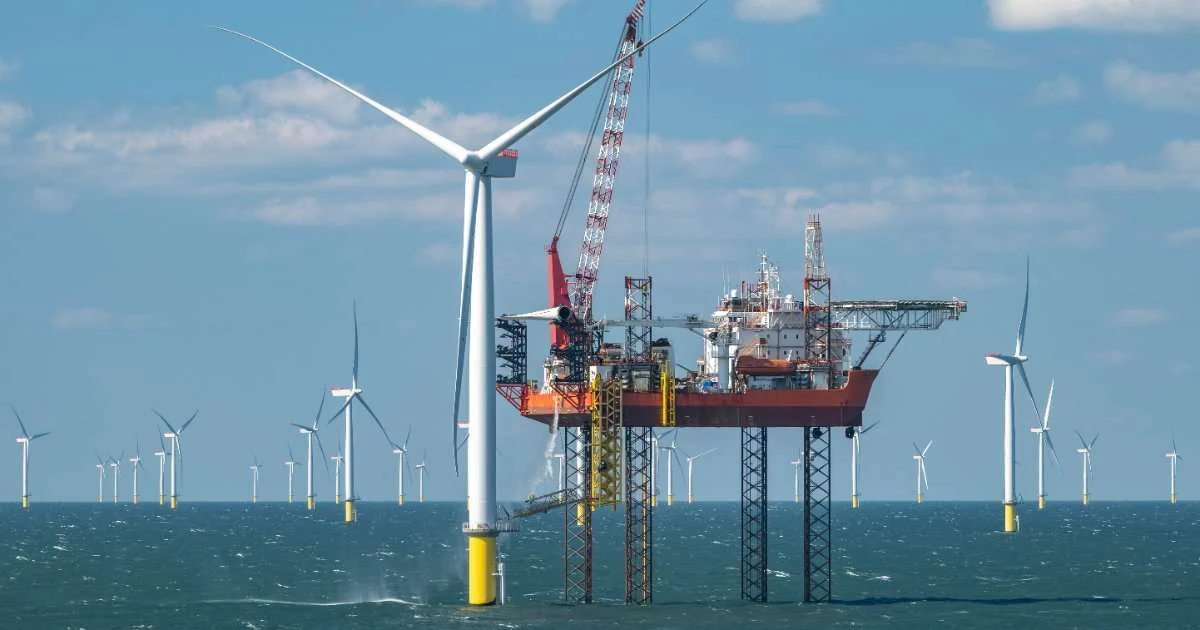
GlobalData’s latest report, “UK Power Market Trends and Analysis by Capacity, Generation, Transmission, Distribution, Regulations, Key Players and Forecast to 2035,” reveals that the country’s installed power capacity is projected to almost double between 2025 and 2035. Renewables are expected to account for 73% of the generation fleet by the end of the forecast period, led by offshore wind, solar PV, and onshore wind.
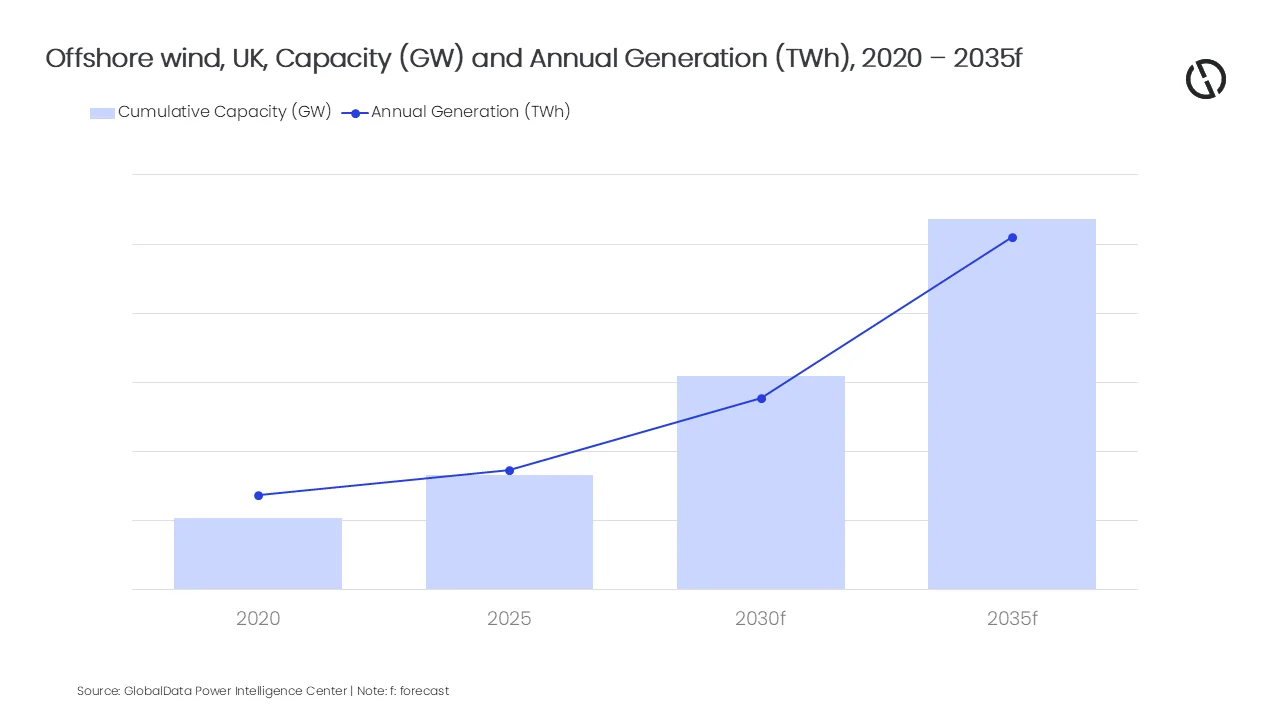
Attaurrahman Ojindaram Saibasan, Power Analyst at GlobalData, commented: “Offshore wind is central to the UK’s clean power strategy. The project pipeline includes large North Sea developments and the ScotWind leasing round, while annual Contracts for Difference (CFD) auctions continue to provide the principal route to market for large-scale renewable projects. However, project awards alone will not ensure delivery. Developers require timely connections, supply-chain capacity, and a market framework that reflects the changing value of power by location and time of day.”
Electricity demand in the country is expected to recover and grow as transport, heating, and industrial processes electrify. Renewable generation will account for roughly two-thirds of gross power output by 2035, while gas-fired capacity continues to provide flexible balancing capacity and nuclear contributes firm low-carbon generation. The expected retirement of older nuclear stations before new projects enter operation will make the timing of replacement investment important for system security.
The grid is the main delivery constraint. A large share of the UK’s renewable pipeline is seeking access to networks that already face connection queues, while new offshore generation will require expanded transmission links from coastal landing points to demand centers. The National Energy System Operator, transmission owners, and Ofgem are pursuing reforms intended to accelerate strategic network investment and improve the connection process.
Saibasan added: “The UK has a strong foundation for a high-renewables system: a mature CFD mechanism, deep offshore wind resources, extensive interconnection, and a competitive retail market. Yet the next stage of the transition requires the network to become more anticipatory. Transmission, distribution capacity, storage, demand response, and digital flexibility must develop alongside generation rather than after it.”
The UK remains among Europe’s most interconnected power markets, with operating links to France, the Netherlands, Belgium, Norway, Denmark, and Ireland. Interconnectors can support security of supply and help balance renewable output across markets, although they also increase the importance of coordinated market arrangements and resilient cross-border infrastructure.
Investment through the end of the decade is expected to focus on offshore wind and nuclear, alongside solar PV, onshore wind, grid infrastructure, and flexibility assets. CFDs provide long-term revenue support for renewable generation, while the Regulated Asset Base model is designed to support financing for new nuclear projects. The Review of Electricity Market Arrangements will be influential in determining how investors manage locational constraints and periods of high renewable output.
Saibasan concluded: “The UK’s challenge is no longer setting clean-power ambitions; it is converting an extensive development pipeline into operating assets. Success will depend on synchronizing renewable deployment with grid expansion, flexible capacity, and reforms that maintain the investment case for low-carbon generation.”