McLane’s April 2026 assessment captures the urgency behind HII’s effort to integrate reliable, repeatable autonomous maritime operations into the fleet—giving sailors and commanders the capability to easily and routinely launch and recover unmanned underwater vehicles, such as HII’s REMUS UUVs, from both manned and unmanned ships.
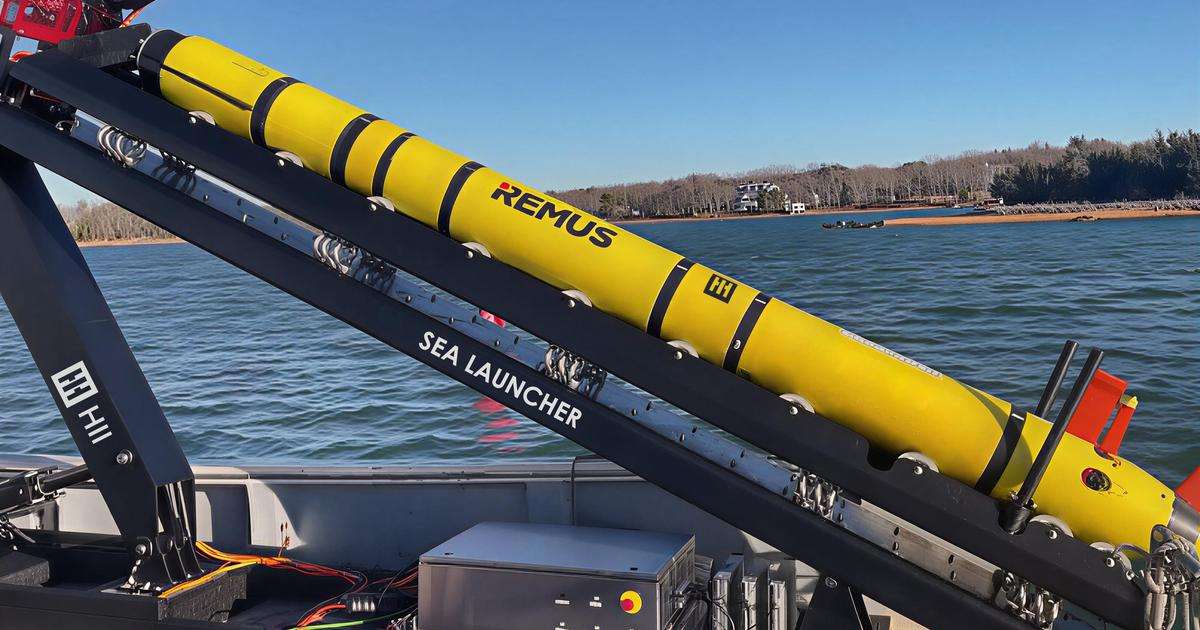
A recent successful test of HII’s Sea Launcher automated launch and recovery system demonstrates significant progress toward that goal.
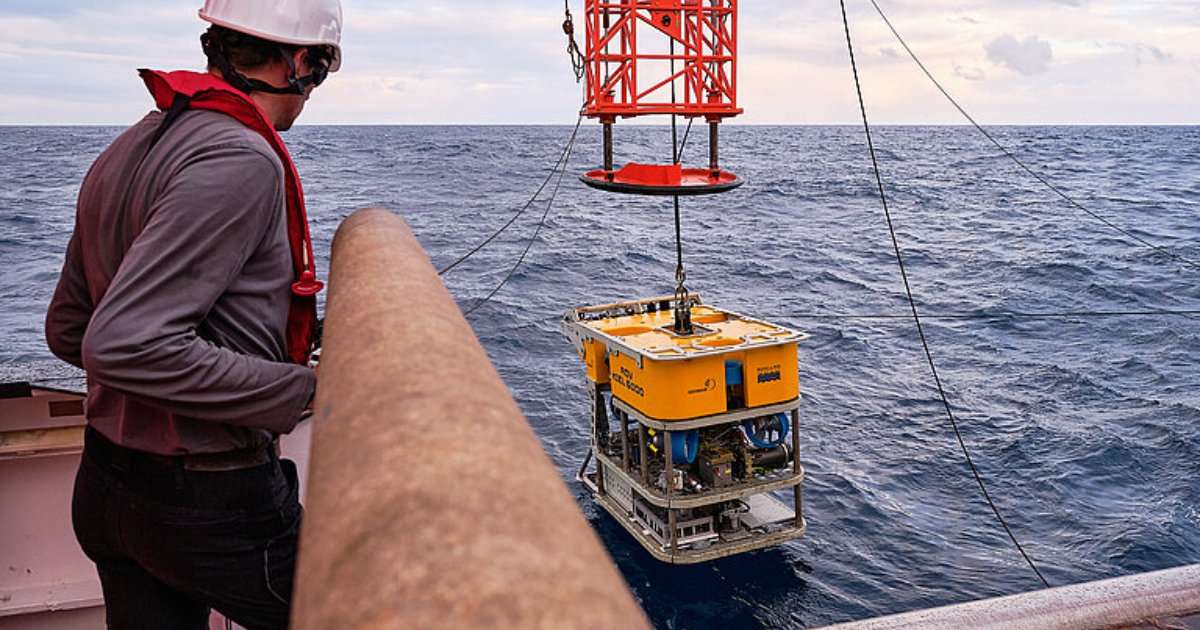
HII again demonstrated the shipboard deployment and recovery of a REMUS autonomous UUV using HII’s automated launch and recovery system, Sea Launcher. The test advances a critical requirement for fielding unmanned systems at scale: reliably getting autonomous vehicles into and out of the water without unnecessarily putting sailors at risk.
That capability is increasingly important as the US Navy and allied forces move beyond individual unmanned platforms toward integrated fleets of manned and unmanned systems operating across surface and undersea domains.
During recent testing, HII validated key elements of a fully autonomous, end-to-end launch and recovery of a REMUS 620 using a representative ship configured for real-world mission conditions.
“This is proven technology applied in a highly relevant shipboard configuration,” said Duane Fotheringham, President of Mission Technologies’ Unmanned Systems Business Group. “REMUS has successfully performed autonomous line capture and recovery for years. What this demonstration shows is how seamlessly that capability integrates with automated launch and recovery systems onboard manned or unmanned vessels to support modern maritime operations.”
Autonomy Teaming for the UUV
Maritime autonomy is often measured by what an unmanned vehicle can do: how far it can travel, what it can sense, and how independently it can operate. But an autonomous vehicle is only one part of an autonomous operation.
A UUV still must be launched, recovered, and prepared for its next mission, often aboard ships operating in difficult conditions. If those tasks require sailors to perform hazardous handling operations on exposed decks, a critical part of the mission remains dependent on human intervention.
Sea Launcher is designed to automate that ship-to-vehicle interface, reducing risk to sailors while improving operational efficiency. In practical terms, it extends autonomy beyond the UUV into the infrastructure needed to operate it.
Repeatability is equally important. A capability designed for distributed maritime operations must work not just once under ideal conditions, but repeatedly across missions, platforms, and operating environments.
Each successful Sea Launcher evolution builds confidence that autonomy can make that transition.
REMUS brings maturity to the equation. The vehicle family is trusted by more than 30 navies for missions including mine countermeasures, undersea survey, intelligence collection, and environmental sensing. Its modular design and open architecture enable REMUS vehicles to operate independently or alongside crewed ships and other unmanned systems.
Unmanned Systems Enabling Unmanned Systems
Sea Launcher’s larger potential becomes clearer alongside HII’s ROMULUS family of unmanned surface vessels (USVs), now in production. HII plans to continue integrating REMUS with ROMULUS and other manned and unmanned vessels.
The result will be an unmanned surface vessel serving as a mobile host for autonomous underwater vehicles.
A ROMULUS USV integrated with Sea Launcher and REMUS could transport UUVs into an operating area, deploy them for undersea missions, and recover them with greatly reduced direct human involvement.
It is unmanned systems enabling other unmanned systems.
Such combinations could distribute sensing and mission capability across wider areas while keeping sailors and higher-value crewed platforms farther from danger. That is the promise of manned-unmanned teaming—not replacing sailors, but giving them more reach, more platforms and more operational options.
From Concept to Combat Power
Scale is ultimately the strategic opportunity. Autonomous systems can distribute sensors, communications, payloads, and mission capacity across vast maritime regions such as the Indo-Pacific—but only if they can be operated efficiently.
That requires autonomy to extend beyond navigation and mission execution to deployment, recovery, and sustainment. Every process requiring intensive human intervention can become a constraint on scale.
REMUS provides proven undersea autonomy. Sea Launcher automates a critical ship-to-vehicle interface. ROMULUS offers the potential to carry those capabilities farther into the maritime battlespace.
Another successful Sea Launcher test advances the transition to persistent, distributed manned-unmanned operations, demonstrating tangible progress toward an operationally ready future force.