Control is Redistributed, not Removed
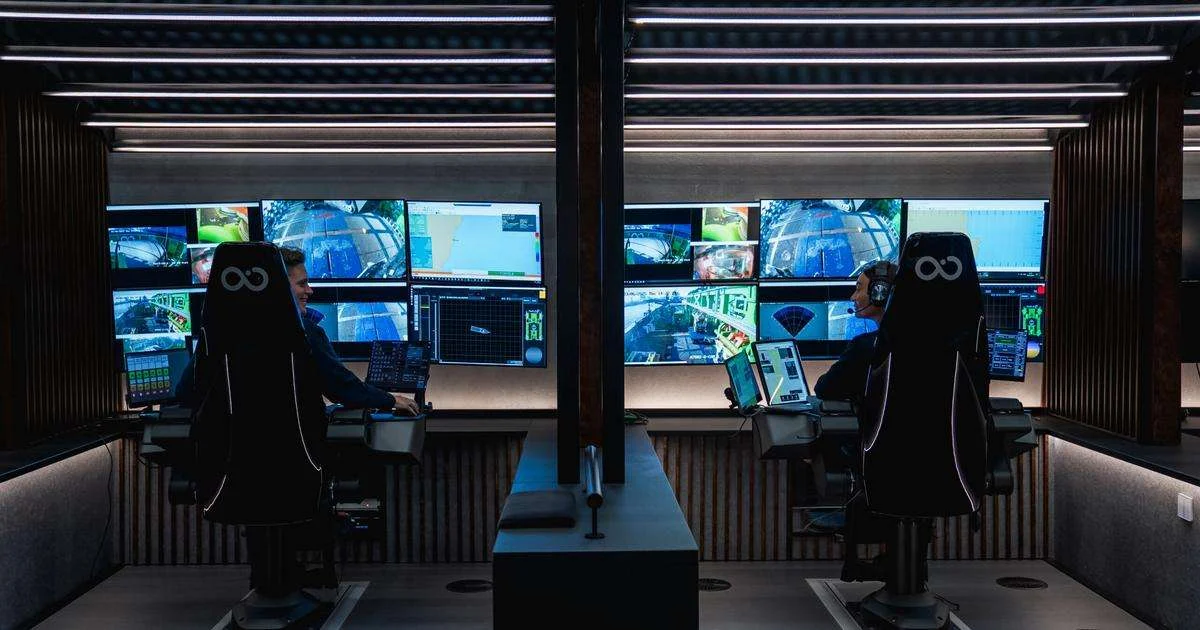
In our coastal surveillance work in the Middle East, multiple vessels can operate simultaneously under the oversight of an onshore control center. The vessels may not have people on board, but the operation is still actively managed. Operators monitor activity and intervene when required. Control isn’t removed; it is redistributed.
This doesn’t just change where people sit, it changes what they spend their time on. By taking on the repetitive and perhaps mundane tasks, technology gives people more capacity to focus on the work that genuinely requires their expertise, operational judgement, problem solving, and technical oversight.
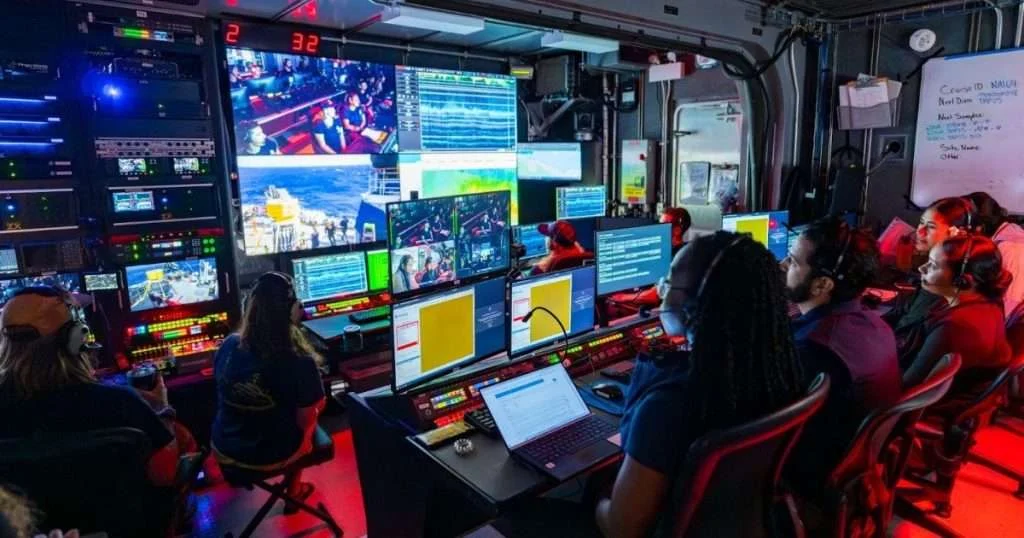
We see the same shift in our work for major energy companies. On large, lean-crewed survey operations, activity that would once have depended on more specialists being offshore is now increasingly supported from shore. Remote payload control from our Remote Operations Centre (ROC), remote ocean bottom node deployment, remote marine mammal observation, and onshore data quality control and processing all show how specialist expertise can be applied across the operation, without always requiring those specialists to be physically present at sea.
The Vessel is No Longer the Center of the Operation
This is a different operating model entirely, not just a different platform. It is the crux of what we’re doing at Ocean Infinity.
Instead of assuming that the center of the operation must be the vessel, activity is increasingly coordinated through remote operation centers, connected control rooms, and onshore teams. Systems, data, and people are linked through a continuous loop rather than separated by distance and time. Decisions are still made by humans, but the context has changed: the person making the decision may be in a ROC, in a client office, or working alongside specialists who are processing and interpreting data onshore.
New Roles, New Ways of Working
For engineers or maritime professionals entering this space, that makes it an especially exciting moment. The challenge is not simply to build autonomous systems, but to design the resilient systems, workflows, and integration that make them work in the real world. Experience at sea still matters, but it is increasingly applied through remote supervision, system oversight, mission planning, and real-time operational decision-making across multiple assets and geographies.
It also changes the working lives of the people involved. Onshore surveyors are not simply doing the same job from a different chair. Shift patterns, handovers, collaboration, and the relationship between offshore activity and onshore decision-making all change. Client representatives are changing too. Instead of always needing to be physically present on the vessel, they can be based in our offices, or their own, with access to the information they need to oversee the work. In time, that could allow a single client representative to maintain oversight across more than one operation anywhere in the world. This can also reduce the pressure created by repeated travel to and from vessels, helping to minimize fatigue and disruption while supporting a more sustainable way for people to contribute to offshore operations.
Resilience Matters More When People are Further from the Asset
What we’ve learned in practice is that some risks are reduced, while other demands become more important. In uncrewed operations, people are no longer exposed to harsh conditions at sea, and operations can continue where traditional deployment would be impractical or unsafe. There is a clear HSEQ dimension to this. Fewer people offshore means fewer people exposed to the risks and pressures of frontline operations. It can also give teams better access to knowledge and support, because subject matter experts, procedure owners, and client representatives can be connected into the operation when needed, without everyone having to be physically present at sea.
But autonomy alone is not enough. Systems must be more resilient because immediate physical intervention is not always possible. Recovery processes must be designed in advance, communications must be robust, and decisions must be made from integrated data rather than direct observation. In many ways, this is not a simpler way of working. It is a more demanding one, requiring tighter integration between technology, people, and process. The further people are moved from the asset physically, the more important the structure around the operation becomes.
Traditional maritime operations are often defined by presence at sea: a crewed vessel is deployed to a location, completes a task, and returns. Remote and uncrewed systems change that dynamic. Without the same constraint of crew endurance, systems can operate for longer periods, cover larger areas, and maintain more continuous activity. Operations become more persistent rather than purely episodic.
This also changes how scale is achieved. In traditional operations, scale usually means deploying more vessels and more people. With remote and uncrewed systems, it depends on how effectively people can operate across multiple systems, supported by data and automation. Our coastal surveillance work makes that shift visible: a small onshore team can maintain oversight across multiple vessels, but only if the data flows, processes, and decision-making are designed to support that level of awareness.
At its core, the move to remote and uncrewed systems is not simply about efficiency or cost. It is about risk, value, and operational judgement. In some contexts, particularly defense, security, and hazardous environments, the value of removing people from the asset is obvious. In others, the question is more nuanced. The goal should not be to remove every person from every vessel for its own sake. It should be to ask where people create the most value, where their presence creates unnecessary risk or constraint, and which parts of the operation can be better delivered from shore.
People, Systems and Data Working Together
AI and automation will continue to change what systems can do independently by increasingly taking on routine or repetitive tasks. But they do not remove the need for operational judgement. If anything, they make it more important that people are focused on the decisions that are complex, ambiguous, or safety-critical. The real challenge is designing the model that allows people, systems, and data to work together safely and effectively.
Operational autonomy is not defined by the absence of humans. It is defined by how effectively systems and people work together to deliver the desired outcome. There will be missions where zero people on board is the right ambition, and others where lean-crewed, supported by remote control, onshore specialists, and connected data, delivers the greatest value. Keeping people in the loop is not a sign that the approach has fallen short. It is part of what makes it robust and fit for purpose.
As remote and uncrewed systems become more widely adopted, success will not be judged by how independently they can operate in isolation. It will be judged by whether they can be integrated into real operations, at scale, over time, with people still playing a central and informed role.
What we have learned from running these operations is that the hardest part is rarely the autonomous system alone.
It is building the operational model around it: the people, processes, decision-making frameworks, and resilience that allow capability to be delivered consistently at sea.
In that context, operating without people at sea isn’t the destination. It is one expression of a broader shift towards an entirely new way of working: more resilient, distributed, and shore-enabled.