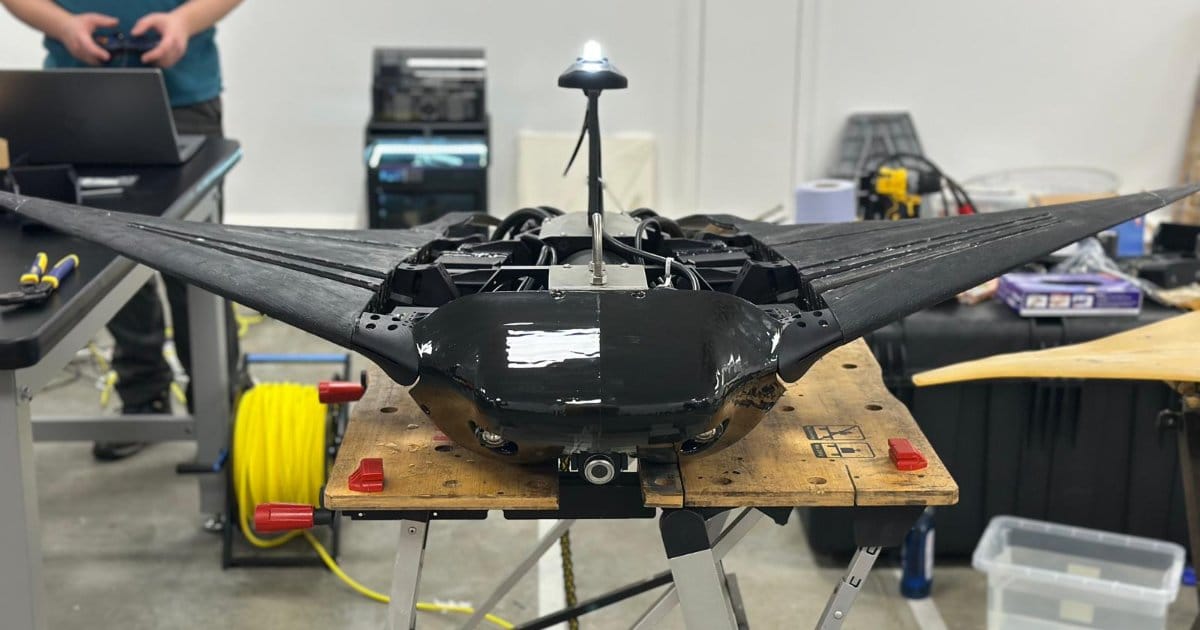
Ray Systems develops fin-based autonomous underwater vehicles (AUVs) built around two core technologies: RayDrive, its bio-inspired oscillating-fin propulsion system, and NelsonOS, an autonomy operating system co-designed with the platform for the GPS-denied, comms-denied conditions of the underwater world. By taking its cues from how marine life actually moves—rather than bolting a propeller onto a hull—Ray Systems is building vehicles that are quieter, more efficient, and more maneuverable than conventional designs.
The collaboration gives Ray Systems a home within the UK’s premier community for marine autonomous systems. The NOC Innovation Hub—a purpose-built facility launched in 2025 following a £200,000 investment—brings together researchers, businesses, and entrepreneurs, and offers members access to NOC’s world-class testing environments, oceanographic data, and specialist teams. For Ray Systems, that means faster iteration on RayDrive and NelsonOS, closer proximity to the scientists and operators who understand the ocean best, and a direct line into the partnerships that will help scale bio-inspired propulsion across the blue economy.
“Nature doesn’t make propellers, and neither will the ocean economy of the future. To get there quickly and prove it rigorously, you need the right environment around you,” said James Farha, Co-founder and CEO of Ray Systems. “The NOC is exactly that environment. Its facilities, its data and its people are among the best in the world, and being part of the Innovation Hub lets us test harder, learn faster and connect with the wider community that’s building the blue economy. It’s a step-change in the pace at which we can bring fin-based propulsion to market.”
“Our mission at the Innovation Hub is to foster innovation by creating connections between industry and science, and Ray Systems is a perfect example of the kind of ambitious, technology-led company we exist to support,” said Mark Hamson, Innovation Hub Manager at the National Oceanography Centre. “Their bio-inspired approach to underwater propulsion has real potential to advance marine autonomous systems and the wider blue economy. By giving them access to our facilities, our expertise and our networks, we can help accelerate their journey from promising technology to fielded capability—and that’s exactly what a world-class innovation ecosystem should do.”
The collaboration reflects a shared belief that the future of the ocean economy depends on innovation that works with nature rather than against it. As Ray Systems scales its fin-based platform across commercial maritime applications, the NOC Innovation Hub will provide the testing rigor, scientific depth, and sector connections to help it move at speed.