There are 56 X-DF-M engines on order across bore sizes ranging from 52 to 92, in similar cylinder configurations and engine rating fields as diesel-fueled X-Engines. The addition of methanol capability to WinGD’s engine line-up further extends the decarbonization options available to deep-sea ship operators, which include the long-established X-DF LNG-fueled engine platform and a new ammonia-fueled X-DF-A platform.
WinGD CEO Dominik Schneiter said: “Production of sustainable, renewable fuels of all types continues to advance, but long-term availability and cost remain uncertain. Ship operators can place their trust in WinGD to deliver reliable, efficient engine designs that enable decarbonization across all candidate fuels. As interest in methanol and regulatory clarity increases, we anticipate the X-DF-M platform will become a key contributor to reducing greenhouse gas emissions from global shipping.”
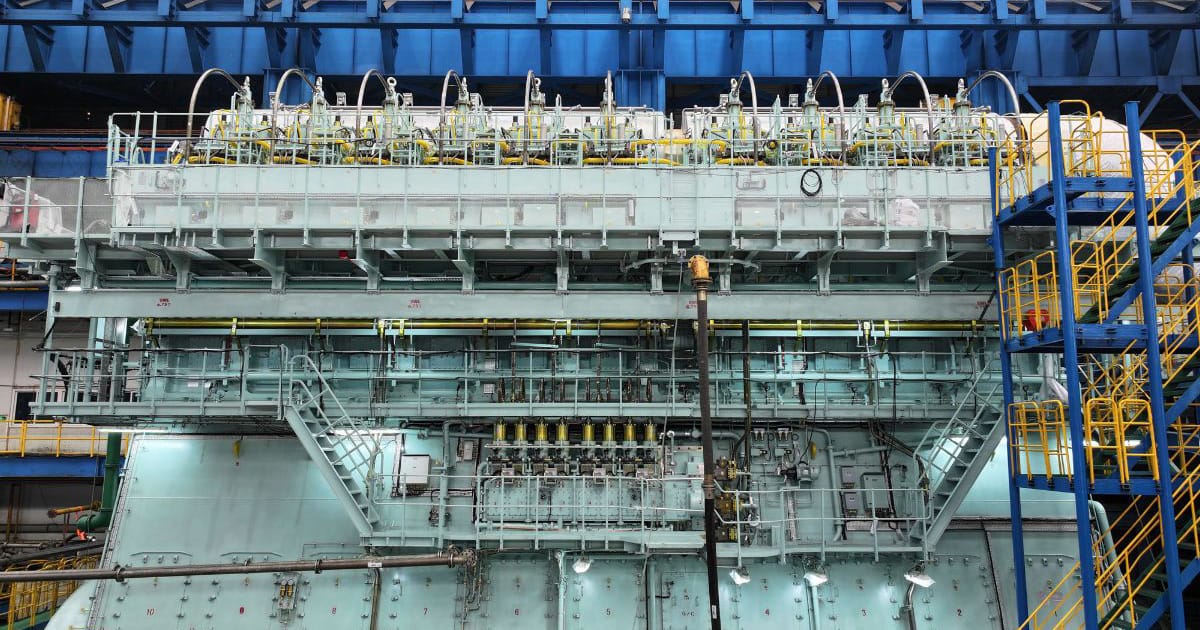
The milestone was marked by a delivery ceremony held at engine builder CMD in Shanghai, attended by senior executives from WinGD, CMD, and China State Shipbuilding Corporation, as well as local government officials and global customers and partners. Eight classification societies were also present for a signing of the X-DF-M type approval certification, which assures that all engine builders can build the engine according to WinGD’s design.
A spokesperson for CMD said: “It is a big responsibility to build the first engine of any type, especially one for an emerging fuel with the potential of methanol. Our debut methanol-fueled engine performed as expected across all tests, and we are looking forward to offering the X-DF-M platform as a new option for shipbuilders.”
As previously reported, the first X-DF-M engine will be installed on the fourth vessel of a new series. The previous three engines were fitted with 10X92-B engines, which will be converted to 10X92DF-M engines once the first newbuild methanol engine is commissioned. Dual-fuel methanol conversion packages will be available for all WinGD single-fuel and dual-fuel engines.
Methanol, like LNG, can be produced with low carbon emissions by using either biomass or renewable energy with captured carbon. The evolution of these fuel pathways – with similar routes towards green ammonia and e-diesel—will be essential for shipping’s energy transition, as will the engine technology to use emerging low- and zero-carbon fuels. WinGD’s range of single- and dual-fuel engines support maritime decarbonization, whichever fuel pathway ship operators choose.