Seabeds near breakwaters and other coastal military-era infrastructure frequently harbor unexploded ordnance—remnants of past training exercises and misfired munitions embedded in the seafloor over decades. A single undetected item can halt an infrastructure project outright, a risk magnified in complex marine engineering works. Under INMAA guidelines, a preliminary UXO survey is therefore mandatory before any engineering activity can proceed in the marine environment.
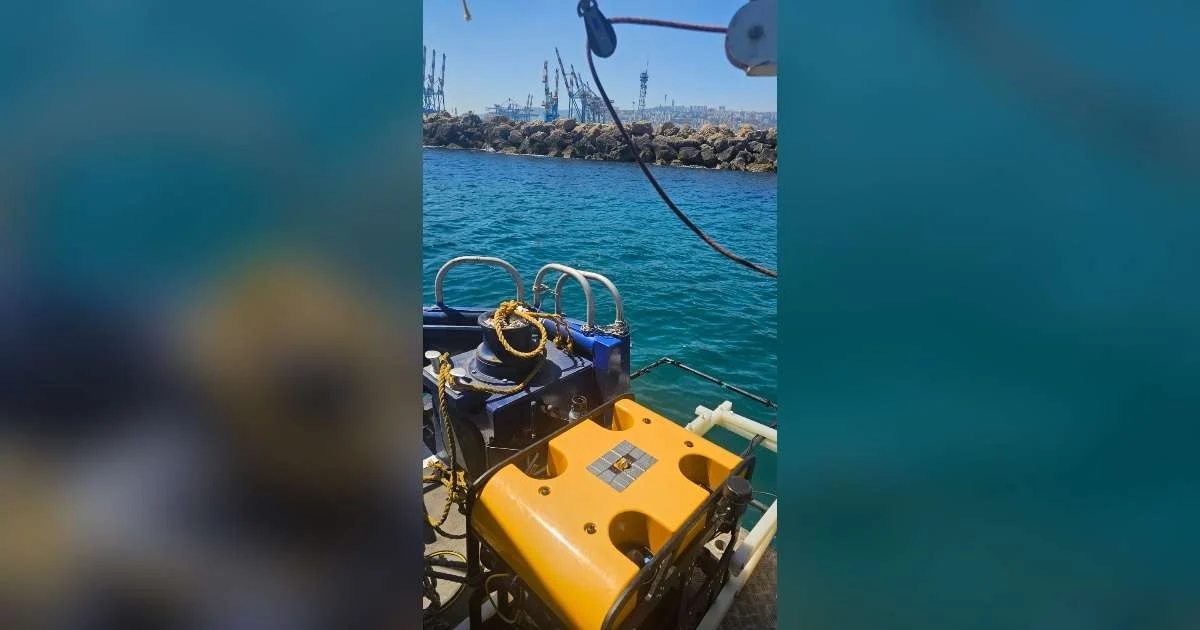
OpMS deployed an Israeli-built remotely operated vehicle (ROV) equipped with high-precision sensors that generate electromagnetic signals to detect buried and surface metal objects, including shells, bombs, and missiles, and maps each finding with pinpoint accuracy.
Paired with a team of explosive ordnance disposal (EOD) specialists holding extensive military and civilian experience, the technology gives project owners a verified, precisely mapped picture of what lies on and beneath the seabed, so construction can proceed with confidence.
“Marine projects are the most complex arena in our field—shifting visibility, currents, depth, and live infrastructure all around us,” said Royi Nahari, CEO of OpMS. “Achieving this level of precision in the marine environment, using innovative technology and to the strictest international standards, represents a significant advance for Israel’s marine industry—particularly for complex engineering undertakings such as offshore gas platforms and subsea cable installations.”
Built by the British in the early 1930s, the original Haifa Port breakwater has stood for nearly a century. The rehabilitation project now underway spans roughly 1,200 meters of the historic structure and an additional 600 meters of the adjacent Carmel Port breakwater. OpMS’s survey represents a required, and now completed, first phase of that undertaking.