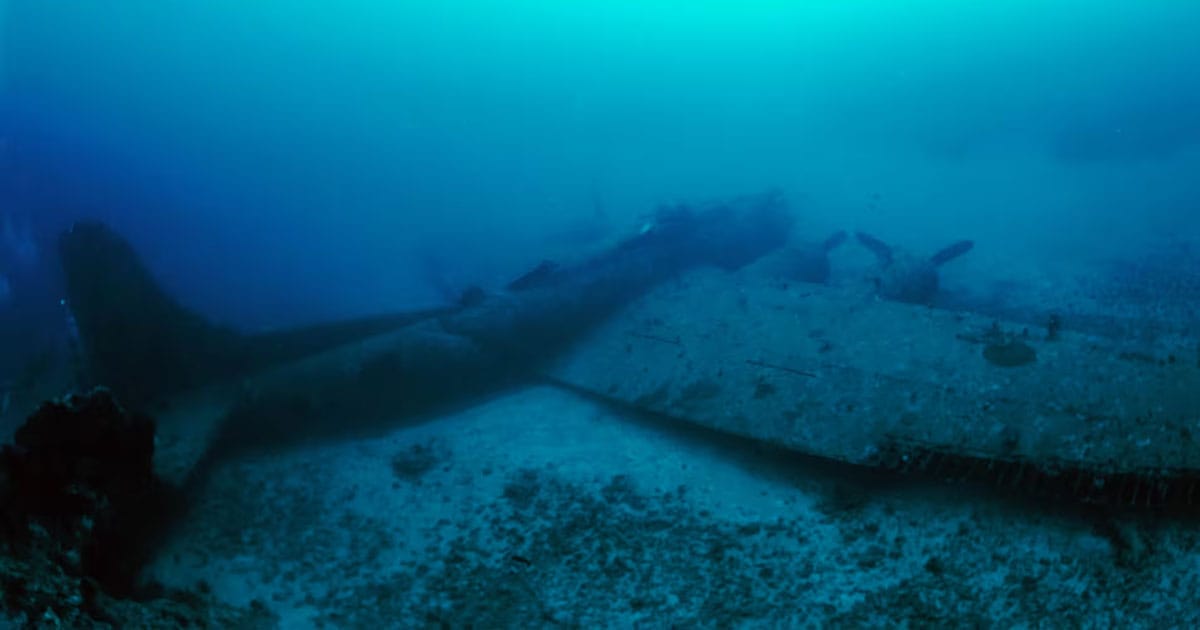
Rheinmetall took on the planning, coordination, and execution of the investigation. Electromagnetic meters were used to map the location and extent of the wreck. The object was then washed free section by section. The layer of sand, sediment, and silt directly above the wreck was 1.5 meters thick. The Defence POW/MIA Accounting Agency (DPAA), a specialized agency of the US Department of Defense, supported the investigation. This enabled the bomb bay of the B-17 wreck to be located quickly. The interior of the bay was exposed and inspected through open hatches: there were no bombs on board the wreck.
Amprion was thus able to clear the area around the site for further project work without having to expect any delays in the project schedule. The result of the investigation is a fundamental prerequisite for the construction of the offshore converter platform. According to current plans, the grid connection systems are scheduled to go into operation in the course of 2028.